
Roof Replacement Cost Per Square Foot: 2026 Homeowner Guide

Replacing a roof is one of the largest maintenance expenses most homeowners face. If your shingles are aging, leaks keep returning, or a storm has caused widespread damage, one of your first questions is probably: How much should a new roof actually cost?
Understanding the roof replacement cost per square foot gives you a practical starting point for comparing estimates and building a realistic budget. But square-foot pricing is only part of the picture. Roof material, pitch, tear-off work, damaged decking, flashing, ventilation, labor rates, permits, and roof complexity can all change the final price.
This guide explains typical 2026 roof replacement costs, how roofing contractors calculate square footage, what can raise your estimate, and how to compare bids without focusing only on the lowest number.
Quick Answer
The roof replacement cost per square foot commonly starts around $3–$6 for asphalt shingles, while metal, tile, slate, and other premium systems can range from roughly $5 to $30 or more per square foot installed. Your actual price depends heavily on material, roof size, pitch, labor, tear-off requirements, location, and hidden damage.
How Much Does Roof Replacement Cost Per Square Foot in 2026?
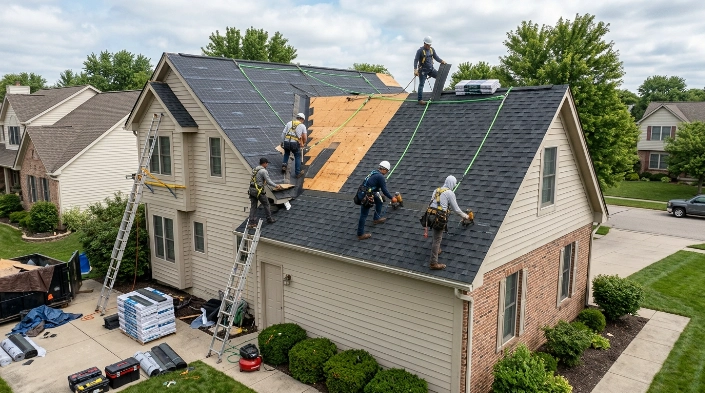
There is no single nationwide price that applies to every roof.
For a basic asphalt shingle replacement, homeowners may see installed costs around $3–$6 per square foot. Metal commonly costs more, while tile, slate, and specialty roofing can increase the price substantially. Current 2026 consumer cost data also shows that project totals vary considerably according to roof size, chosen material, pitch, location, and complexity.
A useful starting comparison looks like this:
| Roofing Material | Approximate Installed Cost per Sq. Ft. | Typical Lifespan Range* | Cost Level |
|---|---|---|---|
| Asphalt shingles | $3–$6 | 15–30 years | Lower |
| Flat/low-slope roofing | $3–$11 | Varies by system | Lower to moderate |
| Metal roofing | $5–$16+ | 30–80+ years | Moderate to high |
| Tile roofing | $7–$25 | 30–100+ years | High |
| Slate | $10–$30+ | 50–100+ years | Very high |
*Actual lifespan depends on product quality, installation, climate, ventilation, maintenance, and storm exposure. Cost ranges are planning estimates rather than contractor quotes.
Premium roofs often cost more upfront because the materials are more expensive and installation requires additional skill. That does not automatically make them the right choice for every house. Your budget, structural capacity, climate, maintenance expectations, and how long you plan to own the home all matter.
Roof Square Footage Is Not the Same as House Square Footage
One of the easiest budgeting mistakes is multiplying your home’s interior square footage by a roofing price.
A 2,000-square-foot house does not necessarily have a 2,000-square-foot roof.
Roof surface area depends on:
- Number of stories
- Roof pitch or steepness
- Overhangs
- Garages and additions
- Dormers
- Valleys
- Porches
- Multiple roof sections
A one-story house typically has more roof area relative to its living space than a two-story home with the same total interior square footage.
Roofers also frequently use a measurement called a roofing square.
One roofing square equals 100 square feet of roof surface.
For example, a 2,200-square-foot roof contains approximately 22 roofing squares.
How to Estimate Your Roof Replacement Budget
If you already know your approximate roof surface area, a simple calculation can give you a starting budget.
Suppose your roof measures approximately 2,200 square feet and you are considering an asphalt system quoted at $5.50 per square foot.
2,200 × $5.50 = $12,100
That $12,100 is only a preliminary estimate.
You may still need to budget for:
- Removing existing roofing
- Replacing rotten decking
- New flashing
- Ice-and-water protection
- Underlayment
- Ridge vents or other ventilation work
- Disposal or dumpster fees
- Permit costs
- Chimney or skylight details
- Structural repairs
For planning purposes, it can be sensible to keep additional money available for problems that cannot be seen until the old roof is removed.
What Makes Roof Replacement Cost More?
Two houses with roofs of nearly identical size can receive very different estimates. The reason is that roofing contractors price the entire scope of work, not simply the number of shingles.
Roofing Material

Material selection is one of the biggest cost factors.
Asphalt shingles remain popular because they offer relatively affordable installation and work well on many residential roofs. Architectural shingles normally cost more than basic three-tab products but can provide improved appearance and durability.
Metal costs more upfront and may require specialized installation. Tile and slate can be considerably more expensive and may require additional structural evaluation because of their weight.
When comparing materials, look beyond the initial price. Consider expected lifespan, maintenance, local climate, warranty requirements, and future replacement costs.
Roof Pitch
Pitch describes how steep a roof is.
Steep roofs generally require more safety equipment, slower installation, and additional labor. Materials also become more difficult to move and position.
A simple, walkable roof will usually be less expensive to replace than a steep roof of the same area.
Roof Shape and Complexity
A straightforward gable roof is generally easier to replace than a roof containing numerous valleys, hips, dormers, skylights, walls, and intersecting sections.
Every interruption can require extra cutting, flashing, sealing, and installation time.
That means a smaller complicated roof can sometimes cost more than a larger simple roof.
Removing the Existing Roof
A full replacement normally involves tearing off old roofing before installing the new system.
Removal allows the contractor to inspect the roof deck underneath. This is important because water damage, rot, or deteriorated sheathing may be hidden beneath otherwise normal-looking shingles.
Multiple existing roofing layers can increase labor and disposal costs.
Roof Decking Repairs
Decking, sometimes called sheathing, is the structural wood surface underneath the roofing system.
If leaks have caused portions of the decking to rot or weaken, those sections should be replaced before new roofing is installed.
Because contractors may not know the full condition of the deck until tear-off begins, ask how your proposal handles additional decking.
For example, the contract should state the price per sheet or per square foot for unexpected replacement rather than leaving the charge undefined.
Flashing and Penetrations
Flashing protects vulnerable locations where roofing meets:
- Chimneys
- Walls
- Skylights
- Plumbing vents
- Roof valleys
- Other roof sections
Poorly installed flashing is a common path for water intrusion.
Replacing or rebuilding complicated flashing details can add labor, but this is not an area where homeowners should automatically choose the cheapest approach.
Ventilation and Insulation
Roof replacement provides an opportunity to evaluate attic ventilation.
Poor ventilation can contribute to excess attic heat and moisture, potentially shortening roofing life and encouraging condensation problems.
Reflective roofing may also be worth discussing in hotter climates. The ENERGY STAR guide to cool roofs explains how reflective roof surfaces can reduce roof temperatures and decrease heat transferred into a building.
Energy benefits vary by climate, insulation level, roof design, and material, so energy savings should not be treated as guaranteed.
Labor and Location
Roofing labor rates vary across the United States.
Contractor availability, local wages, insurance costs, permitting rules, building codes, weather, and disposal fees can all affect pricing.
This is why an online national average is useful for budgeting but cannot replace a local written estimate.
Understanding What Your Roofing Quote Includes
Do not compare roof proposals based only on the final dollar amount.
Two contractors may both quote $12,000 while offering very different scopes of work.
A detailed estimate should identify items such as:
- Roofing manufacturer and product line
- Shingle or membrane type
- Underlayment
- Ice-and-water barrier
- Tear-off
- Deck inspection
- Decking replacement rate
- Flashing
- Drip edge
- Ventilation
- Pipe boots
- Disposal
- Permits
- Cleanup
- Material warranty
- Workmanship warranty
The National Roofing Contractors Association recommends evaluating more than price when selecting a contractor. Its roofing contractor selection guidance advises homeowners to review insurance, references, written proposals, project supervision, warranties, and the contractor’s business history.
A detailed $14,000 estimate may represent better value than a vague $11,000 estimate if major components are excluded from the cheaper proposal.
Expert Tip: Ask every contractor to quote the same roofing material and scope of work. Comparing three estimates becomes much easier when underlayment, flashing, ventilation, tear-off, decking allowances, warranties, and cleanup are listed consistently.
Should You Repair the Roof or Replace It?
A leak does not always mean you need an entirely new roof.
Repair may be reasonable when:
- Damage is limited to a small area
- The roofing is relatively young
- A flashing component has failed
- A few shingles were damaged by wind
- The rest of the roof remains in good condition
Replacement becomes more practical when problems are widespread.
Signs that deserve professional evaluation include:
- Repeated leaks in different locations
- Large areas of missing or damaged shingles
- Extensive granule loss
- Brittle or curling asphalt shingles
- Sagging roof sections
- Widespread storm damage
- Significant decking deterioration
- A roof approaching the end of its expected service life
Replacing an aging roof can sometimes make more financial sense than repeatedly paying for temporary repairs.
How Storm Damage Can Change Replacement Costs
Wind, hail, falling branches, and severe rain can turn a planned roof project into an urgent one.
After a major storm, document visible damage from the ground and contact your insurer if you believe the loss may be covered. Avoid climbing onto a damaged roof yourself.
Storms also create opportunities for questionable contractors. The Federal Trade Commission’s home-improvement scam guidance recommends checking licensing and insurance where applicable, obtaining multiple written estimates, and reviewing the contract before work begins.
Be particularly cautious about high-pressure sales tactics, requests for full payment upfront, or anyone telling you to sign documents you have not carefully reviewed.
Warranty Coverage Can Affect Long-Term Value
Roofing warranties commonly fall into two categories.
Manufacturer Warranty
This generally covers qualifying defects in the roofing material.
Coverage periods and conditions vary considerably between manufacturers and product lines.
Workmanship Warranty
This comes from the roofing contractor and addresses installation-related issues according to the contractor’s terms.
Do not assume that a long material warranty automatically covers incorrect installation.
Before signing a contract, ask:
- What exactly does the manufacturer warranty cover?
- How long is the contractor’s workmanship warranty?
- Is labor included in covered repairs?
- Are there ventilation or installation requirements?
- What actions can void coverage?
- Is the warranty transferable if you sell the house?
Keep your contract, warranty documents, invoices, inspection reports, and photographs together after installation.
When to Consult a Licensed Roofing Contractor
Professional assessment is especially important when you are dealing with:
- Structural sagging
- Widespread leaks
- Major storm or hail damage
- Rotten roof decking
- Multiple layers of old roofing
- Steep or high roofs
- Chimney or skylight leaks
- Insurance claims
- Possible framing damage
- A change to substantially heavier roofing materials
Roof work also involves serious fall hazards. OSHA’s residential construction fall-protection guidance addresses the dangers workers face during roofing and residential construction activities.
Homeowners should not climb onto steep, wet, icy, damaged, or structurally questionable roofs to save the cost of an inspection.
A ground-level visual check, attic inspection from a safe interior location, and professional roof assessment are much safer approaches.
Common Mistakes Homeowners Should Avoid
- Using house square footage as roof square footage. Roof pitch and design change the actual surface area.
- Choosing solely on the lowest bid. A low estimate may omit flashing, ventilation, disposal, permits, or adequate warranties.
- Ignoring decking allowances. Ask how hidden damaged sheathing will be priced.
- Comparing different products as though they are identical. Shingle quality, metal type, underlayment, and warranty coverage can vary significantly.
- Paying everything upfront. Review payment terms carefully and avoid high-pressure demands.
- Skipping contractor verification. Confirm licensing requirements, insurance, references, and business information.
- Assuming insurance will automatically pay for an old roof. Coverage depends on your policy and the cause of damage.
- Attempting dangerous DIY inspections. Saving a small inspection fee is not worth the risk of a serious fall.
How to Get a More Accurate Roof Replacement Estimate
For a realistic price, use this process:
- Estimate the roof size. Do not rely only on interior square footage.
- Choose the general material category. Asphalt, metal, tile, flat roofing, and slate have very different price ranges.
- Get multiple written contractor estimates.
- Ask each contractor to quote comparable materials and specifications.
- Review tear-off and disposal costs.
- Ask how unexpected decking repairs are charged.
- Verify flashing, ventilation, underlayment, and permits are addressed.
- Compare material and workmanship warranties.
- Keep a contingency in your budget for hidden damage.
This process produces a much more useful estimate than multiplying your home’s floor area by a generic online price.
FAQs
How much does a 2,000-square-foot roof replacement cost?
The answer depends heavily on the roofing material and whether 2,000 square feet refers to actual roof area or interior living space. At $3–$6 per square foot, a 2,000-square-foot asphalt roof would have a rough starting range of about $6,000–$12,000 before project-specific extras.
What is the cheapest common roof to replace?
Basic asphalt shingles are generally among the least expensive common residential roofing options. Architectural shingles usually cost somewhat more but may provide improved durability and appearance.
Why is my roofing estimate much higher than the cost per square foot I found online?
Online prices may exclude tear-off, disposal, flashing, decking repairs, steep-roof labor, permits, premium underlayment, ventilation, or regional labor differences. Always compare the complete scope of work.
How many square feet are in one roofing square?
One roofing square equals 100 square feet of roof surface. A 2,500-square-foot roof therefore contains 25 roofing squares.
Does a steeper roof cost more to replace?
Often, yes. Steeper roofs are harder to work on and can require additional labor and safety procedures. Complex roofs with dormers, valleys, skylights, and multiple levels may also cost more.
Does homeowners insurance pay for roof replacement?
It may cover qualifying sudden damage from events such as wind or hail, depending on the policy. Normal wear, aging, and poor maintenance are generally treated differently. Review your policy and speak directly with your insurance company about your specific claim.
Should I replace gutters when replacing my roof?
Not automatically. Gutters that are securely attached, properly pitched, and in good condition may remain usable. Replacement may make sense when they are damaged, leaking, improperly sized, or near the end of their service life.
Conclusion
The roof replacement cost per square foot is a useful budgeting tool, but it should never be the only number you consider.
Standard asphalt roofing may start around $3–$6 per square foot, while metal, tile, slate, and specialty systems can cost substantially more. Roof pitch, complexity, tear-off work, decking condition, flashing, ventilation, labor, location, and warranty coverage can all change the final price.
Before committing to a replacement, determine your actual roof area, obtain multiple detailed written estimates, compare equivalent materials and installation specifications, and verify what happens if hidden damage is uncovered.
A well-installed roof protects much more than shingles. It protects the structure, insulation, interior finishes, belongings, and long-term value of your home. Use per-square-foot pricing to establish your budget, then choose a qualified contractor and complete roofing system based on the full scope of work—not simply the lowest estimate.