
Average Roof Replacement Cost: What Homeowners Should Expect in 2026

Replacing a roof is one of the largest maintenance expenses most homeowners face. If your shingles are aging, leaks keep returning, or a recent storm caused damage, your first question is probably simple: How much will a new roof actually cost?
The average roof replacement cost in the U.S. is about $9,600 based on current 2026 homeowner cost data, but that number is only a starting point. A small, simple asphalt-shingle roof may cost considerably less, while a large, steep, complex roof with premium materials can cost tens of thousands of dollars more. Angi’s 2026 roof replacement cost data
This guide explains what affects roof replacement pricing, how roofing materials change your budget, which costs may appear after work begins, and how to compare contractor estimates without automatically choosing the lowest bid.
Quick Answer
The average roof replacement cost is about $9,600 nationally, although many projects fall above or below that amount. Roof size, roofing material, pitch, tear-off requirements, labor rates, decking repairs, permits, ventilation, and location all affect the final price. The best estimate for your home comes from several detailed local contractor quotes.
What Is the Average Roof Replacement Cost?
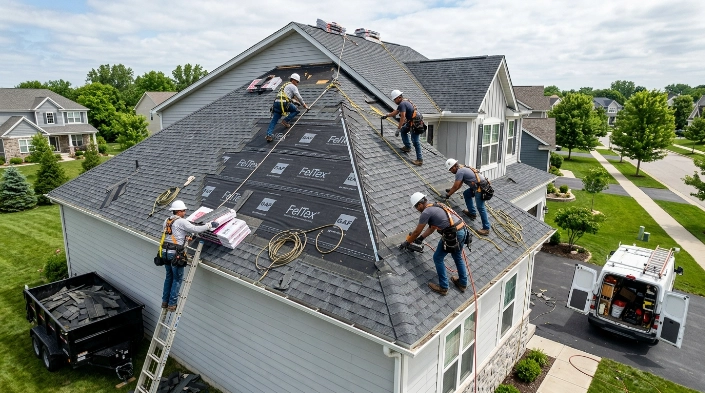
Current national cost data places a professional roof replacement at roughly $9,600 on average.
However, national averages can be misleading because roofs are not standardized.
Two houses with similar interior square footage can have very different roof replacement bills. One may have a simple two-sided roof with easy access. The other may have multiple valleys, dormers, skylights, steep slopes, and two layers of old shingles that must be removed.
Published averages also differ because cost studies may measure different types of projects, roof sizes, materials, and geographic markets.
For that reason, treat a national average as a budgeting reference rather than a quote.
A contractor needs to evaluate your actual roof before determining a realistic price.
What Determines the Cost of Replacing a Roof?

Roof replacement involves more than buying shingles. Your estimate may include removal, disposal, underlayment, flashing, ventilation components, fasteners, labor, cleanup, permits, and repairs to damaged roof decking.
The following factors usually have the biggest effect.
1. Roof Size
Roofing contractors normally price work according to the actual roof surface area.
In the roofing industry, a square means 100 square feet of roof surface.
A 2,000-square-foot house does not necessarily have a 2,000-square-foot roof. Roof pitch, overhangs, attached garages, porches, additions, and architectural features can increase the actual surface area.
A larger roof requires:
- More roofing material
- More underlayment
- More flashing and accessories
- More fasteners
- More removal and disposal
- More labor
- More installation time
This is why roof measurements matter more than interior living space when comparing estimates.
2. Roofing Material
Material selection can change your replacement cost dramatically.
Basic asphalt shingles are generally among the more affordable residential roofing options. Metal, wood, tile, and premium roofing systems typically require a larger initial investment.
| Roofing Material | General Cost Impact | Approximate Service-Life Planning Range |
|---|---|---|
| Asphalt shingles | Low to moderate | About 20–30 years |
| Architectural shingles | Moderate | About 25–35 years |
| Metal roofing | Moderate to high | Often 40–70+ years |
| Wood shingles/shakes | Moderate to high | Roughly 20–40 years |
| EPDM/TPO low-slope roofing | Moderate | Often 20–30 years |
| Clay/concrete tile | High | Often 50+ years |
These lifespan figures are planning ranges, not guarantees. Installation quality, climate, ventilation, maintenance, storm exposure, product quality, and roof design can shorten or extend actual service life.
Do not choose a material based only on purchase price. Consider how long you expect to own the home, maintenance requirements, climate, warranty coverage, and expected lifespan.
3. Roof Pitch and Complexity
Pitch means how steep the roof is.
A relatively simple low-to-moderate-slope roof is generally easier for a crew to work on than a steep roof with many intersecting sections.
Features that can increase labor include:
- Valleys
- Dormers
- Skylights
- Chimneys
- Multiple roof levels
- Turrets
- Complex flashing
- Steep slopes
- Difficult access
Complex roofs require more cutting, fitting, flashing, staging, and safety equipment.
Do not climb onto a steep roof to measure it yourself just to estimate replacement costs. Falls from roofs and ladders can cause severe or fatal injuries. OSHA’s residential roofing guidance emphasizes proper fall protection and safe work practices for professional roofing operations. OSHA residential roofing fall-protection guidance
4. Tear-Off and Disposal
A full replacement usually requires removing the existing roof covering before installing the new system.
Removal exposes the roof deck so the contractor can identify rot, moisture damage, weak areas, or previous installation problems.
Tear-off costs vary according to:
- Number of existing roofing layers
- Type of material being removed
- Roof height and slope
- Dumpster requirements
- Disposal fees
- Local landfill charges
- Site accessibility
A heavy tile roof or multiple roofing layers generally requires more labor to remove than one layer of asphalt shingles.
5. Damaged Roof Decking
Decking is the plywood, oriented strand board, boards, or other structural surface beneath the roofing system.
You cannot always know its complete condition before the old roof is removed.
Leaks may have caused:
- Rot
- Soft spots
- Delamination
- Mold or moisture damage
- Sagging
- Fastener failure
A contractor may include an allowance for a small amount of decking replacement and charge an agreed price for additional sheets discovered during tear-off.
Ask how this will be handled before signing the contract.
A quote that simply says “decking extra” without explaining the price can create an unpleasant surprise.
Labor Is a Major Part of Roof Replacement Cost
Roofing is labor-intensive work.
Workers must remove old materials, protect the property, prepare the deck, install underlayment and flashing, place the roofing system correctly, handle ventilation details, clean the site, and follow required safety procedures.
Labor costs can rise when:
- The roof is steep
- The building is several stories tall
- Access is limited
- Landscaping makes staging difficult
- The roof design is complicated
- Specialized roofing materials are used
- Local labor rates are high
- Structural repairs are needed
A cheap material does not necessarily produce a cheap project if installation is unusually difficult.
Hidden Costs Homeowners Should Budget For
The estimate you receive before tear-off may not reveal every condition underneath the existing roof.
Possible additional expenses include:
- Rotten decking
- Damaged fascia
- Flashing replacement
- Ventilation upgrades
- Structural repairs
- Permit fees
- Code-required improvements
- Skylight replacement
- Chimney flashing work
- Gutter removal or replacement
- Solar panel removal and reinstallation
- Additional disposal
Ask contractors which possible extras are included and which would be treated as change orders.
A detailed written estimate makes comparing quotes much easier.
Expert Tip: Ask every contractor to show exactly how unexpected decking replacement is priced. Knowing the per-sheet or agreed repair cost before tear-off helps prevent a vague change order from turning into a major budget surprise.
Does Roof Ventilation Affect Replacement Cost?
Yes.
Roof replacement is often a good time to evaluate attic ventilation because intake and exhaust ventilation work together to control heat and moisture.
Poor ventilation can contribute to moisture accumulation and excessive attic temperatures. Those conditions may affect roofing materials, insulation, decking, and indoor comfort.
Depending on the home, a contractor might recommend work involving:
- Ridge vents
- Soffit vents
- Intake ventilation
- Exhaust ventilation
- Existing attic fans
- Blocked ventilation pathways
Do not automatically approve additional ventilation simply because it appears on an estimate. Ask the contractor to explain the existing system, the proposed change, and how the design will provide balanced airflow.
Energy-Efficient Roofing Can Affect Long-Term Cost
Roof replacement also gives homeowners an opportunity to consider reflective or “cool roof” materials.
A cool roof reflects more sunlight and absorbs less heat than a conventional roof. ENERGY STAR explains that reflective roofing can lower roof surface temperatures and may reduce air-conditioning demand, particularly in hot, sunny climates. ENERGY STAR guidance on cool roofs
However, energy savings depend on climate, insulation, roofing type, building design, and other factors.
Do not pay a large premium based only on a salesperson’s promise of dramatic utility savings. Compare the product’s performance information and determine whether it makes sense for your climate and home.
Roof Repair or Full Replacement?
A leak does not automatically mean you need a new roof.
Repair may still make sense when:
- Damage is localized
- The roof is relatively young
- Most roofing material remains sound
- One flashing detail has failed
- Only several shingles are missing
- Decking remains structurally sound
Replacement deserves stronger consideration when:
- Leaks appear in several areas
- Repairs keep failing
- Shingles are deteriorating throughout the roof
- Storm damage is widespread
- Decking is extensively damaged
- The roof is approaching the end of its expected lifespan
Consider the long-term cost rather than only today’s repair bill.
Spending $1,000 repeatedly on an aging roof can eventually become less economical than putting that money toward a replacement that addresses the complete roofing system.
How Storm Damage Changes the Cost
Wind, hail, falling branches, and severe storms can damage roofing materials even when the roof was not previously scheduled for replacement.
Warning signs include:
- Missing shingles
- Lifted roof edges
- Broken tiles
- Damaged ridge caps
- Dented metal components
- Fallen branches
- New ceiling stains
- Wet insulation
- Damaged flashing
- Visible sagging
Inspect obvious damage from the ground whenever possible.
If the roofline is sagging, a tree has struck the structure, or large portions of roofing are missing, avoid climbing onto the roof. The decking or framing may be unstable.
If you expect to file an insurance claim, photograph safely visible damage and review your policy before authorizing major permanent work unless emergency repairs are needed to prevent further damage.
Will Homeowners Insurance Pay for Roof Replacement?
Sometimes.
Coverage depends on the cause of loss and the terms of your individual policy.
A sudden covered event such as qualifying wind or hail damage may be treated differently from deterioration caused by age, neglected maintenance, or normal wear.
Important policy details can include:
- Deductible
- Coverage limits
- Exclusions
- Roof age
- Actual cash value
- Replacement cost coverage
- Documentation requirements
Do not assume either the roofer or insurance adjuster alone determines your final contractual coverage. Read your policy and keep copies of photographs, estimates, invoices, inspection reports, and claim correspondence.
Understand Roofing Warranties Before Comparing Prices
Two contractors may offer similar-looking roofing systems but very different warranty protection.
You may encounter two main forms of coverage.
Manufacturer Warranty
This generally applies to qualifying defects in roofing products.
Terms can vary significantly by product.
Workmanship Warranty
This is provided by the contractor and relates to qualifying installation problems.
Ask:
- How long does coverage last?
- What exactly is covered?
- What is excluded?
- Who handles a future leak?
- Is the warranty transferable?
- Are inspections or maintenance required?
- Can another contractor perform repairs without affecting coverage?
A longer warranty is not automatically better if the exclusions are broad.
How to Compare Roofing Estimates
Get several written estimates when practical.
Then compare the scope, not just the final number.
A useful estimate should identify:
- Roofing material and product
- Tear-off scope
- Underlayment
- Flashing
- Drip edge
- Ventilation work
- Decking-repair pricing
- Cleanup and disposal
- Permit responsibility
- Warranty coverage
- Payment schedule
- Start and completion expectations
The National Roofing Contractors Association recommends researching contractors, checking applicable licensing and insurance, requesting references, reviewing written proposals, and understanding warranty terms rather than choosing based on price alone. NRCA contractor-selection guidance
A $12,000 estimate that includes proper flashing, tear-off, ventilation work, disposal, and a clear workmanship warranty may represent better value than a vague $9,000 proposal that excludes important components.
Common Mistakes Homeowners Should Avoid
- Choosing the lowest estimate automatically. A low price may reflect a smaller scope, cheaper materials, missing permit costs, or incomplete flashing work.
- Comparing quotes without comparing materials. Different shingle lines or roofing systems can have very different specifications.
- Ignoring decking charges. Ask how hidden deterioration will be priced.
- Paying the entire project cost upfront. Review the payment schedule carefully.
- Ignoring ventilation. A replacement should account for the complete roofing system.
- Assuming every leak requires replacement. A localized defect may still be repairable.
- Waiting too long after recurring leaks. Repeated water intrusion can damage decking, insulation, drywall, and framing.
- Climbing onto the roof to save inspection money. Roofing work involves serious fall hazards.
- Relying on verbal promises. Important materials, warranties, pricing, and project responsibilities should be documented in writing.
When to Consult a Licensed Roofing Contractor
Contact a licensed or otherwise properly credentialed roofing contractor when your local jurisdiction requires licensing and you are dealing with:
- Multiple roof leaks
- Widespread missing shingles
- Significant hail or wind damage
- Sagging roof sections
- Suspected rotten decking
- Structural movement
- A roof near the end of its expected lifespan
- Repeated unsuccessful repairs
- A major insurance claim
- Steep or difficult-to-access roofing
If rafters, trusses, or other structural components appear damaged, a qualified structural professional may also need to evaluate the home.
A professional inspection should tell you what failed, why it failed, what needs repair, and whether replacement is truly necessary.
FAQs
How much does the average roof replacement cost?
Current 2026 national homeowner cost data puts the average near $9,600, but individual projects vary widely. Size, pitch, material, local labor, tear-off, decking condition, and complexity can move the price substantially.
How much should I budget beyond the contractor’s quote?
There is no universal percentage, but having a contingency fund is useful when decking condition is unknown. Ask your contractor which hidden conditions could increase the final price and exactly how additional work will be charged.
Is an asphalt-shingle roof cheaper than a metal roof?
Asphalt shingles generally have a lower initial installation cost. Metal roofing often costs more upfront but may offer a longer service life. Compare lifecycle cost, maintenance, climate suitability, and how long you expect to own the home.
Does roof pitch increase replacement cost?
Usually, yes. Steep roofs can require additional labor, safety measures, staging, and installation time. Complex roofs with dormers, valleys, skylights, and several levels may also cost more.
Can I put new shingles over old shingles to save money?
Sometimes local codes and manufacturer requirements allow a roof-over, but it is not appropriate for every home. Existing decking damage, multiple roof layers, warranty requirements, weight, and the condition of the current roof should be considered first.
Should I replace my roof before it starts leaking?
Not automatically. Roof age should be considered together with material condition, storm damage, flashing, ventilation, decking condition, and repair history. Periodic inspections can help identify deterioration before major interior water damage occurs.
How many roofing estimates should I get?
Three detailed estimates are often enough to identify major pricing and scope differences. The goal is not simply to find the lowest number. Compare materials, installation details, warranties, exclusions, decking charges, insurance, licensing requirements, and contractor reputation.
Conclusion
The average roof replacement cost is around $9,600 nationally, but your home may cost considerably more or less depending on roof size, material, pitch, complexity, location, labor, tear-off requirements, ventilation, and hidden decking damage.
Start with a professional roof evaluation rather than relying on a national average alone.
Get several detailed written estimates, compare what each contractor actually includes, understand warranties and change-order pricing, and avoid making the decision based only on the lowest bid.
A roof replacement is a major investment, but careful planning can help you control unexpected costs while making sure the new roof protects your home for years to come.