
Do Cracked Shingles Mean You Need a New Roof? Repair vs. Replacement Guide

Cracked shingles can be alarming, especially when you notice several of them after a storm or while looking at an older roof from the ground. The immediate concern is usually the same: do cracked shingles mean you need a new roof, or can the damaged areas simply be repaired?
Fortunately, a few cracked shingles do not automatically mean your entire roof has failed. Localized damage can often be repaired. However, widespread cracking—especially when combined with leaks, missing shingles, heavy granule loss, aging materials, or damaged roof decking—can indicate that replacement is becoming the more practical option.
The right decision depends on how many shingles are cracked, why they cracked, the age and condition of the roof, whether moisture has reached the layers underneath, and whether similar problems are developing elsewhere.
This guide explains how to tell the difference between a repairable shingle problem and a roof that may be approaching replacement.
Quick Answer
No, cracked shingles do not always mean you need a new roof. A few isolated cracked shingles on an otherwise healthy roof can often be replaced individually. A new roof becomes more likely when cracking is widespread, leaks are recurring, the roof is aging, decking is damaged, or several types of deterioration are happening at the same time.
Why Do Roof Shingles Crack?
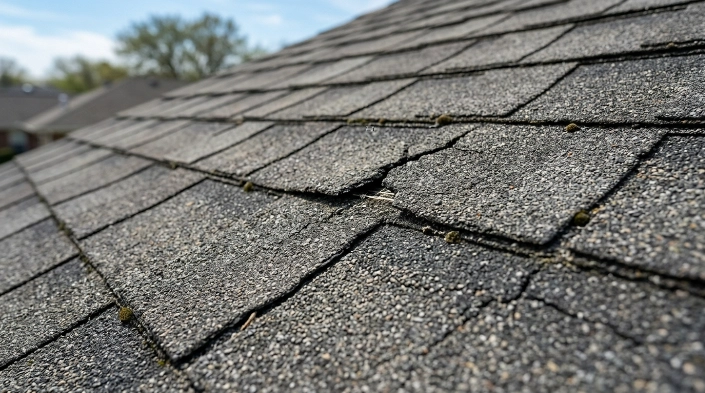
Understanding why shingles cracked is just as important as counting how many are damaged.
Asphalt shingles are designed to withstand years of sun, rain, temperature changes, and normal weather exposure. Over time, however, their materials can become less flexible.
Common causes of cracking include:
- Natural aging and weathering
- Strong winds
- Hail or flying debris
- Repeated hot-and-cold temperature cycles
- Improper installation
- Manufacturing problems
- Poor attic ventilation or excessive heat
- Physical damage from tree limbs or foot traffic
- Previous storm damage that weakened the shingle
A crack can interrupt the shingle’s ability to shed water properly. Once water finds its way beneath the visible roofing material, it can reach the underlayment or roof decking.
The National Roofing Contractors Association’s homeowner guidance identifies cracked and curling shingles as conditions homeowners should watch for during routine roof inspections.
That does not mean every crack is an emergency, but it does mean the condition deserves attention.
A Few Cracked Shingles May Only Need Repair
If you have one, two, or several damaged shingles concentrated in a small area, replacement of the entire roof is usually not the first conclusion to make.
Localized repair may be reasonable when:
- The roof is otherwise in good condition.
- Cracking is limited to one small section.
- There are no recurring interior leaks.
- The roof decking underneath remains solid and dry.
- Matching replacement shingles are available.
- Surrounding shingles are lying flat and still flexible.
- There is no widespread granule loss or curling.
For example, suppose a tree branch damages six shingles on a relatively healthy roof. A roofing contractor may be able to remove those shingles, inspect the underlayment and decking, and install compatible replacements.
In that situation, replacing thousands of square feet of functioning roofing would normally be unnecessary.
Repairing the Shingle Is Not the Same as Hiding the Crack
Be cautious with quick fixes involving roofing cement or sealant.
Roofing sealants can sometimes be appropriate as part of a professional repair, but simply covering visible cracks without determining why they formed can hide a larger problem.
A proper repair should address both the damaged shingle and the condition beneath it.
If water has already reached the decking, replacing the visible shingle alone may not solve the problem.
When Cracked Shingles May Point to Roof Replacement

The decision changes when cracking is not isolated.
Hundreds of cracks spread across multiple roof slopes usually indicate deterioration of the roofing material itself rather than damage to a few individual shingles.
Replacement deserves closer consideration when cracked shingles appear together with several other warning signs.
| Roof Condition | Repair May Be Enough | Replacement Becomes More Likely |
|---|---|---|
| 1–5 isolated cracked shingles | Often | Rarely by itself |
| One storm-damaged area | Often | If damage is extensive |
| Cracks across several roof slopes | Less likely | Yes |
| Recurring roof leaks | Sometimes | Increasingly likely |
| Heavy granule loss | Limited value | Often worth evaluating |
| Curling plus cracking | Less attractive | More likely |
| Soft or rotten decking | Requires deeper repair | May justify replacement |
| Numerous missing shingles | Possible after localized wind damage | More likely if widespread |
| Roof near end of service life | Repair may be temporary | Often more practical |
| Sagging roof areas | Not a simple shingle repair | Structural evaluation needed |
No single row automatically determines the answer. A contractor should evaluate the roofing system as a whole.
How Roof Age Changes the Decision
Age matters because shingles become more vulnerable as they weather.
A newer roof with ten damaged shingles presents a very different situation from an older roof where cracking is appearing across multiple slopes.
Asphalt shingle lifespan varies based on:
- Shingle type and quality
- Installation quality
- Climate
- Sun exposure
- Wind and hail exposure
- Attic ventilation
- Maintenance
- Roof pitch
- Previous repairs
Instead of relying only on the installation date, look at the roof’s actual physical condition.
An older roof can sometimes remain serviceable if it was well installed and maintained. A younger roof can deteriorate prematurely because of installation defects, severe weather, or ventilation problems.
Why Repeated Repairs Matter
One inexpensive repair can make excellent financial sense.
Paying for new repairs every season is different.
If contractors repeatedly replace cracked shingles, fix new leaks, or repair different sections of the roof, ask how much useful life the existing system realistically has left.
At some point, repeated labor costs can make continued patching less attractive than replacement.
Storm Damage Can Change the Situation Quickly
Cracking that appears shortly after hail or high winds should be treated differently from slow age-related deterioration.
The Insurance Institute for Business & Home Safety explains that wind creates uplift forces on roof coverings and that hail can dent, tear, crack, or displace granules from asphalt shingles. Severe damage can create pathways for water intrusion. Its research on weather exposure and roof damage can help homeowners understand why storm-related damage deserves a proper inspection.
After a major storm:
- Inspect the roof from the ground.
- Photograph visible damage.
- Check the attic and ceilings for moisture.
- Look for shingles or roofing debris around the property.
- Check gutters and downspouts for unusual amounts of granules.
- Contact a qualified roofer when significant damage is visible.
- Preserve documentation if an insurance claim may be necessary.
Avoid climbing onto a storm-damaged roof. Wet surfaces, loose shingles, damaged decking, and hidden structural problems can create serious fall hazards.
What Does a Cracked Shingle Actually Expose?
Your roof is made of more than shingles.
A typical asphalt shingle roof includes several layers:
Shingles: The visible exterior material that sheds rain and protects the system from direct weather exposure.
Underlayment: A protective layer installed below the shingles to provide additional resistance to water.
Decking: Usually plywood or oriented strand board, commonly called OSB. It forms the solid surface attached to the roof framing.
Flashing: Metal or other waterproof components installed around chimneys, walls, valleys, vents, and other vulnerable transitions.
One cracked shingle does not necessarily mean water has passed through every layer.
But the longer a damaged area remains exposed, the greater the opportunity for moisture to reach vulnerable materials.
Check the Attic for Clues
You may be able to find useful evidence without stepping onto the roof.
From a safely accessible attic, look for:
- Damp roof decking
- Dark water stains
- Wet insulation
- Mold-like discoloration
- Rusted fasteners
- Dripping water
- Daylight through unexpected openings
- Musty odors
Remember that water does not always drip straight down from the damaged shingle. It can travel along decking, rafters, nails, or other components before appearing inside your home.
That is one reason professional leak diagnosis can be more complicated than simply finding the nearest visible crack.
Ventilation and Heat Can Affect Shingle Condition
If shingles are cracking earlier than expected, the visible roof covering may not be the only issue.
Attic heat and moisture management can affect roof durability.
The U.S. Department of Energy notes that proper air sealing, insulation, and ventilation can help control moisture and protect roof assemblies. Its guidance on durable attics explains the importance of managing heat and moisture below the roof.
Before installing a new roof, ask whether the contractor will evaluate:
- Intake ventilation at soffits
- Exhaust ventilation near the ridge
- Blocked vents
- Bathroom or dryer exhaust terminating improperly in the attic
- Insulation problems
- Moisture accumulation
- Existing decking condition
Replacing shingles without addressing an underlying attic problem can leave the new roofing system exposed to the same conditions.
Repair Cost vs. Roof Replacement Cost
A localized shingle repair generally costs far less than replacing an entire roof.
However, price should not be evaluated by today’s invoice alone.
Repair costs can rise because of:
- Steep roof pitch
- Difficult access
- Multiple roof levels
- Chimneys, skylights, and valleys
- Damaged decking
- Matching-material availability
- Emergency service
- Extensive storm damage
Replacement cost depends heavily on:
- Total roof square footage
- Roofing material
- Tear-off and disposal requirements
- Decking replacement
- Flashing work
- Roof complexity
- Labor rates
- Permits
- Ventilation improvements
- Warranty options
A $500 repair that gives a healthy roof several more years of reliable service may be worthwhile.
Repeated repairs on a badly deteriorated roof may simply postpone a larger expense.
Ask contractors to explain expected remaining service life, not just repair price.
Consider Warranty Coverage Before Authorizing Work
Cracked shingles may potentially involve several different warranties.
A manufacturer’s material warranty generally addresses qualifying defects in the roofing product.
A contractor workmanship warranty may cover installation-related problems for a specified period.
Storm, wind, and hail damage normally involve different considerations and may fall under homeowners insurance rather than a material warranty.
Before repairs begin:
- Locate your roofing paperwork.
- Identify the shingle manufacturer and product.
- Review warranty conditions.
- Check whether previous repairs affect coverage.
- Document damage with photographs.
- Ask the contractor whether the suspected cause appears to be installation, weather, or material related.
Do not assume the presence of a crack automatically qualifies for warranty replacement.
Expert Tip
Expert Tip: Before agreeing to a complete replacement, ask the roofer to photograph several cracked areas up close and show the condition underneath one representative damaged section when appropriate. Seeing the decking, underlayment, and surrounding shingles can help you understand whether you have isolated damage or system-wide deterioration.
Can You Replace Only Part of a Roof?
Sometimes.
A contractor may be able to repair one roof plane or a clearly defined damaged area, but partial replacement has limitations.
Matching older shingles can be difficult because colors fade and manufacturers discontinue products. New material may look noticeably different.
More importantly, replacing one section does not restore the remaining older shingles.
Ask:
- How old will the unreplaced portion be?
- Is the same shingle still available?
- Will warranties differ between sections?
- Are problems limited to one slope?
- Does partial replacement provide enough added service life to justify the cost?
For isolated storm damage, a partial solution may be practical. For uniform age-related cracking across the roof, it may provide limited long-term value.
When to Consult a Licensed Roofing Contractor
Professional evaluation is especially important when:
- Cracking appears across several roof slopes.
- You have an active leak.
- Shingles are missing after a storm.
- Roof decking feels or appears damaged.
- The roofline is sagging.
- You see water stains in several rooms.
- Large amounts of granules are collecting in gutters.
- Flashing appears damaged.
- Previous repairs keep failing.
- Insurance documentation is needed.
- You cannot inspect the problem safely from the ground.
Roofing work involves significant fall hazards. OSHA’s residential roofing fall-protection guidance highlights the risks associated with working at roof height and the protective measures required for professional workers.
Homeowners should generally leave steep, wet, damaged, icy, or structurally questionable roofs to trained professionals.
When hiring someone, verify licensing or registration requirements in your state or locality, insurance, references, and the written scope of work.
The Federal Trade Commission also recommends getting multiple written estimates, checking licensing and insurance, and avoiding contractors who pressure homeowners into immediate decisions or demand full payment upfront. Its home-improvement contractor guidance provides additional consumer-protection advice.
Common Mistakes Homeowners Should Avoid
- Ignoring a few cracked shingles for years. Small damage can become more expensive if water begins reaching lower roofing layers.
- Assuming every crack requires complete replacement. Localized damage may be repairable.
- Using sealant as a permanent solution without diagnosis. The underlying cause still needs to be identified.
- Walking on a damaged roof. You could fall, damage shingles further, or step onto weakened decking.
- Choosing replacement based only on roof age. Physical condition matters too.
- Choosing repair based only on the lowest price. Ask how long the proposed repair should realistically last.
- Failing to investigate ventilation or moisture issues. A new roof will not correct every attic problem.
- Discarding damaged material before an insurance inspection. Document storm-related conditions first when a claim may be involved.
- Accepting a high-pressure replacement recommendation immediately. For a major expense, consider getting another qualified opinion.
FAQs
Do one or two cracked shingles mean I need a new roof?
Usually not. One or two cracked shingles can often be replaced if the surrounding roof remains in good condition and moisture has not caused significant underlying damage.
Can cracked shingles cause a roof leak?
Yes. A crack can create a pathway for moisture, particularly when the damage penetrates enough of the shingle or combines with wind-driven rain. The underlayment may provide temporary additional protection, but damaged shingles should still be evaluated.
Should I replace cracked shingles immediately?
They should be addressed promptly, although the urgency depends on the severity of the crack, weather conditions, and whether water intrusion is occurring. Active leaks or storm-related damage deserve faster professional attention.
Does widespread cracking mean the shingles are worn out?
It can. When similar cracks appear across several roof slopes, the roofing material may be experiencing broad age- or weather-related deterioration. A professional inspection can determine whether continued repairs are worthwhile.
Can I fix a cracked shingle myself?
Minor roofing repairs may appear simple, but roof access creates serious fall risks and incorrect repairs can cause leaks or affect warranties. Ground-level inspection and attic checks are safer homeowner tasks. Professional service is preferable when roof access is required.
Will homeowners insurance pay for cracked shingles?
It depends on the cause and your policy. Sudden covered events such as certain wind or hail losses may be treated differently from deterioration caused by age, wear, maintenance problems, or installation defects. Document the damage and review your policy before assuming coverage.
How do I know whether repair or replacement is better?
Consider the extent of cracking, roof age, leak history, decking condition, storm exposure, repair history, warranty coverage, and expected remaining service life. Isolated damage generally favors repair; widespread deterioration and repeated failures make replacement more reasonable to evaluate.
Conclusion
So, do cracked shingles mean you need a new roof? Not automatically.
A handful of damaged shingles on an otherwise sound roofing system can often be replaced without tearing off the entire roof. The situation becomes more serious when cracks cover large areas, leaks keep returning, granules are disappearing, shingles are curling or missing, decking is deteriorating, or the roof is already heavily aged.
Do not judge the roof based on one symptom alone.
Start with a safe inspection from the ground and attic. Photograph what you see, check your warranty and repair history, and pay attention to whether the damage is localized or widespread.
If the problem involves storm damage, active leaking, structural concerns, widespread deterioration, or an unsafe roof surface, have a qualified roofing contractor inspect the complete system.
The goal is not to replace a roof sooner than necessary—or keep repairing one that can no longer provide reliable protection. A documented professional inspection gives you the information needed to make that decision with confidence.