
What Roof Problems Require Replacement? Signs Homeowners Should Know

A roof problem does not automatically mean you need a complete replacement. One missing shingle, a loose piece of flashing, or a small leak can often be repaired. The decision becomes more serious when damage is widespread, keeps returning, or affects the structure beneath the roofing material.
If you are wondering what roof problems require replacement, focus on the extent of the damage, the roof’s age, its material, the condition of the decking, and whether repairs can still provide reliable protection. This guide explains the warning signs that usually point toward replacement and when a repair may still make sense.
Quick Answer
Roof problems that may require replacement include widespread shingle failure, repeated leaks, major storm damage, sagging or rotten roof decking, extensive moisture damage, serious installation defects, and deterioration near the end of the roof’s expected lifespan. A licensed roofing contractor should determine whether the damage is localized enough to repair safely.
Which Roof Problems Are Most Likely to Require Replacement?
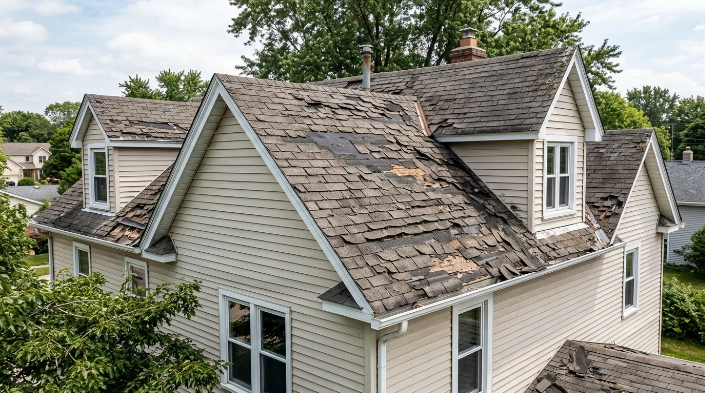
The important question is not simply whether your roof has damage. It is how much of the roofing system is affected and whether the remaining roof can still perform reliably.
Here is a quick comparison.
| Roof Condition | Repair May Be Enough | Replacement May Be Needed |
|---|---|---|
| One or two missing shingles | Often | Rarely |
| Small flashing leak | Often | If flashing failure is widespread |
| One damaged roof section | Sometimes | If surrounding materials are badly aged |
| Repeated leaks in different areas | Less likely | Often |
| Widespread curling or cracking shingles | Rarely | Often |
| Large areas of storm damage | Sometimes | Often |
| Rotten or sagging decking | Limited repair only in small areas | Often if extensive |
| Roof near end of service life | Possibly for minor issues | Often when deterioration is widespread |
| System-wide installation defects | Rarely | Often |
No single symptom should automatically determine the answer. Roof age, material, prior repairs, weather exposure, ventilation, and the condition of the underlying structure all matter.
1. Widespread Shingle or Roofing Material Failure
A few damaged shingles are usually repairable. Hundreds of shingles showing similar deterioration are different.
Replacement becomes more reasonable when large areas have:
- Curling or cupping shingles
- Deep cracks
- Missing shingles across several roof slopes
- Severe granule loss
- Brittle shingles that break during repairs
- Loose, deteriorated, or failing roofing material throughout the system
At that point, replacing individual shingles may simply move the problem from one area to another.
The National Roofing Contractors Association notes that cracked, warped, missing, or otherwise deteriorated roofing materials are important warning signs homeowners should watch for during inspections. Its homeowner roofing maintenance guidance also explains that a leak does not necessarily require replacement, but complete roof-system failure generally cannot be corrected with a simple patch.
2. Leaks Keep Returning in Different Locations
One leak near a chimney, plumbing vent, or roof valley may come from failed flashing that can be repaired.
Replacement becomes more likely when you experience multiple leaks or leaks that keep returning even after professional repairs.
Warning signs include:
- Water stains appearing in several rooms
- Damp roof decking in different attic locations
- Repeated ceiling repairs
- New leaks developing after old ones are fixed
- Moisture entering around multiple roof penetrations
Recurring leaks may indicate that the roofing system, underlayment, flashing, or decking has deteriorated beyond the point where isolated repairs are dependable.
Do not judge the problem only by the location of an indoor stain. Water can travel along rafters, decking, and insulation before becoming visible inside the house.
3. Roof Decking Is Rotten, Soft, or Sagging

Roof decking is the plywood, oriented strand board, or other structural sheathing installed beneath the roofing material.
Small sections of damaged decking can sometimes be removed and replaced during a repair. Extensive rot, softness, sagging, or structural deterioration is much more serious.
Possible warning signs include:
- A roofline that appears wavy or sunken
- Soft decking discovered during inspection
- Dark or deteriorated wood in the attic
- Long-term water intrusion
- Mold or moisture around roof sheathing
- Areas that visibly dip between rafters
A sagging roof should not be treated as a cosmetic roofing issue. The framing may also require evaluation.
Do not climb onto a roof that appears structurally weak. Damaged decking can fail under a person’s weight.
4. Storm Damage Covers a Large Part of the Roof
Wind, hail, falling branches, tornadoes, and severe thunderstorms can damage a roof in minutes.
Minor storm damage, such as several lifted shingles or one punctured area, may be repairable. Replacement becomes more likely when damage extends across multiple slopes or compromises a large percentage of the roof covering.
Examples include:
- Large numbers of missing shingles
- Widespread hail impact
- Creased or torn shingles across several sections
- Multiple punctures
- Extensive metal-panel damage
- Broken tiles across broad areas
- Damage combined with water intrusion
After severe weather, inspect from the ground whenever possible. The NRCA’s storm roof repair guidance strongly encourages homeowners to assess storm damage from ground level and leave closer roof inspection and repair work to professional roofing contractors.
Take photographs of visible damage before temporary repairs when it is safe to do so. Your insurer may also require documentation or a professional assessment before approving covered work.
5. The Roof Is Old and Developing Multiple Problems
Roof age alone does not automatically require replacement.
A well-maintained roof may remain functional longer than a poorly installed roof made from the same material. However, age becomes much more important when it appears alongside cracking, leaks, missing materials, failed flashing, or repeated repairs.
For example, repairing a small isolated leak on a relatively young roof can make good financial sense. Paying for repeated repairs on an aging asphalt-shingle roof with deterioration across several slopes may only delay an unavoidable replacement.
Think of age as one part of the diagnosis rather than a deadline.
6. Installation Problems Affect the Entire Roofing System
Some roofs begin failing years earlier than expected because the original installation was incorrect.
Localized workmanship problems may be repairable. System-wide defects can be much harder to correct without removing significant portions of the roof.
Examples may include:
- Incorrect shingle fastening
- Poorly installed flashing
- Improper roof ventilation
- Incorrect underlayment installation
- Roofing material installed on an unsuitable slope
- Inadequate drainage
- Incorrect panel or seam installation on metal roofing
If the same installation defect appears throughout the roof, repeated spot repairs may not address the underlying cause.
Warranty coverage also matters. Before approving major work, check manufacturer and contractor warranties. Some warranties require specific installation practices, approved materials, documentation, or authorized installers.
7. Moisture Damage Has Spread Beneath the Roofing
The visible roof covering is only one part of the roofing system.
Water that has been entering for months or years can damage:
- Roof decking
- Insulation
- Rafters or trusses
- Attic finishes
- Drywall
- Electrical components
- Interior ceilings and walls
A small roof repair may stop the entry point, but extensive concealed deterioration can change the scope of the project.
During replacement, removing the old roofing material gives the contractor an opportunity to examine the roof deck and replace deteriorated sections before installing the new system.
If structural framing is affected, a roofing contractor may recommend evaluation by a qualified structural professional.
When Is Roof Repair Still the Better Option?
Replacement is not always necessary.
Repair often makes sense when:
- Damage is confined to a small area.
- Most of the roof remains in good condition.
- The roof is not near the end of its practical service life.
- Decking underneath the damaged area is sound.
- Replacement materials can be integrated properly.
- A contractor can identify a specific, repairable cause.
For example, a leak caused by damaged chimney flashing on an otherwise healthy roof usually does not justify tearing off the entire roofing system.
The opposite is also true. If a contractor keeps repairing different sections every year, compare the cumulative repair cost with replacement instead of evaluating each repair separately.
How Roofing Material Changes the Decision
Different roofing materials fail in different ways.
| Roofing Material | Problems That May Favor Replacement |
|---|---|
| Asphalt shingles | Widespread cracking, curling, granule loss, brittleness, repeated leaks |
| Metal roofing | Extensive corrosion, widespread seam failure, major panel damage, systemic fastening problems |
| Tile roofing | Large numbers of damaged tiles plus failing underlayment or structural concerns |
| Wood shakes | Extensive splitting, decay, curling, moisture damage, widespread biological deterioration |
| EPDM or TPO flat roofing | Large membrane deterioration, widespread seam failure, trapped moisture, repeated leaks |
Material lifespan should be considered alongside condition. Two roofs of the same age may be in completely different condition because of climate, installation quality, maintenance, ventilation, roof pitch, and storm exposure.
Cost, Labor, and Warranty Considerations
Replacement normally costs much more upfront than a localized repair, but repeated repairs can become expensive.
When comparing quotes, look beyond the headline price. Ask what the estimate includes:
- Removal of existing roofing
- Disposal costs
- New underlayment
- Flashing replacement
- Decking allowance
- Ventilation improvements
- Roofing material
- Labor
- Permits
- Cleanup
- Workmanship warranty
- Manufacturer warranty requirements
Unexpected decking repairs are common when water damage cannot be seen until old roofing is removed. Ask contractors how additional decking will be priced if damaged wood is discovered.
A low estimate is not necessarily the least expensive option over the life of the roof.
Storm Damage, Insurance, and Replacement Decisions
After a major storm, avoid signing a contract before you understand the damage and your insurance process.
Insurance coverage varies by policy, cause of loss, roof age, deductible, depreciation rules, and local requirements. Document visible damage and contact your insurer promptly when appropriate.
Be cautious with contractors who pressure you to sign immediately, promise that insurance will automatically pay for everything, or demand a large cash payment upfront.
The Federal Trade Commission recommends checking contractor licensing and insurance where applicable, getting multiple written estimates, and reviewing a written contract before work begins. Its home improvement contractor guidance also warns homeowners about high-pressure sales tactics and requests for full payment upfront.
Expert Tip: Before choosing repair or replacement, ask the contractor to show you why each damaged area points to one option or the other. Photos from the roof, attic, flashing, and decking can help you compare recommendations instead of relying only on a verbal sales pitch.
Safety Considerations for Roof Inspection
You can safely look for many roof problems from the ground, an upstairs window, or inside the attic.
Avoid walking on the roof simply to investigate a leak. Wet roofing, loose shingles, steep slopes, deteriorated decking, and wind can create severe fall hazards.
OSHA’s residential roofing fall-protection guidance describes the serious fall hazards associated with residential roofing work and emphasizes proper fall-protection systems for workers.
For homeowners, the practical lesson is simple: a roof is not a safe DIY inspection platform without training and appropriate equipment.
When to Consult a Licensed Roofing Contractor
Contact a qualified roofing contractor when you have:
- Repeated or unexplained leaks
- Visible sagging
- Large areas of missing or damaged roofing
- Major hail or wind damage
- Possible decking deterioration
- A roof approaching the end of its expected service life
- Multiple previous repairs
- Insurance-related storm damage
- Questions about warranty coverage
Use a contractor who is licensed where required by your state or local jurisdiction, carries appropriate insurance, provides a detailed written estimate, and is willing to explain both repair and replacement options.
For major structural concerns, the roofer may recommend additional evaluation by a structural engineer or other qualified professional.
Common Mistakes Homeowners Should Avoid
- Replacing a roof because of one small leak. First determine whether the leak is localized.
- Continuing to patch widespread deterioration. Frequent repairs can become expensive without restoring long-term reliability.
- Ignoring roof decking. The surface material may hide serious moisture damage below it.
- Choosing only by price. Materials, installation details, ventilation, flashing, warranties, and labor quality matter.
- Walking on a damaged roof. A weak or slippery roof can cause serious injury.
- Signing immediately after a storm. Verify the contractor and understand the insurance process first.
- Assuming every contractor recommendation is identical. Get detailed written scopes so you can compare what each roofer proposes.
FAQs
Does one roof leak mean I need a complete replacement?
Usually not. A single leak may come from damaged flashing, a vent, a small puncture, or localized roofing damage. Replacement becomes more likely when leaks appear repeatedly, occur in several areas, or accompany widespread roof deterioration.
Can damaged roof decking be repaired without replacing the whole roof?
Sometimes. A contractor may replace a limited section of damaged decking and repair the roofing above it. Extensive rotten, soft, or sagging decking may require removal of a much larger portion of the roofing system.
Do missing shingles mean the roof needs replacement?
A few missing shingles on an otherwise healthy roof can often be replaced. Widespread missing shingles, brittle surrounding shingles, or repeated wind damage may indicate that full replacement is more practical.
Should an old roof automatically be replaced?
No. Age is an important factor, but condition matters more. A roof that remains watertight and structurally sound may not require immediate replacement simply because it reaches a particular age.
Can storm damage require a full roof replacement?
Yes, when wind, hail, falling debris, or another event damages large areas of the roofing system. Localized storm damage may still be repairable. A professional inspection can determine the extent of the damage.
Is replacing a roof cheaper than making repeated repairs?
It can be over the long term. If repairs are becoming frequent or the roof is already badly deteriorated, continuing to patch individual problems may cost more without providing dependable protection.
How do I know whether a roofer is recommending unnecessary replacement?
Ask for photographs, a written explanation of the damaged areas, the remaining condition of the roof, and separate repair and replacement options when both are feasible. Getting another qualified contractor’s assessment can also help you compare recommendations.
Conclusion
Understanding what roof problems require replacement can keep you from replacing a repairable roof—or spending years patching a roofing system that is already failing.
Widespread material deterioration, repeated leaks, major storm damage, extensive decking problems, structural sagging, serious installation defects, and advanced age combined with active damage are the clearest reasons to consider replacement.
Start with a safe visual inspection from the ground or attic, document what you see, and have a qualified roofing contractor evaluate the full roofing system before making a major decision.