
How to Tell If Your Roof Needs to Be Replaced

A few damaged shingles do not always mean you need a new roof. At the same time, waiting too long to replace a failing roof can lead to water damage, rotten decking, damaged insulation, mold problems, and expensive interior repairs.
So, how do you tell if your roof needs to be replaced instead of repaired?
The answer usually comes from looking at several factors together: the roof’s age, the condition of the roofing material, the number and location of leaks, storm damage, the state of the flashing and decking, and whether repairs are becoming frequent.
This guide explains the warning signs homeowners can safely look for, when a repair may still make sense, how roof material and lifespan affect the decision, and when you should bring in a licensed roofing contractor.
Quick Answer
You can tell if your roof needs to be replaced when it has widespread shingle deterioration, recurring leaks, significant storm damage, sagging or damaged decking, or is approaching the end of its expected service life. One isolated problem may be repairable, but multiple problems across the roof often point toward replacement.
10 Signs Your Roof May Need to Be Replaced
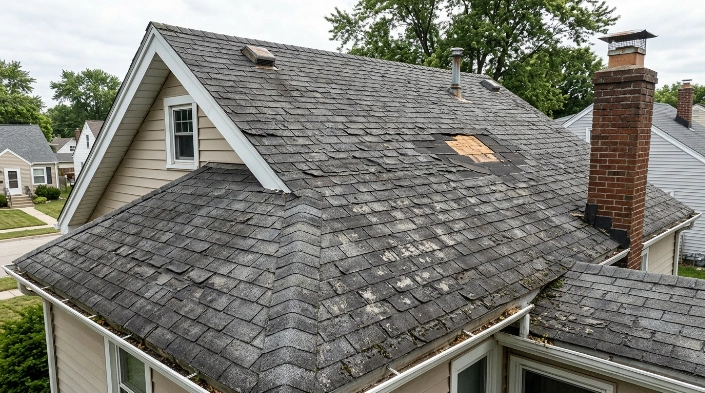
No single symptom automatically means you need an entirely new roof. The strongest case for replacement occurs when several warning signs appear at the same time.
1. Your Roof Is Near the End of Its Expected Lifespan
Start with the age of the roofing material.
Roof coverings do not last forever, and their expected lifespan varies considerably by material, climate, installation quality, ventilation, maintenance, and storm exposure.
Approximate service-life ranges commonly used for planning include:
| Roofing Material | Approximate Expected Life | What to Watch For |
|---|---|---|
| 3-tab asphalt shingles | Around 20 years | Curling, granule loss, cracking |
| Architectural asphalt shingles | Around 30 years | Bald spots, splitting, widespread wear |
| Wood roofing | Around 25–30 years | Splitting, rot, moss, deterioration |
| Metal roofing | Around 40–80 years | Corrosion, failed fasteners, seam problems |
| EPDM membrane | Around 15–25+ years | Open seams, punctures, shrinkage |
| Clay or concrete tile | 50–100+ years in suitable conditions | Cracked tiles, failed underlayment |
| Slate | Often 60–100+ years | Broken slate, flashing or fastener deterioration |
These are planning estimates rather than expiration dates. The InterNACHI home life-expectancy guide emphasizes that climate, installation, maintenance, and severe weather can significantly change a roof’s actual lifespan.
A 22-year-old asphalt roof in excellent condition might not require immediate replacement. A poorly ventilated 12-year-old roof with severe deterioration might.
Age should trigger closer inspection, not an automatic replacement decision.
2. Shingles Are Curling, Cracking, or Breaking Across the Roof
One broken shingle after a storm can usually be repaired.
Dozens of cracked, curled, brittle, or broken shingles across multiple roof sections are different. They suggest the roofing material itself is deteriorating rather than experiencing one isolated defect.
Look from the ground for:
- Shingle edges curling upward
- Corners turning upward or downward
- Horizontal or vertical cracks
- Pieces breaking away
- Large areas that look uneven or weathered
- Shingles that have become visibly brittle
Widespread deterioration is especially important on an older roof because replacing individual shingles may simply move the next failure to another location.
3. Large Areas Have Lost Their Protective Granules
Asphalt shingles are covered with mineral granules that protect the underlying asphalt from sunlight and weather.
Some granule loss is normal, particularly with new shingles. Excessive loss on an aging roof can indicate deterioration.
Check for unusual amounts of granules in:
- Gutters
- Downspouts
- Areas below roof edges
You may also notice dark or smooth-looking patches where shingles have lost much of their surface coating.
The National Roofing Contractors Association’s homeowner guidance identifies excessive granules in gutters and downspouts, cracked or warped shingles, loose seams, and deteriorated flashing among visible signs that a roof may have problems.
Granule loss does not always require immediate replacement, but widespread bald areas on an older asphalt roof deserve professional evaluation.
4. Shingles Are Missing in Several Areas
A few shingles can blow off during a severe storm without destroying the entire roofing system.
Repeated or widespread shingle loss is more concerning.
It may indicate:
- Aging adhesive seals
- Improper installation
- Wind damage
- Deteriorated shingles
- Fastener problems
Matching repairs can also become difficult on older roofs because the original shingle color or model may no longer be available.
When missing shingles occur across several slopes, a contractor should determine whether repairs will provide a durable solution or simply delay replacement.
5. You Have Recurring Roof Leaks
A roof leak does not automatically mean you need a new roof.
Water can enter through one damaged flashing, a plumbing vent, a skylight, a chimney connection, a damaged shingle, or another localized weak point.
One isolated leak may therefore be repairable.
Recurring leaks are different.
If you repair one area and water later appears somewhere else, the roofing system may have multiple failure points.
Inside your home, watch for:
- Brown or yellow ceiling stains
- Damp attic insulation
- Water marks on rafters
- Peeling paint
- Damp drywall
- Musty attic odors
- Water dripping during heavy rain
Remember that the location of an interior stain may not be directly below the entry point. Water can travel along roof decking, rafters, or other building components before becoming visible.
Multiple active leaks—especially on an aging roof—make replacement increasingly worth considering.
6. The Roof Deck Is Sagging or Feels Structurally Compromised
The roof deck, sometimes called sheathing, is the structural surface beneath the roofing material. Plywood or oriented strand board (OSB) is commonly used.
Sagging is much more serious than cosmetic shingle wear.
From the ground, look for roof planes that appear:
- Wavy
- Dipped
- Sunken
- Uneven where they should be straight
Sagging can result from moisture-damaged decking, structural problems, excessive loading, or deterioration of framing components.
Do not climb onto a visibly sagging roof.
Structural problems require professional evaluation. Replacing shingles alone will not solve damaged decking or framing beneath them.
7. Flashing Is Failing in Multiple Locations
Flashing is thin metal or another waterproof material installed where roofs meet walls, chimneys, valleys, skylights, vents, and other transitions.
These areas are common leak points because they interrupt the main roofing surface.
One loose flashing component can often be repaired.
However, widespread corrosion, separation, previous patching, failed sealants, or repeated leaks around several penetrations may indicate that the entire roof system is aging.
During replacement, contractors can remove deteriorated materials and rebuild these transitions rather than repeatedly patching them.
8. Your Roof Has Significant Storm, Wind, or Hail Damage
Storm damage can shorten the life of a roof even when the roof looked healthy beforehand.
High winds may:
- Lift shingle edges
- Break adhesive seals
- Remove roofing material
- Damage ridge caps
- Loosen flashing
Hail may bruise or fracture asphalt shingles. Falling branches can puncture roofing and decking.
Some damage is difficult to identify safely from the ground.
NRCA recommends professional inspection following severe weather because important damage may not be obvious to a homeowner, and it specifically advises homeowners to avoid walking on roofs without appropriate experience and safety equipment.
If you suspect storm damage, photograph what you can safely see from the ground and contact your insurer promptly if you may file a claim.
Avoid signing an immediate replacement contract simply because someone knocks on your door after a storm. Obtain a written inspection and understand exactly what is damaged.
9. Poor Ventilation Has Accelerated Roof Deterioration
Roof lifespan is affected by more than the exterior covering.
An attic that cannot properly manage heat and moisture may contribute to premature deterioration.
Possible ventilation-related warning signs include:
- Excessive attic heat
- Condensation
- Damp insulation
- Mold growth
- Rusted fasteners
- Moisture-damaged decking
- Ice dams in cold climates
Replacing shingles without correcting an underlying ventilation problem can allow the same conditions to damage the new roof.
A replacement estimate should therefore consider the whole roofing system, including intake vents, exhaust vents, insulation, decking, and moisture management.
10. Repairs Are Becoming Frequent and Expensive
Individual repairs make sense when a roof is fundamentally sound.
The decision changes when repair calls become routine.
For example, imagine an older asphalt roof with one flashing repair last year, missing shingles this year, another ceiling leak six months later, and widespread granule loss.
Each defect might be repairable individually. Together, they suggest broader deterioration.
Ask yourself:
Am I investing money in extending a healthy roof—or repeatedly paying to patch a roof that is reaching the end of its useful life?
A professional inspection can help answer that question.
Repair vs. Replacement: How to Decide
The condition of the entire system matters more than one visible defect.
| Situation | Repair May Make Sense | Replacement May Make More Sense |
|---|---|---|
| One small leak | Yes, if source is isolated | If leaks are widespread or recurring |
| A few missing shingles | Usually | If shingle loss occurs across several areas |
| Local flashing failure | Often | If flashing and roof covering are deteriorated throughout |
| Young roof | Often | If major structural or storm damage exists |
| Roof near expected lifespan | Possibly | Increasingly likely if other problems are present |
| Damaged decking | Localized deck repair may work | Extensive deck deterioration may justify replacement |
| Frequent previous repairs | Less attractive | Often worth comparing replacement cost |
The decision should not be based on age alone.
A younger roof can need replacement after catastrophic damage, while an older but well-maintained roof may still have serviceable life remaining.
What Roof Replacement Cost Factors Should You Consider?
There is no reliable one-price-fits-all roof replacement cost.
Two similar-looking homes can produce very different estimates.
Major cost factors include:
Roof Size
Roofers commonly estimate material quantities by roofing area rather than the home’s interior floor area.
Complex overhangs, attached garages, porches, dormers, and multiple roof sections increase total roofing area.
Roof Pitch and Complexity
A steep or complicated roof normally requires more labor and safety planning than a simple low-slope design.
Valleys, hips, skylights, chimneys, walls, and roof penetrations add detail work.
Roofing Material
Asphalt shingles, metal panels, tile, slate, wood, EPDM, and TPO have different material and installation requirements.
Tear-Off Requirements
Removing old roofing adds labor and disposal costs.
Hidden decking deterioration may not become fully visible until the old material has been removed.
Decking Repairs
Soft, rotten, or damaged roof sheathing must be repaired before the new roofing system is installed.
Ask contractors how replacement decking is priced before work begins.
Flashing, Ventilation, and Accessories
A complete estimate may also involve:
- New flashing
- Ridge vents
- Intake ventilation
- Pipe boots
- Underlayment
- Ice-and-water protection where required
- Drip edge
- Gutters or drainage corrections
Do not compare estimates based only on the bottom-line price. Compare what each contractor is actually installing.
Warranty Coverage Can Affect the Decision
Homeowners sometimes assume a long manufacturer warranty guarantees that every roof problem will be covered.
That is not necessarily the case.
Roofing warranties can contain separate terms for manufacturing defects, workmanship, installation requirements, wind coverage, maintenance responsibilities, and transferability.
Before replacing your roof, ask:
- What does the manufacturer’s material warranty cover?
- What workmanship warranty does the contractor provide?
- How long does each warranty last?
- Is coverage prorated?
- Are registration or maintenance requirements involved?
- Is the warranty transferable if you sell the home?
Keep contracts, invoices, product information, photographs, and warranty paperwork together.
What You Can Safely Check Yourself

A homeowner can learn a surprising amount without walking on the roof.
Start from the ground with binoculars if needed.
Look for missing shingles, damaged gutters, sagging areas, debris, lifted metal, damaged flashing that is visible from below, and obvious storm damage.
Then inspect accessible interior areas such as the attic.
Look for staining, damp insulation, daylight through unintended openings, moisture, or damaged wood.
Do not climb onto a wet, icy, steep, damaged, or questionable roof.
Roof work involves serious fall hazards. OSHA’s residential construction fall-protection guidance illustrates why professional roofing work requires proper access systems and fall protection.
Homeowners generally do not have the training or equipment roofing crews use.
Expert Tip: Take dated ground-level photos of each side of your roof once or twice a year. Comparing today’s photos with older ones makes gradual changes—such as curling shingles, staining, or missing material—much easier to spot.
When to Consult a Licensed Roofing Contractor
Schedule a professional roof inspection when:
- You have recurring or unexplained leaks.
- Your roof is approaching its expected service life.
- Significant wind, hail, or falling-tree damage occurred.
- Large areas of shingles are cracked, missing, or deteriorated.
- The roof appears sagged or structurally uneven.
- You see moisture-damaged decking.
- You are unsure whether repair or replacement offers better value.
- You need documentation for an insurance claim.
- You are planning to buy or sell a home with an aging roof.
Depending on your location, licensing rules for roofing contractors vary. Verify applicable state and local requirements.
For a major replacement, getting two or three detailed written estimates can also help you compare scope rather than simply price.
A proper proposal should clearly identify the materials, tear-off work, underlayment, flashing, ventilation work, decking-replacement terms, cleanup, warranty, and payment schedule.
Consider More Than Shingles When Replacing the Roof
A roof replacement provides an opportunity to address weaknesses that may otherwise remain hidden.
Ask the contractor to evaluate:
Decking
Damaged or improperly spaced roof sheathing can compromise the new system.
Underlayment
Underlayment is the protective layer installed between the deck and primary roof covering.
Flashing
Critical transition areas should be detailed correctly rather than relying on excessive sealant as a substitute for proper flashing.
Ventilation
Balanced intake and exhaust ventilation may help manage attic heat and moisture.
Drainage
Gutters and downspouts should direct water away efficiently.
Energy Performance
If you live in a hot climate, replacement is also an opportunity to discuss reflective roofing products. ENERGY STAR’s cool roof guidance explains that reflective roofing can reduce roof surface temperatures and reduce heat transferred into the building.
Whether that provides meaningful savings for your house depends on climate, insulation, roof design, material, and other factors.
Common Mistakes Homeowners Should Avoid
- Assuming every leak requires replacement. Localized flashing or shingle damage may be repairable.
- Assuming an old roof automatically requires replacement. Condition matters along with age.
- Ignoring repeated small problems. Several minor failures can collectively signal system-wide deterioration.
- Walking on the roof to inspect it. Roofing surfaces can be slippery, fragile, steep, or structurally compromised.
- Choosing a contractor only by lowest price. A low estimate may exclude important items included by another contractor.
- Failing to compare materials. Product type, underlayment, ventilation, flashing, and installation details matter.
- Ignoring attic moisture or ventilation problems. A new roof covering will not automatically correct underlying building issues.
- Using temporary patches as permanent repairs. Roofing cement and sealant have appropriate uses, but repeated surface patching can hide a larger problem.
- Throwing away documentation. Keep inspection reports, photos, estimates, contracts, warranties, and insurance correspondence.
- Waiting for major interior damage. Roof problems are generally easier to manage before water reaches ceilings and walls.
FAQs
How do I know if my roof needs replacing or just repairing?
Consider the extent of the damage. One isolated leak, small flashing defect, or few missing shingles may be repairable. Widespread deterioration, repeated leaks, damaged decking, extensive storm damage, or multiple problems on an aging roof make replacement more likely.
Does a leaking roof always need to be replaced?
No. A leak can come from one damaged shingle, pipe boot, flashing detail, skylight, or another local defect. A professional inspection should identify the source before you assume the entire roof needs replacement.
At what age should a roof be replaced?
There is no universal replacement age. Standard asphalt shingles often have shorter expected service lives than metal, tile, or slate. Installation quality, climate, ventilation, maintenance, and severe weather can make a roof fail earlier or remain usable longer.
Can I inspect my roof myself?
You can perform a useful visual inspection from the ground and inspect accessible attic areas. Avoid walking on the roof unless you have appropriate training and safety equipment. Have a professional evaluate storm damage, structural concerns, steep roofs, or difficult-to-identify leaks.
Is granule loss a sign I need a new roof?
Minor granule loss does not automatically require replacement. Heavy granule accumulation combined with bald shingles, cracking, leaks, and an aging roof is more concerning and should be professionally evaluated.
Can hail damage require complete roof replacement?
Yes, but not every hail event results in replacement. The outcome depends on the roofing material, hail severity, extent of damage, affected area, roof condition, insurer requirements, and whether reliable repairs are possible.
Should I replace my roof before it starts leaking?
Sometimes. Waiting for active leaks is not always the best strategy, especially when an older roof already has widespread deterioration. A professional inspection can estimate condition and help you plan replacement before emergency water damage occurs.
Conclusion
Learning how to tell if your roof needs to be replaced means looking at the whole roofing system rather than focusing on one cracked shingle or one ceiling stain.
Pay attention to the roof’s age, widespread material deterioration, granule loss, missing shingles, recurring leaks, flashing failure, storm damage, ventilation problems, and the condition of the decking.
One isolated defect may call for a repair. Multiple problems across an aging roof make full replacement more reasonable to investigate.
Most importantly, do not put yourself at risk trying to diagnose roof problems from the rooftop. Start with a safe ground-level and attic inspection, document anything unusual, and have a qualified roofing contractor evaluate significant damage.
A good inspection should give you something more useful than a simple sales recommendation: a clear explanation of what is failing, why it is failing, and whether repairing or replacing it is the more practical long-term option.