
Roof Replacement: What Homeowners Need to Know

A roof replacement is one of the biggest maintenance projects most homeowners will face. It can also be confusing. You may be wondering whether your roof truly needs replacing, how much work is involved, which material makes sense, and whether the estimate sitting on your kitchen counter is reasonable.
Understanding what homeowners need to know about roof replacement can make the process much less stressful. The right decision depends on more than the age of your shingles. Leaks, storm damage, ventilation, roof decking, material condition, warranties, labor quality, and your long-term plans for the home all matter.
This guide explains how roof replacement works, when replacement makes more sense than repair, what affects the cost, how roofing materials compare, what to ask contractors, and how to protect yourself during the project.
Quick Answer
Roof replacement involves removing or covering an existing roofing system and installing new roofing materials designed to protect the home from weather. Homeowners should consider roof age, leaks, widespread damage, decking condition, ventilation, material lifespan, contractor qualifications, warranties, labor quality, and total project cost before deciding to replace a roof.
What Is a Roof Replacement?
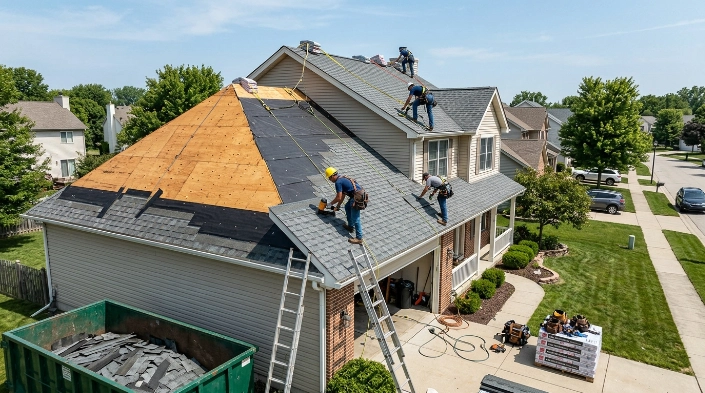
A roof replacement is more than installing new shingles.
Depending on the project, the contractor may remove the existing roofing material, inspect the underlying roof deck, replace damaged wood, install underlayment and flashing, improve ventilation, and then install the new roof covering.
Understanding a few basic roofing terms helps when reviewing estimates.
Roof decking is the wood surface, usually plywood or oriented strand board, attached to the roof framing.
Underlayment is a protective layer installed between the decking and exterior roofing material.
Flashing is metal or another waterproof material installed around roof penetrations and transitions, including chimneys, vents, valleys, and walls.
Roof pitch describes how steep the roof is.
These parts work together as a system. A new shingle layer alone cannot compensate for rotten decking, improperly installed flashing, or poor attic ventilation.
How Do You Know When a Roof Needs Replacement?
Roof age is useful, but it should not be the only reason you replace a roof.
A 15-year-old roof exposed to severe hail, poor ventilation, or repeated leaks might deteriorate faster than a properly installed older roof in a mild climate.
Watch for several warning signs occurring together.
Aging or Deteriorating Shingles
Asphalt shingles may begin curling, cracking, losing granules, or becoming brittle as they age.
A few damaged shingles can often be repaired. Widespread deterioration across several roof slopes may indicate that repairs are becoming less practical.
Repeated Roof Leaks
One isolated leak does not automatically mean you need a new roof.
A leak around a plumbing vent, chimney, skylight, or damaged flashing may be repairable.
However, repeated leaks in different areas can indicate broader roofing problems. Water entering through several locations can also damage insulation, ceilings, wall cavities, and roof decking.
Storm or Hail Damage
High winds can lift or remove roofing materials. Hail may bruise or fracture shingles. Falling branches can damage both the roof covering and the structure underneath.
After severe weather, avoid assuming that everything visible from the ground tells the full story. Some damage requires close professional inspection.
Sagging Roof Areas
A visibly sagging roof requires prompt attention.
Sagging may indicate deteriorated decking, framing problems, moisture damage, or excessive loads. Because these issues can involve the structure of the home, they should not be treated as a simple shingle repair.
Extensive Granule Loss
Asphalt shingles have mineral granules that help protect them from ultraviolet exposure and weather.
Some loose granules are normal, particularly on newer roofs. Heavy or widespread granule loss on an aging roof can be a sign that shingles are nearing the end of their useful life.
Repair or Replace: Which Makes More Sense?
One of the hardest decisions is determining whether to repair part of the roof or replace the whole system.
A repair may make sense when:
- Damage is limited to a small area.
- The rest of the roof remains in good condition.
- The roof is relatively young.
- A leak has a clearly identifiable cause.
- Matching roofing material is available.
- Decking and structural components are sound.
Replacement becomes more reasonable when:
- Damage is widespread.
- Repairs are becoming frequent.
- Large sections of roofing material are deteriorating.
- Multiple areas leak.
- The roof has reached or exceeded the typical service life of its material.
- Significant decking problems exist.
- A major storm has caused extensive damage.
There is no universal age at which every roof must be replaced. Condition, installation quality, maintenance, climate, exposure, and material type all affect longevity.
The National Roofing Contractors Association emphasizes the importance of regular inspection and maintenance for long-term roof performance. NRCA roof maintenance guidance
Typical Roof Lifespan by Material

The following ranges are useful for planning, but they are not guarantees.
| Roofing Material | Typical Planning Range | Important Considerations |
|---|---|---|
| Asphalt shingles | About 15–30 years | Quality, ventilation, sun exposure, storms, and installation affect lifespan |
| Architectural asphalt shingles | About 20–35 years | Usually thicker and more durable than basic three-tab shingles |
| Metal roofing | About 40–70 years | Installation quality, coating, panel type, and corrosion exposure matter |
| Clay or concrete tile | 50+ years | Tiles may last a long time, but underlayment may need attention sooner |
| Wood shake | About 20–40 years | Maintenance, moisture, fire exposure, and climate are important |
| EPDM/TPO low-slope roofing | About 20–30 years | Seams, drainage, membrane quality, and installation strongly affect performance |
Use these figures as general planning ranges rather than automatic replacement deadlines.
A professional roof inspection can provide a better picture of the roof’s remaining serviceable life.
What Happens During a Roof Replacement?
Although details vary by roofing system, a typical replacement follows several stages.
1. Property and Roof Preparation
The contractor prepares the property for falling debris and equipment.
Tarps or other protective materials may be placed near siding, landscaping, windows, air-conditioning equipment, and walkways.
Roofing materials may also be delivered before work starts.
2. Existing Roofing Is Removed
For a full tear-off, contractors remove the old shingles or other roof covering.
Removing the material exposes the decking so hidden deterioration can be identified.
Some local codes and roof systems permit additional roofing layers in certain circumstances. However, installing new material over an old roof can make it harder to inspect the decking and may affect warranties or future repairs.
3. Roof Decking Is Inspected
Once exposed, the decking is checked for deterioration, soft areas, water damage, or missing sections.
Damaged decking should be replaced before new roofing material is installed.
This is also why a final bill can sometimes exceed the original estimate: hidden decking damage may not be visible until the old roof comes off.
4. Water-Protection Components Are Installed
The contractor installs the required underlayment and may install ice-and-water protection in vulnerable locations depending on climate, code requirements, and roofing design.
Flashing around valleys, chimneys, vents, walls, and other penetrations is also inspected or replaced as needed.
5. New Roofing Material Is Installed
The roofing material is installed according to the system’s requirements.
Correct fastening matters. Improper nail placement, inadequate flashing, poor alignment, or shortcuts around penetrations can reduce roof performance even when high-quality materials are used.
6. Ventilation and Roof Components Are Finished
Ridge vents, intake vents, plumbing vent boots, flashing, and similar components are completed.
The contractor should also remove debris and roofing nails from the property.
How Much Does Roof Replacement Cost?
There is no single reliable national price that applies to every house.
Roof replacement cost depends on the roof itself, the material selected, local labor rates, disposal costs, building-code requirements, and the amount of hidden work discovered after tear-off.
Major cost factors include:
- Total roof area
- Roof pitch and complexity
- Number of valleys, dormers, skylights, and penetrations
- Roofing material
- Number of existing roofing layers
- Tear-off and disposal requirements
- Decking repairs
- Flashing replacement
- Ventilation improvements
- Labor costs
- Permit requirements
- Accessibility around the property
- Local code requirements
Roofers often measure roof size in squares. One roofing square equals 100 square feet of roof surface.
Remember that roof area is not necessarily the same as your home’s floor area. A steep or complex roof can have considerably more surface area.
Compare the Scope, Not Just the Bottom-Line Price
When comparing estimates, check whether each contractor is pricing the same work.
One proposal may include new flashing, upgraded underlayment, disposal, ventilation work, permits, and decking allowances, while another may exclude several of those items.
A low estimate is not automatically a bargain.
Ask each contractor to explain exactly what is included and how unexpected repairs will be priced.
Choosing the Right Roofing Material
Replacing a roof gives homeowners an opportunity to reconsider the roofing material rather than automatically installing the same product again.
Asphalt Shingles
Asphalt shingles remain common because they provide a practical balance between cost, availability, appearance, and installation complexity.
They come in several grades and styles.
Their disadvantages include a generally shorter lifespan than some premium roofing systems and sensitivity to severe weather, heat, and installation quality.
Metal Roofing
Metal roofing can provide a long service life and strong weather resistance when properly designed and installed.
The initial investment may be considerably higher than standard asphalt shingles.
Metal roofing systems also vary widely. Exposed-fastener panels, standing-seam roofs, coatings, gauges, and attachment systems should not all be treated as the same product.
Tile Roofing
Clay and concrete tile can provide long-term durability and a distinctive appearance.
However, tile is heavy. The structure must be capable of supporting the roofing system.
Walking on tile can also damage some products, making professional inspection and repair particularly important.
Wood Shake
Wood roofing provides a natural appearance but generally demands more maintenance than many alternatives.
Moisture, insects, wildfire risk, insurance requirements, and local building regulations should all be considered.
Low-Slope Roofing
Low-slope sections often require membrane systems such as TPO or EPDM rather than standard shingles.
Drainage is especially important. Water that remains on a poorly designed low-slope roof can shorten system life and expose installation weaknesses.
Ventilation Matters During Roof Replacement
A roof replacement is a good time to evaluate attic ventilation.
Roofing and attic ventilation are connected. Inadequate airflow can contribute to excess heat and moisture inside the attic.
A balanced system usually combines intake ventilation near the lower portion of the roof with exhaust ventilation higher up.
However, adding vents randomly is not the solution. Ventilation should be appropriate for the home’s roof design and attic configuration.
Insulation and air sealing also affect attic conditions.
Energy Efficiency and Roofing
Roof color and material can affect how much solar heat the roof absorbs.
ENERGY STAR explains that cool-roof materials can reduce roof surface temperature by reflecting more sunlight and releasing absorbed heat more effectively. ENERGY STAR guidance on cool roofs
That does not mean a reflective roof is automatically the best choice for every home.
Climate, attic insulation, roofing material, building design, heating needs, cooling needs, and local requirements should all be considered.
Understand Roofing Warranties Before You Sign
Roof warranties can be confusing because several warranties may apply.
Manufacturer Material Warranty
This generally covers qualifying defects in roofing materials.
Coverage limits, duration, transferability, prorated periods, registration requirements, and exclusions vary.
Contractor Workmanship Warranty
This addresses installation-related problems covered by the roofing contractor.
The length and terms vary substantially among contractors.
Do not assume a long manufacturer’s warranty protects you against poor installation.
Before signing a contract, ask which party is responsible if a leak results from installation rather than a material defect.
Keep copies of:
- Your signed contract
- Final invoice
- Material information
- Warranty documents
- Permit records
- Inspection records
- Before-and-after photos
- Insurance correspondence when applicable
How to Choose a Roofing Contractor
Contractor selection can have as much impact on roof performance as material selection.
Look for contractors who provide clear written information about the project rather than vague promises.
Ask about:
- Required state or local licensing
- General liability insurance
- Workers’ compensation coverage where applicable
- Local references
- Manufacturer certifications when relevant
- Written workmanship warranty
- Permit responsibility
- Cleanup procedures
- Start and completion expectations
- Payment schedule
- How decking repairs and change orders are handled
The Federal Trade Commission recommends checking licensing and insurance, obtaining multiple estimates, reviewing written contracts carefully, and avoiding contractors who demand full payment upfront. FTC guidance for avoiding home-improvement scams
Be especially cautious after major storms, when homeowners may face pressure from unfamiliar contractors offering immediate roof work.
What Should Be Included in a Roof Replacement Estimate?
A useful written estimate should clearly describe the work being proposed.
Look for details covering:
- Roofing material and product line
- Tear-off requirements
- Underlayment
- Flashing
- Drip edge
- Ventilation components
- Disposal and cleanup
- Permit responsibility
- Decking replacement pricing
- Labor
- Warranty coverage
- Payment schedule
- Change-order procedures
If one estimate is dramatically cheaper than the others, ask why.
Differences often come from scope, material quality, insurance coverage, labor practices, disposal, or excluded work rather than simple profit margins.
Expert Tip: Compare roofing proposals line by line instead of comparing only the final price. A slightly higher estimate that includes proper flashing, ventilation, cleanup, permits, and documented workmanship protection may represent a very different project from a bare-bones quote.
Roof Replacement and Insurance Claims
Homeowners insurance may cover qualifying sudden damage caused by events such as wind or hail, depending on the policy.
It generally should not be assumed to cover normal wear, age-related deterioration, neglected maintenance, or every type of roof damage.
After suspected storm damage:
- Document visible damage safely from the ground.
- Review your insurance policy.
- Contact your insurer if a claim may be appropriate.
- Keep photographs, estimates, invoices, and correspondence.
- Avoid signing agreements you do not fully understand.
Do not allow anyone to pressure you into signing a roofing or insurance-related contract immediately after a storm.
Roof Replacement Safety: What Homeowners Should Know
Roof work carries serious fall risks.
Homeowners should not climb onto a steep, wet, damaged, icy, or unstable roof simply to confirm what a contractor has reported.
OSHA’s residential construction guidance recognizes roofing as work involving significant fall hazards and addresses protective systems for workers performing residential roof construction. OSHA residential roofing fall-protection guidance
For homeowners, the safest approach is often to inspect from the ground, attic, or another protected location and leave rooftop inspection to qualified professionals with appropriate equipment.
Never step onto roof decking that appears soft, sagging, fire-damaged, or water-damaged.
When to Consult a Licensed Roofing Contractor
Professional evaluation is appropriate when you notice:
- Active or recurring roof leaks
- Significant storm or hail damage
- Missing roofing across a large area
- Sagging roof sections
- Soft or deteriorated decking
- Widespread shingle deterioration
- Damage around chimneys or major penetrations
- Suspected structural problems
- A roof approaching the end of its expected service life
- Insurance-related storm damage
A licensed or otherwise properly credentialed contractor, as required by your jurisdiction, can evaluate the roof system more comprehensively than a ground-level visual inspection.
If structural framing appears compromised, a structural engineer or other appropriately qualified professional may also be needed.
Common Mistakes Homeowners Should Avoid
- Choosing a contractor based only on price. Compare materials, installation details, insurance, warranties, and scope.
- Ignoring ventilation. Replacing shingles without addressing a known attic ventilation problem may leave an important underlying issue unresolved.
- Assuming every leak requires replacement. Some leaks result from isolated flashing or penetration problems.
- Assuming an old roof automatically requires immediate replacement. Condition matters as much as age.
- Ignoring flashing. Reusing deteriorated flashing can undermine an otherwise new roofing system.
- Failing to ask about decking costs. Hidden wood damage can create unexpected change orders.
- Paying the entire project cost upfront. Use a written contract and a clearly defined payment schedule.
- Trying to inspect unsafe roofing yourself. Falls are a serious hazard.
- Throwing away paperwork. Warranty, permit, material, contractor, and insurance records can become important years later.
FAQs
How long does a roof replacement take?
Many straightforward residential asphalt-shingle replacements can be completed in a relatively short period, but weather, roof size, complexity, material, crew size, inspections, and unexpected decking repairs can extend the schedule.
Can I stay in my house while the roof is being replaced?
Usually, yes. However, roof replacement is noisy and causes vibration. People working from home, young children, pets, or anyone sensitive to loud construction noise may be more comfortable elsewhere during active work.
Should old shingles always be removed?
A complete tear-off provides access to the decking and makes hidden damage easier to identify. Some jurisdictions and roofing systems may permit another layer in certain situations, but code requirements, weight, warranty conditions, and the existing roof’s condition should be considered.
Does a roof leak mean I need a new roof?
Not necessarily. A localized leak may result from damaged flashing, a vent boot, a small area of storm damage, or another repairable problem. Repeated leaks or widespread deterioration make replacement more likely to be appropriate.
What time of year is best for roof replacement?
Roofing can be performed during many seasons when weather and manufacturer installation requirements allow it. Temperature, precipitation, wind, material type, contractor availability, and regional climate are more important than choosing one universal “best” month.
Should I replace gutters at the same time as my roof?
Not automatically. Gutters in good condition may remain usable. Replacement can make sense if they are damaged, poorly sized, incorrectly pitched, leaking extensively, or interfering with the new roofing and drainage system.
How many roofing estimates should I get?
Obtaining several written estimates makes it easier to compare project scope, materials, warranties, contractor practices, and pricing. The cheapest proposal should not automatically be considered the best value.
Final Thoughts
Roof replacement is a major investment, but homeowners make better decisions when they understand the entire roofing system rather than focusing only on shingles or price.
The most important things homeowners need to know are the condition of the existing roof, whether replacement is truly necessary, what the contractor’s scope includes, which roofing material fits the home, how ventilation and flashing will be handled, what the warranties actually cover, and how unexpected repairs will be priced.
Avoid making the decision under pressure.
Get a professional evaluation when the roof is leaking, aging, storm-damaged, sagging, or showing widespread deterioration. Compare detailed written proposals, verify contractor credentials required in your area, understand the warranty, and keep safety ahead of DIY inspection.
A carefully planned roof replacement can protect the structure below it for decades. Before signing a contract, make sure you understand exactly what is being installed, who is responsible for the work, and what protection you will have after the job is finished.