
How to Prevent Electrical Damage During a Roof Leak

A roof leak is stressful enough when water starts staining drywall or dripping onto the floor. The situation becomes much more serious when that water reaches a ceiling light, outlet, wiring, appliance, electrical panel, or other energized equipment.
Knowing how to prevent electrical damage during a roof leak can help you protect your family, reduce fire and shock risks, and limit expensive damage while the roofing problem is being repaired.
This is especially important with a metal roof leak. Water entering around fasteners, seams, flashing, vents, or roof penetrations may travel along the roof deck or framing before appearing indoors. The visible drip may therefore be several feet away from the actual roof opening.
Your first priority should be safety—not immediately climbing onto the roof or trying to save an electrical device that is already wet.
This guide explains what to do during an active leak, how to recognize electrical warning signs, what equipment may need professional inspection, how roof condition affects the problem, and when to call a roofer or licensed electrician.
Quick Answer
To prevent electrical damage during a roof leak, keep people away from wet electrical fixtures, outlets, wiring, and panels. Shut off the affected circuit only from a completely dry and safely accessible location. Move dry electronics away from incoming water, control the leak without touching electrical equipment, and have water-exposed components inspected before restoring power.
Why Roof Leaks and Electricity Are a Dangerous Combination
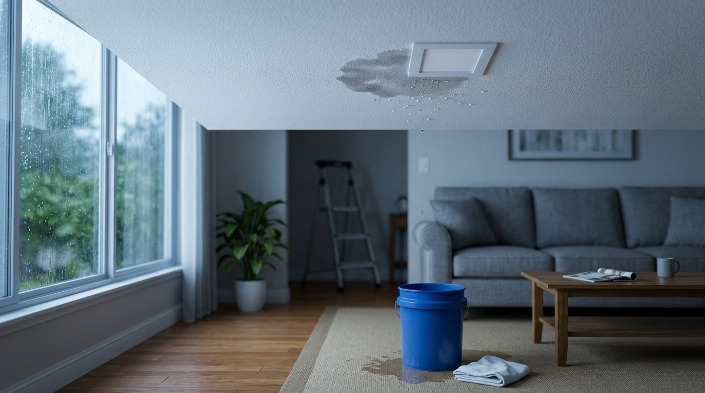
Rainwater entering a house does more than damage paint and drywall.
Water can reach:
- Electrical wiring
- Junction boxes
- Ceiling lights
- Recessed lighting
- Ceiling fans
- Wall outlets
- Switches
- Smoke alarms
- HVAC controls
- Appliances
- Surge protectors
- Circuit breakers
- The main electrical panel
When moisture enters electrical equipment, it can cause corrosion, short circuits, ground faults, unreliable connections, equipment failure, shock hazards, and in some situations fire.
The danger does not necessarily disappear when the visible water dries.
The Electrical Safety Foundation International’s guidance on water-damaged electrical equipment explains that electrical equipment exposed to water can create long-term shock and fire risks and should be evaluated by qualified professionals before being reused.
Never assume a wet outlet, fixture, breaker, or switch is safe simply because it looks dry later.
What to Do Immediately When a Roof Leak Is Near Electricity
The first few minutes matter, but rushing can make the situation more dangerous.
1. Keep Everyone Away From the Wet Area
Move children, pets, and other household members away from the affected room.
Do not touch:
- Wet electrical fixtures
- Dripping ceiling fans
- Wet switches
- Wet outlets
- Exposed wiring
- Appliances sitting in water
- A wet electrical panel
If water is dripping directly through a light fixture or another electrical component, treat the area as potentially energized.
2. Shut Off Power Only If You Can Do It Safely
If the breaker panel is completely dry and you can reach it without walking through water or touching wet surfaces, you may be able to turn off the circuit supplying the affected room.
If you are uncertain which breaker controls the area, shutting off the main disconnect may sometimes be appropriate.
However, do not approach or touch the electrical panel if the panel itself is wet, water is dripping near it, the floor around it is wet, or reaching it would require crossing standing water.
In that situation, stay away and contact your utility company, emergency services when appropriate, or a licensed electrician.
FEMA’s guidance for homeowners returning to water-damaged properties similarly advises people not to touch wet electrical equipment or equipment while standing in water. FEMA electrical and flood safety guidance
3. Do Not Keep Resetting a Tripped Breaker
A breaker that trips during a roof leak may be responding to an electrical fault.
Do not repeatedly switch it back on.
Repeated resetting can reenergize wet or damaged equipment and potentially make the situation worse.
Leave the circuit off until the reason for the trip has been identified.
4. Move Dry Electronics Before Water Reaches Them
If electronics are still completely dry and can be moved without entering the wet area, relocate them.
Examples include:
- Computers
- Televisions
- Chargers
- Power strips
- Lamps
- Small appliances
- Speakers
- Gaming systems
Unplug devices only when the plug, outlet, your hands, and the surrounding floor are dry.
Do not reach through dripping water to unplug equipment.
5. Control Water From a Safe Location
Place buckets or waterproof containers under ordinary ceiling drips only when there are no electrical components directly involved.
Use towels or plastic sheeting to protect furniture and flooring.
If water is coming through an electrical fixture, do not stand underneath it trying to position a container.
Keep the area clear until power has been safely isolated and the electrical hazard has been evaluated.
Electrical Warning Signs During a Roof Leak

Some electrical problems are obvious. Others develop behind drywall or above the ceiling.
| Warning Sign | Possible Concern | Recommended Response |
|---|---|---|
| Water dripping through a light fixture | Water reaching wiring or junction box | Keep away and shut circuit off from a safe, dry location |
| Breaker suddenly trips | Ground fault, short, or wet equipment | Leave breaker off |
| Buzzing or crackling | Arcing or damaged connection | Leave area and call an electrician |
| Burning smell | Overheating or electrical damage | Shut power off if safely possible and seek urgent help |
| Outlet or switch feels wet | Water intrusion into electrical box | Do not use it |
| Flickering lights during leak | Moisture or electrical connection problem | Turn affected circuit off if safe |
| Wet electrical panel | Serious shock and equipment hazard | Do not touch; call a professional |
| Smoke or sparks | Immediate fire/electrical emergency | Leave the home and call emergency services |
Sparks, smoke, burning odors, or visible arcing require immediate attention.
Do not remain in the affected area while trying to diagnose the problem yourself.
Why a Metal Roof Leak Can Reach Electrical Components
Metal roofing itself does not automatically create an electrical problem when it leaks. The danger comes from where the water travels after entering the building.
Common metal roof leak locations include:
- Loose or deteriorated fasteners
- Failed rubber washers
- Open panel seams
- Damaged flashing
- Cracked sealant
- Ridge-cap problems
- Roof valleys
- Plumbing vents
- Skylights
- Chimney transitions
- Rusted or punctured panels
- Storm-damaged roof edges
Once water passes the exterior roof covering, it can reach the underlayment and roof decking, which is the structural surface beneath the finished roofing.
Water may then move along rafters, trusses, insulation, pipes, wiring, or the underside of metal panels.
This explains why a ceiling light can become wet even though the roof opening is not directly above it.
Preventing Electrical Damage Before the Next Roof Leak
Emergency response is important, but prevention can reduce your risk considerably.
Keep the Roof Watertight
The best electrical protection begins outside the electrical system.
Have roof problems corrected before they become active leaks.
Pay particular attention to:
- Flashing
- Roof penetrations
- Metal panel seams
- Fasteners
- Sealants
- Ridge caps
- Gutters
- Valleys
- Corrosion
- Storm damage
Small roofing defects are usually easier to repair before they allow repeated moisture into insulation, ceilings, wiring, and wall cavities.
Check the Attic for Early Moisture
When conditions are dry and attic access is safe, watch for:
- Damp insulation
- Dark staining on decking
- Water trails on rafters
- Rusted fasteners
- Musty odors
- Mold-like growth
- Wet areas around vents
- Moisture near electrical cables or boxes
Catching a slow leak before water reaches finished ceilings can prevent a much larger problem.
Do not touch wet wiring or electrical boxes during the inspection.
Maintain Gutters and Drainage
Blocked or overflowing gutters can push water into roof edges, fascia, walls, and other areas where it does not belong.
Keep gutters and downspouts clear and make sure water drains away from the building.
Drainage maintenance will not correct failed roof flashing or damaged metal panels, but it can reduce unnecessary water buildup.
Use Appropriate Electrical Protection
Ground-fault circuit interrupters, commonly called GFCIs, are designed to quickly interrupt electricity when they detect certain leakage-current conditions.
They are particularly important where electricity and moisture may come together.
The Electrical Safety Foundation International provides a helpful explanation of how GFCI protection works.
A GFCI is an important safety device, but it does not make it safe to use wet electrical equipment.
What Happens to Electrical Equipment That Gets Wet?
The correct response depends on what became wet and how much water entered it.
Some components may require replacement rather than drying and reuse.
Potentially affected items include:
- Circuit breakers
- GFCI devices
- AFCI devices
- Receptacles
- Light switches
- Junction boxes
- Surge protectors
- Transformers
- Wiring
- Lighting components
Water can leave behind minerals and contaminants that create corrosion or conductive residue.
For that reason, homeowners should not attempt to determine the safety of exposed electrical equipment based only on appearance.
Can You Simply Let Wet Wiring Dry?
Not necessarily.
Some wiring systems may remain serviceable depending on their construction and type of exposure, while other components can be permanently compromised.
A qualified electrician should determine whether water reached:
- Cable conductors
- Cable ends
- Splices
- Junction boxes
- Breakers
- Outlets
- Switches
- Fixtures
Dry does not automatically mean electrically safe.
Should You Use Fans or Dehumidifiers?
Drying the house after a leak can help reduce moisture damage and mold risk.
However, do not immediately plug a fan or dehumidifier into an outlet in the affected area.
First make sure the outlet and circuit were not exposed to moisture.
Use drying equipment only from known-safe electrical sources after immediate electrical hazards have been addressed.
If significant water entered walls, ceilings, or insulation, professional water-damage remediation may also be appropriate.
Expert Tip
Expert Tip: When water appears near a ceiling fixture, do not focus only on stopping the visible drip. Treat it as both a roofing problem and a possible electrical problem. The safest repair plan may require a roofer to stop the water and an electrician to inspect the affected circuit.
Roof Repair, Electrical Repair, or Both?
Many leak emergencies require more than one trade.
A Roofing Contractor Handles the Water Entry Point
A qualified roofer can inspect:
- Metal panels
- Flashing
- Fasteners
- Seams
- Penetrations
- Roof decking
- Storm damage
- Drainage details
The goal is to determine why water entered and correct the source.
A Licensed Electrician Handles Electrical Exposure
An electrician should evaluate components that became wet or behaved abnormally during the leak.
This is particularly important when:
- A breaker tripped
- Water entered a light fixture
- An outlet became wet
- Wiring was submerged
- You heard buzzing
- Lights flickered
- The panel was exposed
- There was smoke, heat, or a burning smell
One professional does not necessarily replace the other.
Fixing the roof prevents more water from entering. Inspecting the electrical system addresses damage that may already have occurred.
How Cost Can Increase When a Roof Leak Reaches Electricity
A small roof leak may begin as a relatively localized repair.
Costs can rise substantially when water spreads into other systems.
Possible expenses include:
- Roofing diagnosis
- Flashing or fastener repair
- Panel repair
- Wet insulation removal
- Drywall replacement
- Electrical inspection
- Outlet or switch replacement
- Light-fixture replacement
- Wiring repairs
- Breaker or panel work
- Structural decking repairs
- Water mitigation
Emergency and after-hours work may also cost more than a scheduled inspection.
This is why responding early matters.
A minor roof defect that is repaired before the next storm may cost far less overall than allowing water to repeatedly reach the electrical system and interior finishes.
Roof Age, Condition, and Repeated Leaks
One leak does not automatically mean that a metal roof needs replacement.
Localized problems such as failed flashing, damaged fasteners, worn sealant, or an isolated puncture may be repairable.
A broader assessment becomes more important when you have:
- Multiple recurring leaks
- Widespread corrosion
- Numerous failed fasteners or seams
- Significant storm damage
- Deteriorated roof decking
- Large areas of wet insulation
- Repeated repairs that do not last
Roof age matters, but condition is usually more useful than age alone.
Before approving an expensive replacement, ask the contractor to show where the roof is failing and explain why localized repairs are no longer practical.
Also review manufacturer and workmanship warranty terms before authorizing repairs because certain repair methods may affect coverage.
Never Climb Onto a Wet Metal Roof to Stop the Leak
A wet metal roof can be extremely slippery.
Rain, wind, lightning, poor visibility, steep roof pitch, algae, and wet debris all increase the danger.
Even professional roofers use fall-protection equipment and specific work practices when working at height. OSHA’s residential roofing fall-protection guidance illustrates the seriousness of roof fall hazards.
During an active storm, concentrate on keeping people safe and controlling interior damage.
Exterior diagnosis and repair can wait until conditions are safe.
When to Consult a Licensed Roofing Contractor
Contact a qualified roofing contractor when:
- You cannot identify the leak source safely.
- Water returns after previous repairs.
- Flashing appears damaged.
- Metal panels have shifted or lifted.
- Fasteners are loose across a large area.
- Significant corrosion is present.
- The roof was hit by severe wind or hail.
- Decking feels or appears damaged.
- Multiple rooms are leaking.
- The roof is steep or difficult to access.
- Repair may involve an insurance or warranty claim.
Also call an electrician when the leak involves electrical equipment.
If structural framing or decking has been seriously affected by long-term water exposure, a structural assessment may be necessary as well.
Common Mistakes Homeowners Should Avoid
- Touching a wet light switch to see whether it still works. Leave wet electrical equipment alone.
- Resetting a breaker repeatedly. A tripped breaker may be warning you about a real fault.
- Walking through water to reach the electrical panel. Never enter a wet area to shut power off.
- Assuming a device is safe after drying overnight. Internal corrosion or contamination may remain.
- Using extension cords through a wet room. This can create another electrical hazard.
- Climbing onto a wet metal roof. Interior damage control is safer during active rain.
- Covering every roof seam with sealant. Random sealing can hide the true leak without solving it.
- Repairing drywall before finding the leak source. The ceiling may simply become wet again.
- Ignoring a small recurring stain. Repeated moisture can eventually reach wiring, decking, insulation, and framing.
- Skipping warranty documentation. Check roofing warranties before major repairs or modifications.
FAQs
Can a roof leak cause an electrical fire?
Yes. Water reaching electrical wiring, fixtures, breakers, outlets, or other equipment can create faults, corrosion, overheating, or arcing. If you notice smoke, sparks, a burning smell, buzzing, or unusual heat, leave the affected area and seek professional help immediately.
Should I turn off electricity when my roof is leaking?
If water is near electrical equipment, turning off the affected circuit can reduce risk—but only when the breaker panel and the route to it are completely dry and safe. Never walk through water or touch a wet electrical panel to shut off power.
What should I do if water is dripping from a ceiling light?
Stay away from the fixture and keep other people out of the area. Shut off the circuit from a safe, dry location if possible. Do not touch the fixture, bulb, switch, or dripping water. Have the electrical system inspected and the roof leak repaired.
Can I use an outlet after a roof leak if it looks dry?
Do not rely on appearance alone. If there is reason to believe water entered the outlet or electrical box, avoid using it until a qualified electrician determines that it is safe.
Why did my circuit breaker trip during a roof leak?
Moisture may have created a short circuit, ground fault, or other electrical problem. Leave the breaker off rather than repeatedly resetting it. An electrician can determine whether the circuit or connected equipment was affected.
Will fixing the roof solve the electrical problem?
Fixing the roof stops additional water from entering, but it does not automatically correct electrical equipment that has already become wet. When electrical components were exposed, both roofing repair and electrical evaluation may be necessary.
Does a leaking metal roof need to be replaced?
Not always. Many metal roof leaks are caused by localized problems such as damaged flashing, loose fasteners, failed sealant, or a problem around a penetration. Replacement becomes more reasonable when leaks are widespread, corrosion is extensive, decking is deteriorated, or repeated repairs continue to fail.
Conclusion
Learning how to prevent electrical damage during a roof leak starts with recognizing that the problem is not only about keeping your floors and ceiling dry.
Water near electricity requires additional caution.
Keep people away from wet electrical components, shut off affected circuits only from a safe and dry location, avoid repeatedly resetting breakers, move dry electronics before water reaches them, and never climb onto a wet metal roof during a storm.
After the immediate emergency is controlled, correct the roof leak at its source. If wiring, outlets, lights, breakers, or other electrical components were exposed to water, have them professionally evaluated before returning them to service.
Acting early can turn a potentially dangerous roof-and-electrical emergency into a manageable repair—and can help prevent a small metal roof leak from causing much larger damage.