
How to Protect Furniture From Roof Leak Water: Emergency Steps for Homeowners

A roof leak can damage much more than the ceiling. Water may drip onto sofas, beds, tables, cabinets, rugs, electronics, and valuable belongings within minutes. If the leak is coming from a metal roof, the visible drip inside may also be several feet away from the actual roof opening because water can travel along panels, decking, framing, or insulation before it reaches the room.
Knowing how to protect furniture from roof leak water helps you limit damage while you arrange a permanent roof repair. The safest approach is to move vulnerable items away from the leak, contain the water, dry anything that became wet, document the damage, and avoid dangerous electrical or roof-access situations.
Quick Answer
To protect furniture from roof leak water, first keep people away from electrical hazards, then move furniture out of the wet area. Cover items that cannot be moved with waterproof plastic, place containers under active drips, remove wet cushions, and begin drying damp furniture quickly. Arrange a roof inspection so the leak does not return.
What to Do in the First 10 Minutes
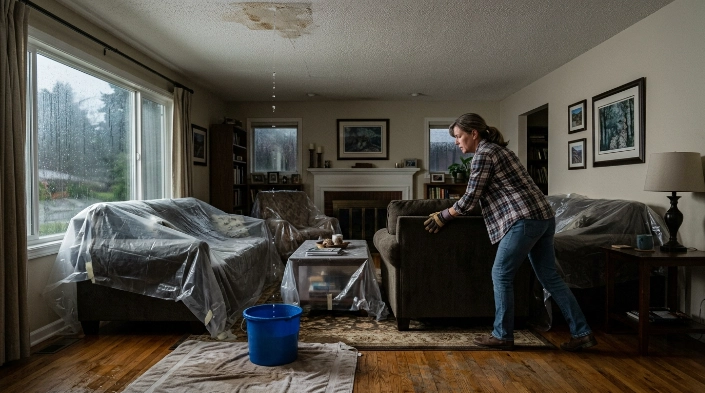
When water is actively entering the room, your first goal is not to diagnose the roof. It is to protect people and reduce interior damage.
1. Check for Electrical Danger Before Touching Anything
Look at where the water is falling. If it is dripping through a light fixture, running down a wall near an outlet, pooling around a plugged-in appliance, or reaching extension cords, treat the area as an electrical hazard.
Do not stand in water while touching electrical equipment. Do not handle wet appliances that are still connected to power. The U.S. Consumer Product Safety Commission’s household electrical safety guidance warns that mixing water and electricity can create a serious shock or fire hazard.
If you can safely reach a dry electrical panel without crossing wet flooring, shutting off the affected circuit may reduce risk. If the panel itself is wet, the leak is near service equipment, or you are unsure which circuit is involved, stay away and call a qualified electrician or emergency service provider.
2. Move Furniture Away From the Leak
Move lightweight furniture first. Take chairs, small tables, lamps, baskets, electronics, and removable cushions into a dry room.
For heavy furniture, moving it several feet away from the drip path may be enough if the surrounding floor is still dry. Lift furniture legs off wet carpet, remove cushions to dry separately, and keep wood or upholstered pieces out of standing water.
Do not strain yourself trying to move a large sofa, cabinet, or bed alone.
3. Cover Items That Cannot Be Moved
Use a clean plastic drop cloth, shower curtain, tarp, or heavy plastic sheet as a temporary shield.
Drape the covering so water runs away instead of pooling on top. Do not leave already-wet upholstery tightly wrapped after the leak stops because trapped moisture slows drying.
4. Catch and Redirect the Water
Place a stable waterproof container under a direct drip and use towels for splashes. If the ceiling is sagging or heavily saturated, keep people out from underneath it. Do not puncture bulging drywall near wiring or fixtures.
5. Document the Damage
Once everyone is safe, photograph the leak, ceiling stains, wet flooring, and damaged furniture. Record when the leak started, the weather, and which belongings became wet.
Furniture Protection Guide by Material

Different furniture materials react to water differently. The right response depends on what became wet and how long it stayed wet.
| Furniture type | Immediate action | Main concern |
|---|---|---|
| Upholstered sofa or chair | Remove cushions, blot excess water, improve airflow | Moisture trapped in foam and fabric |
| Solid wood furniture | Wipe dry, move away from wet walls and floors | Swelling, finish damage, joint movement |
| Veneer or particleboard furniture | Dry immediately and avoid standing water | Edge swelling, delamination, loss of strength |
| Leather furniture | Blot gently and air-dry away from direct heat | Staining, stiffness, finish damage |
| Metal furniture | Wipe dry and inspect joints or scratched finishes | Rust or corrosion |
| Mattresses | Move from the leak and dry promptly if lightly wetted | Deep moisture, odor, mold, difficult sanitation |
Porous furniture is more difficult to save when water has soaked deeply into padding, fiberboard, or internal layers. The EPA’s guide to mold, moisture, and your home says water-damaged areas and items should be dried within about 24–48 hours when possible to reduce the chance of mold growth.
How to Dry Furniture After the Leak Stops
Stopping the drip does not mean the furniture is safe. Moisture may remain inside cushions, wood joints, carpet beneath furniture, and the underside of upholstery.
Start drying as soon as the room is electrically safe.
Upholstered Furniture
Remove cushions and stand them on edge so air can reach more surface area. Blot wet fabric with clean absorbent towels instead of rubbing it aggressively.
If electricity is safe to use, dehumidification and controlled airflow can help remove moisture. The EPA identifies moisture control as the key to preventing indoor mold and notes that porous materials may be difficult to clean if mold develops.
If padding is saturated, stays damp, or develops a musty odor, consider professional water-restoration or upholstery cleaning.
Wood Furniture
Wipe standing water off immediately. Open drawers and cabinet doors to allow airflow. Move the piece away from damp walls and avoid placing it directly against heating equipment.
Rapid high heat can damage finishes or cause uneven movement in wood. Gentle drying and lower room humidity are generally safer than trying to “bake” the furniture dry.
Particleboard, MDF, and some veneered furniture can swell quickly when water enters exposed edges. Once these materials expand or delaminate, full restoration may not be practical.
Leather Furniture
Blot water with a clean cloth and allow the leather to dry gradually. Do not use a hair dryer, heat gun, or space heater directly on the leather. After drying, follow the furniture manufacturer’s care instructions before applying any conditioner or cleaner.
Rugs and Furniture Sitting on Carpet
Move furniture off wet carpet so both materials can dry. If the carpet is heavily soaked, water may also be in the pad underneath.
Surface dryness does not guarantee the carpet pad or flooring underneath is dry.
Preventing Mold After Roof Leak Water Reaches Furniture
Mold prevention is mostly a moisture-control problem.
The EPA advises drying wet materials within 24–48 hours when possible. It also notes that absorbent materials may sometimes need to be discarded if they become moldy because growth can penetrate porous spaces.
After a leak:
- Remove standing water.
- Separate wet cushions, rugs, and movable items.
- Increase ventilation when conditions are safe.
- Use a dehumidifier if electricity can be used safely.
- Check the underside and back of furniture.
- Inspect nearby carpet, baseboards, drywall, and wall cavities for continued dampness.
- Investigate musty odors instead of covering them with fragrance.
If visible mold develops across a large area, the room has extensive water damage, or a household member has significant respiratory or immune-system concerns, professional remediation may be the safer choice.
If the Leak Is Coming From a Metal Roof
A metal roof can leak even when the panels themselves still look intact from the ground. Water may enter around fasteners, seams, flashing, penetrations, roof transitions, sealant failures, or damaged panels.
Do not climb onto a wet metal roof during rain to search for the leak. Wet roofing can be extremely slippery, and storm conditions add wind and visibility hazards. OSHA’s residential roofing safety guidance warns against roofing operations when adverse weather creates hazardous conditions.
Instead, note where the water appears inside and photograph the area. A roofing contractor can compare the interior leak location with roof seams, flashing, valleys, vents, chimneys, skylights, and other possible entry points.
Remember that the interior drip location is a clue, not proof of the exact roof defect.
Temporary Furniture Protection Is Not a Roof Repair
Buckets, tarps, plastic sheets, and moved furniture can limit damage, but they do not stop the source of the leak.
A permanent repair may involve replacing a failed fastener, resealing a compatible roof detail, repairing flashing, correcting a penetration, replacing a damaged panel, or addressing deteriorated roof decking. The correct repair depends on the roof system and the reason water entered.
For an older roof, repeated leaks may also raise a bigger question: is continued repair still economical?
Consider the roof’s age, material type, overall condition, repair history, labor required to access the damaged area, and whether the problem is isolated or widespread. Metal roofing can have a long service life, but lifespan varies greatly with the metal type, coating, installation quality, climate, maintenance, and corrosion exposure.
Repair Cost, Warranty, and Insurance Considerations
The cost of a roof leak is not limited to the roof repair itself. Interior costs may include ceiling repair, paint, insulation, flooring, furniture cleaning, dehumidification, mold remediation, and electrical work.
Before authorizing a major repair, ask the roofing contractor to explain:
- The likely leak source.
- Whether surrounding panels or decking are damaged.
- Whether the repair is temporary or permanent.
- What labor and materials are included.
- Whether the repair affects an existing manufacturer or workmanship warranty.
- Whether photos or written findings can be provided for an insurance claim.
If storm damage caused the leak, document the condition before discarding damaged items when it is safe to do so. FEMA’s property-protection guidance recommends keeping records of belongings and using photos or video to support insurance documentation.
Coverage depends on the policy and cause of loss. Contact your insurer or agent rather than assuming furniture damage is covered or excluded.
When to Consult a Licensed Roofing Contractor
Call a qualified roofing contractor promptly when the leak is active, recurring, difficult to locate, associated with storm damage, or affecting multiple rooms.
Professional help is especially important when you notice:
- Sagging ceiling or roof decking.
- Repeated leaks in the same area.
- Water around a chimney, skylight, vent, or roof penetration.
- Loose or damaged metal panels.
- Corrosion, failed seams, or missing fasteners.
- Evidence of wet insulation or rotten decking.
- Wind or hail damage.
- A leak that returns after a previous repair.
A licensed or properly qualified contractor can inspect the roof without relying only on the stain inside the room. They can also determine whether a localized repair is reasonable or whether broader replacement work is becoming necessary.
Expert Tip: Before moving everything back into place, confirm that the leak source has been repaired and the furniture, flooring, wall, and ceiling area are truly dry. Reassembling a room too early can hide lingering moisture and make a second leak harder to notice.
Common Mistakes Homeowners Should Avoid
- Climbing onto a wet roof during the storm. Protect the interior first and leave hazardous roof access to trained professionals.
- Ignoring electricity near the leak. Water near fixtures, outlets, cords, or appliances deserves immediate caution.
- Leaving furniture in standing water. Even moving a heavy piece a short distance or elevating its legs can reduce damage.
- Wrapping wet upholstery tightly in plastic for days. Plastic can shield furniture during active dripping but may trap moisture afterward.
- Using strong direct heat to dry wood or leather. Aggressive heating can create additional material damage.
- Assuming the visible ceiling stain marks the exact roof hole. Water can travel before it appears indoors.
- Painting over a ceiling stain before the area is dry. This can hide an unresolved moisture problem.
- Throwing away damaged furniture before documenting it. If an insurance claim is possible, photograph the condition first when safe.
- Treating repeated leaks as normal maintenance. Recurring water entry can indicate a larger flashing, seam, decking, installation, or aging-roof problem.
FAQs
What Is the Fastest Way to Protect a Couch From a Roof Leak?
Move the couch out of the drip path if you can do so safely. Remove cushions, place them in a dry area, and use a waterproof sheet as a temporary shield if the couch cannot be moved. Once the leak stops, remove the plastic and begin drying any damp upholstery.
Can I Leave Plastic Over Furniture Until the Roof Is Repaired?
You can use plastic temporarily while water is actively dripping, but do not leave wet upholstered or wood furniture tightly covered for extended periods. Trapped moisture can slow drying. After the immediate leak is controlled, uncover damp items and dry them in a safe environment.
How Quickly Can Mold Grow on Wet Furniture?
The EPA recommends drying water-damaged areas and items within 24–48 hours when possible to help prevent mold growth. The actual outcome varies with temperature, humidity, material, and how wet the item became. Fast moisture removal is the safest practical goal.
Should I Use a Fan on Wet Furniture?
Fans can help with drying when electricity is safe and there is no established mold problem being disturbed. If visible mold is already present, aggressive airflow can spread spores. A dehumidifier is also useful for reducing room moisture.
Is Furniture Damaged by a Roof Leak Covered by Homeowners Insurance?
It depends on the cause and your policy. Photograph the damage and contact your insurer or agent for a policy-specific answer.
Should I Repair a Leaking Metal Roof Myself?
Simple ground-level interior protection is reasonable for many homeowners, but working on a wet or storm-damaged roof is hazardous. Metal roof leaks can involve seams, flashing, fasteners, penetrations, coatings, or decking, so professional diagnosis is often the safer choice.
When Should Wet Furniture Be Replaced Instead of Dried?
Replacement becomes more likely when porous furniture is deeply saturated, structurally swollen, contaminated, moldy, or unable to dry fully. High-value or sentimental furniture may justify evaluation by a restoration specialist before you discard it.
Conclusion
Learning how to protect furniture from roof leak water starts with controlling the immediate damage without creating a new safety hazard. Keep people away from electricity and sagging ceilings, move furniture out of the drip path, cover items that cannot be moved, catch active water, and document what happened.
Then focus on drying. Separate cushions, reduce room humidity, check hidden surfaces, and do not assume furniture or flooring is dry just because the top surface looks better.
Finally, fix the source. A leaking metal roof may need attention at a seam, fastener, flashing detail, penetration, panel, or the roof deck beneath it. If the leak is recurring, storm-related, difficult to locate, or affecting structural materials, schedule an inspection with a qualified roofing contractor.
Protecting furniture buys you time. Repairing the roof prevents the next round of damage.