
What Should You Do if Your Roof Starts Leaking on the Weekend?

A roof leak rarely waits for a convenient time. You may notice dripping water late Saturday night, during a Sunday thunderstorm, or when most local roofing offices appear closed.
So, what should you do if your roof starts leaking on the weekend? First, protect people and belongings, contain the water, document the damage, and contact an emergency roofing service if the leak is serious. Avoid climbing onto a wet or storm-damaged roof yourself.
This guide explains what you can safely do right away, when a leak becomes an emergency, how to handle a leaking metal roof, what temporary measures make sense, and when you need a licensed roofing contractor.
Quick Answer
If your roof starts leaking on the weekend, move people and valuables away from the leak, catch dripping water, check for electrical hazards, photograph the damage, and call an emergency roofer when necessary. Do not climb onto a wet or damaged roof. Temporary interior damage control is usually safer than DIY roof repair.
First, Decide Whether the Roof Leak Is an Emergency
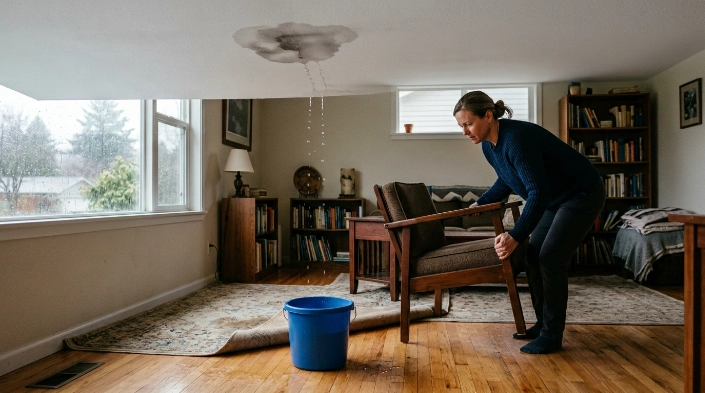
Not every roof leak requires a crew at your house at midnight. However, some situations should not wait until Monday.
Treat the leak as urgent when you see:
- Water running steadily rather than dripping occasionally
- A ceiling that is sagging, bulging, cracking, or becoming saturated
- Water near electrical fixtures, wiring, outlets, or the electrical panel
- Storm damage that has removed roofing materials
- A fallen tree or large branch on the roof
- Water entering several rooms
- Visible structural movement
- A large opening in the roof
- Significant wind or hail damage
- Water reaching insulation, walls, or expensive equipment
If the ceiling is heavily swollen with water, keep everyone away from the area underneath it. Wet drywall can become very heavy and may collapse.
If water is contacting electrical components and you can safely shut off power to the affected area from a dry location, do so. If you are uncertain, stay away and contact an electrician or emergency service.
What to Do Immediately When Your Roof Starts Leaking
The first hour is about controlling damage, not permanently repairing the roof.
1. Move People and Belongings Away From the Leak
Clear the area underneath the leak first.
Move:
- Furniture
- Electronics
- Rugs
- Artwork
- Clothing
- Boxes
- Important documents
Do not leave children or pets near a sagging or water-damaged ceiling.
If furniture is too large to move, cover it with waterproof plastic if you can do so safely.
2. Catch the Water
Place a bucket, plastic storage container, or other waterproof container beneath the drip.
If water splashes out of the bucket, place an old towel inside the bottom. This reduces splashing and protects nearby flooring.
For several leaks, use separate containers rather than trying to redirect all the water into one location.
Check containers frequently during heavy rain. A five-gallon bucket can overflow surprisingly quickly during an active roof leak.
3. Look for Electrical Hazards
Water and electricity are a dangerous combination.
Pay special attention when a leak appears around:
- Ceiling lights
- Recessed lighting
- Ceiling fans
- Smoke detectors
- Electrical outlets
- Wall switches
Never touch a wet electrical fixture.
If you cannot safely isolate electricity to the affected area, keep your distance and contact a qualified electrician.
4. Document the Damage
Once immediate safety issues are controlled, take photographs and video.
Document:
- Water dripping from the ceiling
- Ceiling stains
- Damaged drywall
- Wet flooring
- Damaged furniture or belongings
- Visible storm damage outside
- Missing roofing materials visible from the ground
- Any temporary measures you take
The National Association of Insurance Commissioners’ claims guidance recommends documenting losses with photos or videos before making temporary repairs. It also advises keeping records and receipts related to those repairs.
This documentation may become important if you file a homeowners insurance claim.
Do Not Climb Onto a Wet Roof
A leaking roof naturally makes homeowners want to find the hole immediately.
That is often the most dangerous response.
Wet roofing materials can be extremely slippery. Wind, darkness, loose shingles, damaged decking, and lightning can make weekend storm conditions even more hazardous.
The National Roofing Contractors Association’s storm-repair guidance recommends that homeowners assess storm damage from ground level rather than attempting roof repairs themselves.
The advice is especially important after:
- High winds
- Hail
- Tornadoes
- Hurricanes
- Falling-tree damage
- Heavy rain
- Ice storms
A temporary water stain is less dangerous than a fall from a roof.
Should You Put a Tarp Over the Roof?
A roof tarp can reduce water intrusion when shingles, panels, or another roofing component has been damaged.
However, installing one is not automatically a safe DIY project.
OSHA’s roof-tarping safety guidance specifically warns against installing a tarp while it is windy or raining and emphasizes the fall and electrical hazards associated with roof work.
If the roof is wet, steep, unstable, storm-damaged, or near electrical lines, let an emergency roofing contractor handle the tarp.
A professional may secure a temporary covering until permanent repairs can be completed in safe weather.
Remember that a tarp is a temporary measure, not a roof repair.
What if the Leak Is Coming Through a Metal Roof?

Metal roofing is durable, but it can still leak.
A metal roof leak may originate from somewhere other than the place where water appears inside the house. Water can travel along panels, framing, insulation, and underlayment before finally dripping through the ceiling.
Common metal roof leak sources include:
Loose or Failed Fasteners
Some exposed-fastener metal roofs use screws with rubber washers.
Over time, movement from heating and cooling can contribute to loosened fasteners or deteriorated washers. Water may then enter around the screw penetration.
Failed Seams
Standing-seam and panel roofs contain joints where metal sections meet.
Improper installation, movement, sealant failure, or physical damage can sometimes allow moisture to enter at a seam.
Flashing Problems
Flashing is the material used to waterproof vulnerable transitions.
Check professionally around:
- Chimneys
- Skylights
- Plumbing vents
- Roof-to-wall intersections
- Valleys
- HVAC penetrations
A flashing defect can create a significant leak even when the surrounding metal panels remain in good condition.
Storm Damage
Wind-driven debris can dent or puncture metal panels.
Severe wind may also damage:
- Ridge caps
- Trim
- Flashing
- Fasteners
- Sealant
- Panel edges
From the ground, you may be able to photograph obvious storm damage without getting onto the roof.
Condensation That Looks Like a Leak
Not every metal-roof moisture problem comes from rain penetration.
Poor ventilation or insulation can sometimes allow condensation to develop beneath metal roofing. Moisture may then drip into the attic or interior.
A roofer needs to determine whether you have an exterior roof leak, condensation issue, flashing failure, or another source.
Can You Find the Leak From Inside the Attic?
Sometimes.
If the attic is safely accessible, you may be able to inspect it without going onto the roof.
Use a flashlight and look for:
- Wet insulation
- Darkened wood
- Water trails
- Damp roof decking
- Dripping fasteners
- Wet rafters
- Mold-like discoloration
- Water around roof penetrations
Do not walk across exposed ceiling drywall.
Stay on proper attic flooring or structural framing where safe access exists.
Also avoid attic inspection when water is close to electrical wiring or when the roof structure appears damaged.
Water often travels before becoming visible, so the wet area inside may not be directly beneath the exterior defect.
Weekend Roof Leak Action Guide
| Situation | What You Can Do Now | What to Avoid |
|---|---|---|
| Small ceiling drip | Use a bucket, move belongings, document damage | Climbing onto a wet roof |
| Water near electricity | Keep away and shut off power only if safely possible | Touching wet fixtures |
| Sagging ceiling | Clear the room and call for help | Standing underneath it |
| Missing shingles or metal panels | Photograph from the ground and call a roofer | DIY storm repairs |
| Large roof opening | Request emergency temporary protection | Waiting several days |
| Minor leak that stops with rain | Document it and schedule an inspection | Assuming the problem is gone |
| Tree impact | Stay out of affected rooms and call professionals | Entering a structurally damaged area |
Should You Call Your Insurance Company on the Weekend?
If significant storm damage has occurred, check your insurer’s claims number or mobile app. Many insurers accept claims outside normal business hours.
Before cleaning up extensively, document the damage.
The NAIC recommends notifying the insurer promptly when filing a homeowners claim and keeping photos, videos, and information about damaged property.
Your insurance company may ask:
- When the leak started
- What weather event occurred
- Which rooms were affected
- Whether temporary repairs were made
- Whether personal property was damaged
- Whether a contractor has inspected the roof
Keep receipts for emergency services, tarps, water removal, temporary lodging, and other expenses related to the incident.
Coverage varies by policy and cause of loss.
For example, sudden wind or hail damage may be treated differently from leakage caused by long-term deterioration or neglected maintenance.
Temporary Repair vs. Permanent Roof Repair
Emergency roof work is usually intended to prevent the situation from getting worse.
A temporary repair may include:
- Professional tarping
- Temporary sealing
- Securing loose materials
- Protecting exposed decking
- Redirecting water
- Emergency removal of hazardous debris
Permanent repairs address the actual defect.
Those may involve:
- Replacing shingles
- Repairing metal panels
- Replacing flashing
- Correcting failed seams
- Replacing damaged underlayment
- Repairing decking
- Replacing vents or pipe boots
Do not assume a temporary patch solves the underlying problem.
Expert Tip
Expert Tip: If the leak stops when the rain stops, do not cancel the inspection. Dry weather can hide an active roofing defect. Photograph the leak while it is happening and show those photos to the contractor; the water pattern can help narrow down the source.
How Much Does an Emergency Roof Leak Repair Cost?
There is no single reliable weekend repair price.
Costs depend heavily on:
- Roof material
- Roof height
- Roof pitch
- Size of the damaged area
- Accessibility
- Weather conditions
- Emergency or after-hours labor
- Need for tarping
- Decking damage
- Interior water damage
- Location
- Amount of material that must be replaced
A small flashing repair and a storm-damaged roof with exposed decking are very different jobs.
Emergency work may also cost more than a scheduled weekday visit because the contractor may need to mobilize a crew outside normal working hours.
Ask what the emergency fee covers before authorizing work.
Does a Weekend Leak Mean You Need a New Roof?
Not necessarily.
NRCA’s homeowner resources note that a leaking roof does not automatically mean the entire roofing system has failed. Problems such as damaged sections or failed flashing may sometimes be repairable.
Replacement becomes more likely when the roof has:
- Widespread deterioration
- Repeated leaks
- Extensive storm damage
- Significant decking damage
- Multiple failed repair areas
- A material system nearing the end of its useful service life
The decision should consider the roof’s age, material, repair history, warranty, damage extent, and the cost difference between repeated repairs and replacement.
For example, repairing one damaged metal-roof flashing detail may make sense on an otherwise sound roof. Continually patching widespread corrosion or failed installation details may not.
Check Your Roof Warranty Before Permanent Repairs
If your roof is still covered by a manufacturer, workmanship, or contractor warranty, review the terms before allowing major permanent work.
Some warranties require:
- Approved repair materials
- Specific installation methods
- Documentation
- Authorized installers
- Prompt reporting of damage
Emergency stabilization may still be necessary to prevent further water intrusion, but keep photographs, receipts, and contractor documentation.
Avoid applying random roofing cement, coatings, or sealants simply because they are available at a hardware store. Using an incompatible product may make diagnosis more difficult and could affect warranty coverage.
When to Consult a Licensed Roofing Contractor
Contact a qualified roofing contractor when:
- Water continues entering the house
- A storm has damaged the roof
- Metal panels or shingles are loose
- Flashing is visibly damaged
- The leak is near a chimney or skylight
- Roof decking may be damaged
- The ceiling is sagging
- You cannot identify the source
- The roof has leaked repeatedly
- The home has an older roof
- You are considering an insurance claim
- Temporary repairs are needed
A contractor can inspect the exterior system, identify the actual entry point, check the decking and underlayment, and determine whether repair or replacement is appropriate.
When possible, verify licensing requirements in your state, insurance coverage, references, and written estimates before approving permanent work.
Common Mistakes Homeowners Should Avoid
- Climbing onto the roof during rain. Wet roofing surfaces dramatically increase fall risk.
- Assuming the ceiling stain is directly below the roof defect. Water frequently travels along framing or underlayment.
- Ignoring a leak after the weather clears. The opening that allowed water inside still needs attention.
- Applying excessive sealant without identifying the problem. This can hide the defect rather than repair it.
- Throwing away damaged materials before documenting them. Photograph damage first if an insurance claim may be involved.
- Hiring the first person who appears after a major storm. Verify credentials and understand the contract.
- Treating a tarp as a permanent repair. Temporary coverings are intended to buy time.
- Forgetting interior drying. Wet insulation, drywall, carpet, and framing may require drying even after the roof is repaired.
FAQs
Can a small roof leak wait until Monday?
A very small, controlled drip may sometimes wait for a normal business-hours inspection if there are no electrical, structural, or safety concerns. Continue monitoring it closely, contain the water, document the damage, and schedule a roofer as soon as possible.
Who should I call if my roof leaks at night?
For a serious active leak, look for a reputable roofing contractor offering emergency service. If the leak creates an electrical hazard, fire risk, or structural danger, contact the appropriate emergency professional as well.
Should I go onto the roof to find the leak?
Usually not, especially during rain, wind, darkness, or immediately after storm damage. Inspect from the ground or a safe interior location and let a properly equipped roofing professional perform the roof-level inspection.
Can I use a tarp on a leaking metal roof?
A tarp may temporarily protect damaged metal roofing, but installation can be dangerous. Wet metal can be extremely slippery. A professional roofer is generally the safer choice, particularly during storms or on steep roofs.
Why is my metal roof suddenly leaking?
Possible causes include damaged flashing, loose fasteners, failed seams, storm damage, penetrations, deteriorated sealants, or condensation. A professional inspection is usually needed because the interior drip may not be directly below the exterior defect.
Will homeowners insurance cover a weekend roof leak?
Coverage depends on what caused the damage and the terms of your policy. Sudden damage from a covered storm event may be treated differently from gradual deterioration, poor maintenance, or ordinary wear. Document the damage and contact your insurer for a coverage determination.
Is a leaking roof always a sign that it needs replacement?
No. Some leaks can be repaired when the rest of the roofing system remains sound. Replacement may make more sense when damage is widespread, leaks repeatedly occur, the roof is significantly deteriorated, or the system is near the end of its expected life.
Conclusion
If you’re wondering what should you do if your roof starts leaking on the weekend, focus first on safety and damage control.
Move people and belongings away from the affected area, contain the water, watch for electrical hazards, photograph the damage, and contact an emergency roofing contractor when the situation is serious.
Do not climb onto a wet, windy, or storm-damaged roof simply to find the leak.
Whether the problem involves asphalt shingles, flashing, or a metal roof leak, the visible drip inside your home may only be the final symptom of a problem somewhere else in the roofing system.
Once conditions are safe, arrange a professional inspection. Finding the actual source early can help prevent damaged insulation, drywall, decking, framing, and belongings—and give you a clearer answer about whether you need a targeted repair or a larger roofing project.