
Should You Call an Emergency Roofer for a Leak?

A roof leak can go from a small nuisance to a serious home-damage problem surprisingly fast. If water is dripping through the ceiling, running down a wall, or appearing after a storm, you may be wondering: Should you call an emergency roofer for a leak?
In many cases, yes—especially when water is actively entering the home, the ceiling is sagging, electrical fixtures are wet, or storm damage has opened part of the roof.
Metal roofs can make the decision slightly more complicated. Water may enter around a loose fastener, failed seam, flashing detail, vent, ridge cap, or damaged panel and then travel several feet before becoming visible indoors.
This guide explains when a metal roof leak is an emergency, when it can safely wait for a scheduled appointment, what to do while waiting for help, how cost and insurance may affect your decision, and when repair may no longer be enough.
Quick Answer
Should you call an emergency roofer for a leak? Call one when water is actively entering your home, a ceiling is sagging, water is near electricity, storm damage has exposed the roof, or structural damage is possible. A small inactive stain may usually wait for a prompt scheduled inspection, but it should never be ignored.
What Counts as a Roofing Emergency?
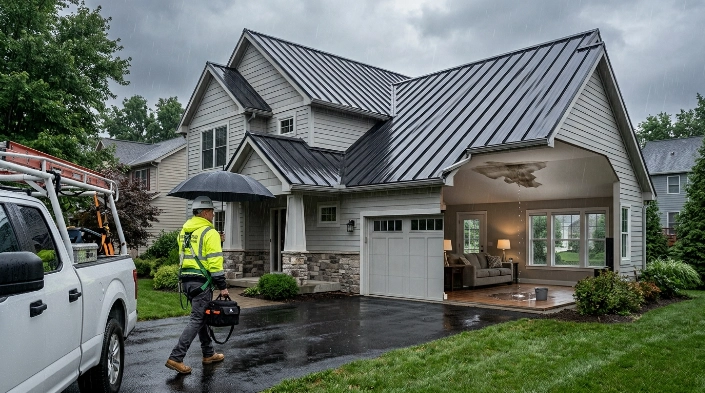
Not every roof leak requires an after-hours emergency visit.
The important question is whether the leak presents an immediate threat to your home, belongings, electrical system, or personal safety.
A roofing problem is more likely to be an emergency when:
- Water is dripping continuously or rapidly.
- Water is entering several rooms.
- A ceiling is bulging or sagging.
- Water is reaching light fixtures, outlets, or electrical wiring.
- Strong winds have lifted or removed roofing material.
- A tree limb or other object has struck the roof.
- Part of the roof appears open to the weather.
- Metal panels are loose or partially detached.
- Significant water is entering during an ongoing storm.
- You suspect damage to the roof decking or framing.
The decking is the structural surface underneath the roof covering. On many homes it is made from plywood or oriented strand board. If prolonged water exposure softens or rots the decking, the problem can become much more serious than a simple surface leak.
When a Metal Roof Leak Needs Emergency Attention
Metal roofs often last for decades, but they still depend on properly installed seams, fasteners, flashing, sealants, and penetrations.
Several metal-roof problems deserve immediate professional attention.
Water Is Entering Near Electricity
This is one of the clearest emergencies.
If water is dripping around a ceiling light, electrical panel, outlet, wiring, or powered appliance, do not touch the wet fixture or surrounding electrical components.
Keep people away from the area. If you can safely shut off power without entering a wet area or touching wet equipment, do so. Otherwise, contact the appropriate electrical or emergency professional.
The roof problem can then be addressed once the immediate electrical hazard is controlled.
The Ceiling Is Bulging or Sagging
A bulging ceiling can indicate that water is collecting above the drywall.
Water is heavy. Saturated drywall can eventually collapse, bringing insulation and debris with it.
Keep people, pets, furniture, and valuables away from the area. A sagging ceiling combined with an active roof leak warrants prompt professional attention.
Storm Damage Has Opened the Roof
Wind and falling debris can:
- Lift metal panels.
- Damage ridge caps.
- Pull flashing away from walls or chimneys.
- Puncture panels.
- Damage skylights or vents.
- Loosen fasteners.
- Tear away gutters or edge trim.
A visible opening can allow large amounts of rain to reach the underlayment, decking, insulation, and living space.
Do not attempt to climb onto the roof while high winds, rain, lightning, ice, or other dangerous conditions are present.
A Metal Panel Is Loose
A loose metal panel is more than a leak risk.
Wind can get underneath the panel and increase the damage. A partially detached panel may also create a hazard around the property.
Keep people away from the affected area and contact a roofer experienced with metal roofing.
Several Areas of the Home Are Leaking
One small leak may come from a localized flashing or fastener problem.
Multiple leaks appearing at the same time can indicate a larger failure involving seams, drainage, flashing, underlayment, or storm damage.
That is a good reason to request urgent professional diagnosis.
When a Roof Leak May Not Require an Emergency Roofer
Some leaks need prompt attention without necessarily requiring an after-hours emergency visit.
For example, you may be able to schedule a normal roofing appointment when:
- You find an old ceiling stain but the area is currently dry.
- A small leak occurred during one storm but has stopped.
- You notice minor staining in the attic without active dripping.
- One fastener or flashing detail appears questionable but there is no active water intrusion.
- The weather is dry and no additional rain is expected immediately.
Non-emergency does not mean unimportant.
Water stains often indicate that moisture has already entered the roofing system. Delaying an inspection for weeks or months may allow the problem to damage insulation, decking, drywall, or framing.
Emergency vs. Scheduled Roof Repair

| Situation | Emergency Service Usually Appropriate? | Recommended Action |
|---|---|---|
| Active water pouring through ceiling | Yes | Protect the interior and call promptly |
| Water near electrical fixtures | Yes | Avoid the area and obtain urgent professional help |
| Sagging or bulging ceiling | Yes | Clear the room and call for help |
| Metal panels lifted after storm | Yes | Stay off the roof and request emergency service |
| Tree or large branch hit roof | Yes | Keep away from damaged area and arrange inspection |
| Small dry ceiling stain | Usually no | Schedule a prompt inspection |
| Minor leak that stopped after rain | Usually no | Schedule diagnosis before the next storm |
| Aging sealant with no interior leak | Usually no | Arrange maintenance or inspection |
| Repeated leak after previous repairs | Often urgent | Have the entire problem professionally evaluated |
What Should You Do While Waiting for a Roofer?
Your priority should be reducing interior damage without putting yourself in danger.
1. Protect the Interior
Move furniture, electronics, rugs, and valuables away from the leak.
Place a bucket or waterproof container beneath manageable dripping water.
Use towels or plastic sheeting to protect flooring where appropriate.
2. Stay Away From Sagging Ceilings
Do not stand underneath a ceiling that looks swollen, bowed, cracked, or heavily saturated.
A damaged ceiling can fail without much warning.
3. Watch for Electrical Hazards
Water and electricity are a dangerous combination.
Do not touch wet switches, outlets, fixtures, wiring, or appliances. Contact an electrician or emergency service when electrical hazards are present.
4. Document the Damage
Take photographs or video from a safe indoor or ground-level location.
Document:
- Ceiling stains.
- Active dripping.
- Wet insulation visible from a safe location.
- Damaged siding or gutters.
- Fallen branches.
- Visible roof damage from the ground.
- Damaged personal property.
This documentation may help with contractor estimates and insurance discussions.
5. Do Not Climb Onto a Wet Metal Roof
A wet metal roof can be extremely slippery.
Roof work also introduces serious fall hazards. OSHA’s residential roofing safety materials emphasize the importance of proper fall protection, equipment, and training for roof work.
OSHA residential roofing fall-protection guidance
For most homeowners, inspecting from inside the attic or from the ground is far safer than climbing onto the roof during an emergency.
Why Metal Roof Leaks Can Be Difficult to Diagnose
The visible drip is not necessarily directly underneath the roof opening.
Water may travel along:
- The underside of a metal panel.
- Rafters or trusses.
- Roof decking.
- Underlayment.
- Insulation.
- Pipes or wiring.
- Structural framing.
For example, water might enter around a vent near the ridge and travel down the underside of a panel before dripping onto insulation several feet away.
This is why simply applying sealant above the visible ceiling stain is often ineffective.
A professional diagnosis should identify the actual entry point.
Common Sources of Emergency Metal Roof Leaks
Failed Fasteners
Exposed-fastener metal roofs use screws with sealing washers.
Over time, screws can loosen, washers can deteriorate, or fasteners can be installed improperly.
A single failed fastener may create a small leak. Multiple failed fasteners can indicate a broader maintenance problem.
Damaged Flashing
Flashing helps keep water out around roof transitions and penetrations.
Common flashing locations include:
- Chimneys.
- Walls.
- Skylights.
- Plumbing vents.
- Valleys.
- Roof-to-wall transitions.
Improper or damaged flashing can allow significant water intrusion during wind-driven rain.
Open Seams
Standing-seam and other metal roofing systems are designed to accommodate movement.
If a seam separates, becomes damaged, or was incorrectly installed, water may enter during heavy rain.
Failed Sealant
Sealant is used at certain joints and details, but it does not last forever.
Cracked, dried, separated, or incompatible sealant can create leak paths.
Applying more sealant without understanding the roof design may temporarily hide the problem rather than fix it.
Corrosion or Punctures
Rust, dropped tools, branches, hail, or foot traffic can damage metal panels.
Minor surface corrosion may be repairable. Extensive corrosion or multiple punctures may require panel replacement or a larger roofing solution.
Drainage Problems
Clogged gutters, blocked valleys, and poorly functioning drainage systems can cause water to back up into areas that normally remain dry.
Heavy rain often exposes these weaknesses.
How Much Does an Emergency Roof Leak Repair Cost?
Emergency roofing generally costs more than a scheduled repair because the contractor may need to respond quickly, work outside normal hours, install temporary protection, or return later for permanent repairs.
Your final cost can depend on:
- Roof height.
- Roof pitch.
- Accessibility.
- Time of day.
- Weather conditions.
- Local labor rates.
- Metal roof type.
- Leak location.
- Amount of damaged material.
- Whether panels must be removed.
- Condition of the decking.
- Wet insulation.
- Flashing replacement.
- Interior water damage.
A temporary emergency measure and a permanent repair may also appear as separate charges.
Ask the contractor to explain exactly what is included before approving non-emergency additional work.
Repair or Replace the Metal Roof?
A leak does not automatically mean the entire roof needs replacement.
Repair often makes sense when the problem is limited to:
- One damaged flashing detail.
- A small number of failed fasteners.
- A localized seam problem.
- A damaged pipe boot.
- One punctured panel.
- A limited sealant failure.
Replacement or a larger rehabilitation project becomes more reasonable when:
- Leaks repeatedly return.
- Many areas are failing.
- Corrosion is widespread.
- The roof deck has extensive water damage.
- Large sections were damaged by a storm.
- Previous repairs continually fail.
- The roof is approaching the end of its expected service life.
Metal roofing can have a long service life, so the overall condition of the system matters more than the existence of one leak.
What About Your Roof Warranty?
Before approving a permanent repair, check your available warranty paperwork.
You may have separate coverage for:
- Roofing materials.
- Manufacturer defects.
- Contractor workmanship.
- Coatings or finishes.
Using incompatible products or allowing unauthorized alterations could potentially affect some warranty terms.
Ask whether the contractor has experience with your specific metal roofing system and whether the proposed repair is compatible with the manufacturer’s requirements.
Does Homeowners Insurance Cover an Emergency Roof Leak?
Coverage depends on your policy and what caused the damage.
A sudden event such as wind, hail, or a falling tree may be treated differently from deterioration caused by neglected maintenance, corrosion, or long-term leaking.
Take photographs and keep receipts for reasonable emergency measures.
If significant storm damage is involved, contact your insurer promptly and ask what documentation they require.
Avoid making assumptions about coverage before reviewing your specific policy.
Choosing an Emergency Roofing Contractor
An emergency should not force you to hire the first person who knocks on your door.
The National Roofing Contractors Association recommends evaluating contractors based on factors such as insurance, licensing where required, references, written proposals, workmanship, and business history—not simply choosing the lowest bid.
NRCA guidance for selecting a roofing contractor
Ask the roofer:
- Are you licensed where licensing is required?
- Do you carry liability and workers’ compensation insurance?
- Do you regularly repair metal roofs?
- Is today’s work temporary or permanent?
- What caused the leak?
- What materials will be used?
- Is there a warranty on the repair?
- Will damaged decking or insulation be inspected?
- Can you provide photographs of the affected area?
After storms, be particularly cautious about high-pressure sales tactics. The Federal Trade Commission warns consumers about contractors who demand immediate decisions, ask for full payment upfront, or pressure homeowners into questionable arrangements after weather emergencies.
FTC guidance on avoiding home-repair scams
Expert Tip
Expert Tip: When a metal roof leaks, ask the contractor to show you the actual entry point and explain why it failed before approving the permanent repair. Repeatedly covering seams and fasteners with sealant can hide the symptom without correcting the underlying problem.
When to Consult a Licensed Roofing Contractor
Contact a licensed roofing contractor where licensing applies when:
- The leak is active or worsening.
- The roof is steep, high, wet, or difficult to access.
- Water is close to electricity.
- Metal panels are loose or damaged.
- Flashing has separated.
- A standing seam appears damaged.
- A skylight or roof penetration is leaking.
- Wind or hail damage is suspected.
- Insulation or decking is saturated.
- Leaks have returned after previous repairs.
- You suspect structural damage.
- An insurance claim may be necessary.
Professional assessment is especially important for standing-seam roofs because improperly opening, fastening, or sealing panels can create additional problems.
DIY work should generally be limited to safe interior damage control and ground-level observations unless the homeowner has the proper equipment, knowledge, and conditions for the work.
Common Mistakes Homeowners Should Avoid
- Climbing onto the roof during rain. Wet metal can be extremely slippery.
- Assuming the indoor drip is directly under the leak. Water frequently travels before becoming visible.
- Covering everything with sealant. The wrong sealant or application method can create new problems.
- Ignoring a leak because it stopped. The opening may still exist even when the weather becomes dry.
- Waiting for visible structural damage. Wet insulation and decking can deteriorate before major symptoms appear.
- Hiring an unverified storm-chaser. Check credentials, insurance, references, and written terms.
- Paying the entire project cost upfront. Understand the payment schedule before work begins.
- Ignoring warranty requirements. Some repair methods or incompatible materials may affect coverage.
FAQs
Should you call an emergency roofer for a small leak?
Not always. If the leak has stopped, there is no electrical or structural danger, and the home is protected from additional rain, a prompt scheduled inspection may be enough. Active or worsening leaks should receive faster attention.
Is a leaking metal roof dangerous?
It can be. The greatest concerns include slippery surfaces, electrical contact, saturated ceilings, damaged decking, mold-producing moisture, and structural deterioration. Avoid climbing onto a wet roof.
Can I temporarily fix a metal roof leak myself?
Interior damage control, such as moving valuables and safely collecting dripping water, may be reasonable. Roof-level repairs are much riskier, especially during bad weather. A temporary patch should never replace proper diagnosis.
Should I call a roofer while it is still raining?
Yes, you can call. The contractor may be able to advise you immediately or schedule an emergency response. However, dangerous weather may prevent roof-level work until conditions improve.
How quickly should a roof leak be repaired?
Active leaks should be addressed as soon as reasonably possible. Even a leak that stops after the storm should be inspected promptly because water may already have reached insulation, decking, or framing.
Does one metal roof leak mean I need a new roof?
Usually not. Many leaks result from isolated fastener, flashing, seam, penetration, or sealant failures. Replacement becomes more likely when damage is widespread, corrosion is extensive, or repeated repairs continue to fail.
Can a roof leak cause mold?
Persistent moisture can support mold growth, particularly in wet insulation, drywall, wood, and poorly ventilated spaces. Drying the affected area and stopping the water source quickly reduces the risk of additional moisture damage.
Conclusion
So, should you call an emergency roofer for a leak? If water is actively entering your home, the ceiling is sagging, electrical components are wet, a storm has opened the roof, or metal panels are loose, treat the problem as urgent.
A small inactive stain may not justify an after-hours emergency visit, but it still deserves a timely inspection.
With a metal roof, identifying the real source matters more than simply covering the visible area with sealant. Fasteners, seams, flashing, penetrations, drainage, and panel movement all need to be considered.
Protect the interior, stay off a wet or damaged roof, document what happened, and contact a qualified roofing contractor who can explain the cause and recommend a repair that fits the condition of the entire roofing system.
A fast, well-informed response can be the difference between a manageable roof repair and extensive water damage.