
How to Minimize Damage From a Roof Leak: A Metal Roof Emergency Guide

A roof leak can go from a small ceiling stain to damaged drywall, wet insulation, mold, ruined flooring, or electrical hazards surprisingly quickly. Metal roofs are durable, but water can still enter around fasteners, seams, flashing, vents, ridge caps, and damaged panels.
Knowing how to minimize damage from a roof leak is therefore just as important as finding the leak itself. Your first goal is not to perform a permanent roof repair during a storm. It is to keep people safe, control the water entering your home, protect belongings, dry wet materials, document the damage, and arrange a proper roof inspection.
This guide explains what homeowners should do immediately, what not to do, how metal roof leaks differ from other leaks, and when professional help is the safest choice.
Quick Answer
To minimize damage from a roof leak, move people and valuables away from the wet area, contain dripping water, shut off electricity if water is near wiring or fixtures, dry wet materials quickly, photograph the damage, and contact a qualified roofing contractor. Avoid climbing onto a wet or storm-damaged roof.
What to Do as Soon as You Notice a Roof Leak
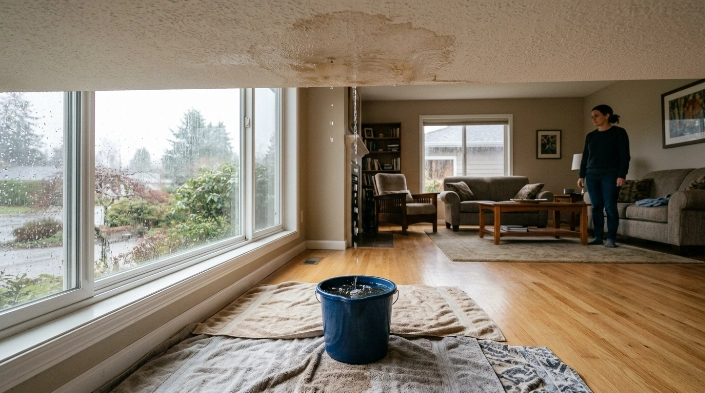
The first few minutes matter. Water may be entering faster than the visible drip suggests because insulation, roof decking, drywall, and framing can absorb moisture before water reaches the room below.
1. Protect People First
Keep children and pets away from the affected area.
If the ceiling is bulging, sagging, cracking, or dropping pieces of drywall, do not stand underneath it. Water trapped above drywall can make the ceiling heavy enough to collapse.
Move furniture and valuables out of the area if you can do so safely.
Do not prioritize furniture over personal safety. A damaged ceiling, wet electrical fixture, or unstable attic area can be dangerous.
2. Watch for Electrical Hazards
Water and electricity are a serious combination.
Be especially cautious when a leak appears near:
- Ceiling lights
- Recessed lighting
- Electrical outlets
- Extension cords
- Appliances
- Electrical panels
- Attic wiring
If water is entering around an electrical fixture, avoid touching the fixture, nearby switches, or standing water.
If you can safely reach your electrical panel without walking through water, switching off power to the affected circuit may reduce risk. If you are unsure which circuit is affected or cannot access the panel safely, stay away and contact a qualified electrician or emergency service provider.
3. Contain the Water
Place a bucket, plastic storage container, or other waterproof container beneath an active drip.
Put old towels around the container to catch splashes.
For a larger leak, several containers may be more effective than trying to catch everything in one bucket.
If water is running down a wall, protect the floor and move nearby furniture away. Hardwood, laminate flooring, cabinetry, and baseboards can absorb water and become damaged if they remain wet.
4. Relieve a Bulging Ceiling Only When It Is Safe
A ceiling bubble often means water is collecting above the drywall.
Allowing a large amount of water to remain trapped can eventually cause the ceiling to fail. However, puncturing a ceiling also carries risks because you do not know what is above it.
Do not puncture an area near electrical fixtures, wiring, or a ceiling that appears structurally unstable.
When there is any doubt, keep people away and call a professional.
Why Fast Drying Matters
Stopping the drip is only part of the problem. Materials that have already become wet also need attention.
The U.S. Environmental Protection Agency advises that water-damaged areas and materials should generally be dried within 24 to 48 hours to reduce the chance of mold growth. EPA guidance on mold and moisture
Once the immediate leak is controlled:
- Remove wet rugs, boxes, fabrics, and movable belongings.
- Wipe up standing water.
- Use a wet/dry vacuum where appropriate and electrically safe.
- Increase ventilation when outdoor conditions allow.
- Run a dehumidifier to lower indoor moisture.
- Separate wet objects so air can circulate around them.
- Check nearby walls, closets, insulation, and flooring for hidden moisture.
Do not assume an area is dry just because the surface looks dry.
Wet insulation, drywall, wood decking, and framing can hold moisture internally.
Why Metal Roof Leaks Can Be Difficult to Trace

A metal roof leak does not always appear directly beneath the place where rain entered.
Water can travel along:
- The underside of metal panels
- Roof decking
- Rafters or trusses
- Insulation
- Fasteners
- Pipes
- Flashing
- Panel seams
For example, water might enter around a loose fastener ten feet uphill from the ceiling stain, run along the underside of a panel, and finally drip into the attic somewhere else.
That is why covering the visible area with random sealant often fails.
The National Roofing Contractors Association notes that roof leaks do not necessarily mean an entire roof requires replacement and that localized problems such as damaged sections or loose flashing can sometimes be responsible. NRCA homeowner roofing resources
Common Metal Roof Leak Sources
Typical trouble spots include loose or backed-out screws, deteriorated rubber washers, failed sealant, panel seams, ridge caps, valleys, chimney flashing, plumbing vents, skylights, wall transitions, rusted metal, punctures, and storm-damaged panels.
Metal roofing also expands and contracts as temperatures change. Over time, that movement can put stress on fasteners, seams, sealants, and flashing details.
Immediate Damage-Control Checklist
| Situation | Best Immediate Action | Professional Help? |
|---|---|---|
| Small ceiling drip | Catch water and dry surrounding surfaces | Roofing inspection recommended |
| Water near a light fixture | Stay clear and shut off power if safely possible | Electrician and roofer |
| Sagging or bulging ceiling | Keep everyone away | Yes |
| Wet attic insulation | Stop moisture source and begin drying | Often recommended |
| Missing or damaged metal panel after a storm | Protect interior and document damage | Yes |
| Water entering during heavy rain | Contain water indoors until weather clears | Yes |
| Suspected structural damage | Leave unsafe area undisturbed | Immediate professional assessment |
| Mold or persistent musty odor | Correct moisture source and assess contamination | May require remediation professional |
Should You Put a Tarp Over a Leaking Metal Roof?
A properly installed tarp can sometimes reduce water entry until permanent repairs are made.
However, installing one usually requires roof access, and that is where a temporary solution can become dangerous.
Never climb onto a wet, icy, wind-damaged, steep, or storm-exposed roof simply to install a tarp.
Metal roofing can be especially slippery when wet.
OSHA’s fall-prevention information highlights the serious fall hazards associated with roofing work and the importance of appropriate fall-protection equipment. OSHA fall-prevention guidance
A professional roofer may be able to install a temporary covering, repair displaced panels, or create another short-term waterproofing solution without turning a manageable leak into a fall injury.
Temporary coverings are exactly that—temporary. They should not replace a proper diagnosis and permanent repair.
Move and Protect Belongings Before Water Spreads
Water frequently causes more damage to the contents below the roof than homeowners expect.
Move electronics, upholstered furniture, rugs, books, artwork, clothing, and important documents away from the leak.
For heavy furniture that cannot easily be moved, cover it with plastic sheeting if doing so is safe.
Check the room below and adjoining rooms as well. Water can travel inside walls or across ceilings before becoming visible.
A stain that appears six feet away from the original drip may be part of the same leak.
Document the Damage
Take photographs and video before cleaning up whenever practical.
Document:
- Ceiling stains
- Active dripping
- Wet flooring
- Damaged furniture
- Wet insulation
- Visible roof damage from the ground
- Hail or storm debris
- Water-damaged belongings
Record the date, approximate time, weather conditions, and when you first noticed the problem.
Keep receipts for emergency drying, temporary repairs, contractor visits, and materials.
If you may file an insurance claim, contact your insurer promptly and ask what documentation is required. Coverage depends on your policy and the cause of the damage, so avoid assuming every roof leak will automatically be covered.
Dry the Attic Carefully
If the attic is safely accessible, look from a secure walking surface rather than stepping between ceiling joists.
Wet insulation may need to be removed or dried depending on its type and the amount of water exposure.
Watch for darkened decking, dripping fasteners, wet rafters, compressed insulation, staining, or a musty odor.
Never enter an attic when structural damage is suspected, electrical wiring is wet, or you cannot see where it is safe to step.
Insulation can hide ceiling joists and make it easy to fall through the drywall below.
Consider the Roof’s Age and Overall Condition
A single leak does not automatically mean you need a new roof.
A relatively young metal roof with one damaged flashing detail may only require a localized repair.
However, repeated leaking becomes more concerning when combined with widespread corrosion, numerous failed fasteners, badly separated seams, deteriorated coatings, extensive storm damage, or problems across several roof areas.
Metal roofs can provide decades of service when designed, installed, and maintained correctly, but lifespan alone should never determine whether a leaking roof should be repaired or replaced.
A contractor should consider the roof’s overall condition, installation quality, previous repairs, remaining service life, and whether replacement would be more economical than continuing to patch recurring failures.
Repair Cost and Labor Considerations
The final cost of a metal roof leak repair depends heavily on what caused the leak.
A limited fastener, sealant, or flashing repair may require relatively little material. Labor can still be significant if the leak is difficult to locate or if access requires special safety equipment.
Costs tend to increase when the project involves:
- Removing and replacing panels
- Damaged roof decking
- Wet insulation
- Structural repairs
- Skylight or chimney flashing
- Extensive corrosion
- Electrical damage
- Interior drywall repairs
- Mold remediation
- High, steep, or difficult roof access
The cheapest quote is not always the least expensive solution over time. A repair that treats only the visible symptom may allow the leak to return.
Check Your Roof Warranty Before DIY Repairs
Before applying coatings, caulk, screws, patches, or other materials to a metal roof, review the manufacturer’s warranty and any workmanship warranty from the installer.
Some products must be repaired using compatible materials or specific procedures.
An incorrect sealant can fail to bond, restrict normal metal movement, trap moisture, or complicate future professional repairs.
If the roof is still under warranty, contact the installer or manufacturer before making substantial modifications whenever possible.
Expert Tip: Mark the location of the indoor drip and record whether it occurs during wind-driven rain, light rain, or only very heavy rain. Weather conditions often give a roofer valuable clues about whether the problem involves flashing, panel seams, fasteners, drainage, or another roof detail.
When to Consult a Licensed Roofing Contractor
Call a qualified roofing contractor when the leak cannot be safely located from inside the home or from the ground.
Professional help is especially important when:
- Water is entering rapidly.
- The roof was damaged by wind, hail, or falling debris.
- Multiple areas are leaking.
- Metal panels are loose or displaced.
- The roof has significant corrosion.
- Flashing around a chimney, wall, or skylight appears damaged.
- Decking feels soft or appears rotted.
- The ceiling is sagging.
- The leak repeatedly returns after previous repairs.
- Insurance documentation may be needed.
- The roof is steep, high, wet, or otherwise unsafe.
A qualified roofer should identify the true entry point instead of simply sealing the area above the interior stain.
Professional leak investigation is especially valuable because water pathways can be difficult to trace. NRCA roofing guidance emphasizes the importance of properly investigating leakage rather than making unverified remedial repairs that may not address the actual source. NRCA guidance on investigating roof leaks
Common Mistakes Homeowners Should Avoid
- Climbing onto the roof during rain. Wet metal is extremely slippery.
- Assuming the ceiling stain is directly below the roof opening. Water frequently travels before it drips.
- Applying sealant everywhere. Excess sealant can hide the real problem and may interfere with proper repairs.
- Ignoring wet insulation. Moisture can remain hidden even after dripping stops.
- Waiting several days to dry the room. Fast drying helps reduce mold and material damage.
- Painting over a ceiling stain immediately. The moisture source must be corrected first.
- Discarding damaged items before documenting them. Photograph damage when an insurance claim may be involved.
- Treating a tarp as a permanent repair. Temporary protection should be followed by professional diagnosis.
- Forgetting about gutters and drainage. Overflowing gutters and backed-up drainage can worsen roof-edge leaks.
- Ignoring repeat leaks. A recurring leak may indicate a larger installation or roof-system problem.
FAQs
How quickly should I act after noticing a roof leak?
Immediately. Move belongings, contain the water, check for electrical hazards, and begin drying wet areas as soon as it is safe. The longer building materials remain wet, the greater the risk of staining, deterioration, and mold growth.
Can I stay in a room with a leaking ceiling?
A minor isolated drip may not require leaving the entire home, but avoid the affected area if the ceiling is sagging, water is near electrical equipment, drywall is falling, or structural damage is suspected. When conditions appear unsafe, leave the area and seek professional help.
Should I climb onto my metal roof to find the leak?
Generally, no. Metal roofing can be slippery even when dry and becomes much more hazardous when wet. Homeowners can often provide useful information by inspecting the attic safely and observing exterior damage from the ground.
Does a leaking metal roof need to be replaced?
Not necessarily. Many leaks originate from localized problems such as flashing, fasteners, seams, sealants, or roof penetrations. Replacement becomes more likely when damage is widespread, structural problems are present, or repeated repairs are no longer cost-effective.
Can I use roof sealant as an emergency fix?
Sealant may be appropriate for certain professionally diagnosed repairs, but applying it randomly is not a reliable emergency strategy. The surface may be wet or dirty, the sealant may be incompatible with the roof system, and the true water entry point may be somewhere else.
How can I tell whether water damage has caused mold?
Musty odors, discoloration, visible growth, or materials that remained wet for an extended period can indicate a moisture problem. Mold may also be hidden behind drywall or inside insulation. Correct the water source first and seek professional remediation advice if contamination appears extensive.
What should I tell a roofing contractor about the leak?
Explain where you first saw water, when the leak began, whether it happens in light or heavy rain, the direction of strong winds if known, previous roof repairs, the approximate roof age, and any storm damage. Photos and videos can help the contractor narrow down possible entry points.
Conclusion
Learning how to minimize damage from a roof leak starts with controlling the situation inside your home rather than rushing onto the roof.
Protect people from falling materials and electrical hazards, catch incoming water, move valuables, dry wet materials quickly, document the damage, and arrange a qualified roof inspection.
For metal roofs, remember that the visible indoor drip may be far from the actual roof opening. Fasteners, seams, flashing, penetrations, drainage problems, storm damage, and panel movement can all contribute to leaks.
A temporary measure may protect your home for a short period, but it should never replace a proper diagnosis.
When the leak involves unsafe roof access, structural concerns, electrical hazards, repeated water intrusion, or significant storm damage, contact a licensed roofing contractor and address the source before the damage spreads.