What to Do if Water Is Coming Through the Ceiling

Water dripping through your ceiling is more than an inconvenience. It can mean rainwater has already passed through the roofing material, underlayment, roof decking, attic insulation, and ceiling drywall before finally becoming visible inside your home.
If you are wondering what to do if water is coming through the ceiling, your first priorities are protecting people, controlling interior damage, and arranging a proper roof inspection. This is especially important with a metal roof because water can enter around seams, fasteners, flashing, vents, or penetrations and travel some distance before appearing indoors.
The steps below explain how to respond safely, limit damage, identify likely causes, and decide whether you need a repair or a more extensive roofing solution.
Quick Answer
If water is coming through the ceiling, move people and valuables away, place containers under the leak, shut off electricity to the affected area if water is near wiring or fixtures, and contact a qualified roofing contractor. Do not climb onto a wet roof. Document the damage and begin drying wet materials as soon as it is safe.
What to Do Immediately When Water Comes Through the Ceiling
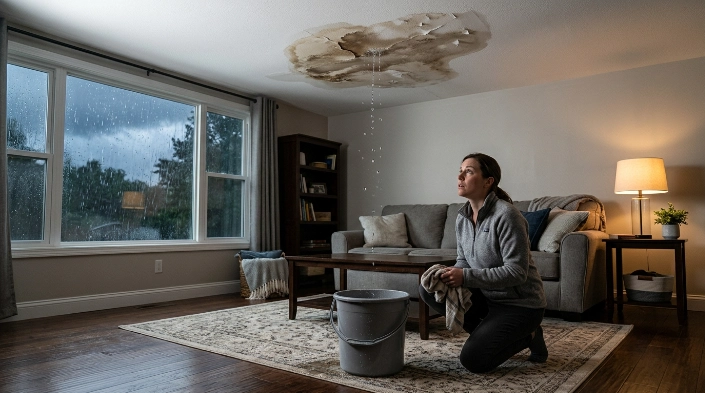
A ceiling leak can become dangerous quickly, especially if the drywall is sagging or water is near electrical fixtures.
1. Move People and Belongings Away
Clear furniture, electronics, rugs, artwork, and other valuables from underneath the leak.
If the ceiling is visibly bulging, sagging, cracking, or becoming soft, do not stand directly underneath it. Wet drywall and insulation can become heavy enough to fall.
Keep children and pets out of the affected area until the immediate hazard is controlled.
2. Catch the Water
Place buckets, plastic containers, or another waterproof container under active drips.
Protect the floor with towels or plastic sheeting. If water is splashing from a significant height, placing an old towel inside the bucket can reduce splashing.
Remember that catching the drip only protects the room temporarily. It does not stop water from entering the roof assembly.
3. Treat Electricity as a Serious Hazard
Water near ceiling lights, recessed lighting, electrical outlets, wiring, or a ceiling fan deserves extra caution.
If you can safely reach the electrical panel without entering standing water, turn off power to the affected circuit. If you are uncertain which breaker controls the area or see sparking, buzzing, smoke, or other electrical warning signs, stay away and contact an electrician or emergency service.
Never touch a wet electrical fixture to investigate the leak.
4. Photograph the Damage
Take clear photographs and video of:
- Water dripping through the ceiling
- Ceiling stains and bubbling paint
- Damaged furniture or flooring
- Sagging or broken drywall
- Attic moisture you can safely observe
- Visible exterior storm damage from ground level
Record the date and approximate time the leak started as well as the weather conditions.
Documentation can help a roofing contractor diagnose the problem and may also be useful if you later file a homeowners insurance claim.
5. Call a Roofing Contractor
An active ceiling leak means water has already entered part of the building envelope.
A qualified roofer should determine where the water actually entered rather than simply repairing the spot directly above the ceiling stain. The National Roofing Contractors Association’s guidance on investigating roof leaks emphasizes proper investigation because the visible leak location may not identify the actual entry point.
This is especially true with metal roofing. Water can follow panels, seams, rafters, insulation, pipes, and other components before dripping into the room.
Do Not Climb Onto a Wet Roof
A leaking roof often creates the temptation to climb up immediately and cover the suspected area.
That can be dangerous.
Rain, wind, wet metal panels, steep slopes, damaged roofing, and poor visibility dramatically increase fall risk. Metal roofing can become particularly slippery when wet.
OSHA provides extensive roofing and ladder fall-prevention resources because falls are a serious hazard during roof work.
For most homeowners, the safer approach is to control the problem from indoors and allow trained professionals with appropriate fall-protection equipment to handle exterior inspection and emergency repairs.
Why Is Water Coming Through the Ceiling?

The stain or drip on your ceiling tells you where water became visible—not necessarily where it entered the roof.
Several different problems can produce the same symptom.
Metal Roof Seam Problems
Standing-seam and other metal roof systems depend on properly joined panels and seams.
Movement from temperature changes, installation problems, mechanical damage, or aging components may create openings where water can enter.
During wind-driven rain, even a small vulnerability may become noticeable.
Loose or Failed Fasteners
Exposed-fastener metal roofs use screws with washers designed to seal the screw openings.
Over time, fasteners can loosen, washers can deteriorate, or screws can become improperly seated. Water may then enter through the fastener opening.
Simply coating every screw with sealant is not necessarily a durable solution. The failed component and reason for failure should first be identified.
Damaged Flashing
Flashing is the material used to direct water around vulnerable roof transitions.
Common flashing locations include:
- Chimneys
- Plumbing vents
- Skylights
- Valleys
- Walls
- Roof transitions
- HVAC or other penetrations
Loose, corroded, improperly installed, or deteriorated flashing can allow significant water intrusion even when the surrounding roofing material remains in good condition.
Damaged Panels or Punctures
Storm debris, falling tree limbs, foot traffic, tools, or installation work can puncture or deform a metal panel.
A small opening may remain unnoticed until heavy or wind-driven rain occurs.
Ridge, Eave, or Transition Problems
Metal roofing requires properly designed details at ridges, eaves, valleys, and changes in roof slope.
Water entering through one of these areas can travel along the roof structure before reaching the ceiling.
Clogged Gutters and Poor Drainage
Gutters and downspouts should move rainwater away efficiently.
Leaves, roofing debris, ice, or poor drainage can cause water to back up or overflow around roof edges and vulnerable transitions.
Correcting drainage is particularly important during prolonged heavy rain.
Condensation Instead of an Exterior Roof Leak
Not every wet ceiling comes from rain entering through the roof covering.
Warm, moist indoor air can condense on cold metal roofing or other attic surfaces when insulation and ventilation conditions are poor.
Signs that condensation may be involved include widespread moisture rather than one clear entry point, dampness occurring without rain, wet fasteners or metal surfaces throughout the attic, and recurring moisture during cold weather.
A contractor may need to evaluate ventilation, insulation, vapor movement, and indoor humidity rather than simply sealing the exterior roof.
Ceiling Leak Warning Signs and What They May Mean
| Warning Sign | Possible Cause | Recommended Response |
|---|---|---|
| Active dripping during rain | Roof opening, flashing, seam, or fastener failure | Protect interior and arrange roof inspection |
| Brown or yellow ceiling stain | Current or previous water intrusion | Check for active moisture and identify source |
| Ceiling bubbling or sagging | Water trapped above drywall | Keep people away and seek urgent help |
| Leak near chimney or vent | Flashing or penetration problem | Professional flashing inspection |
| Leak only during heavy wind-driven rain | Seam, flashing, edge, or transition weakness | Document weather conditions for contractor |
| Multiple leaks | Widespread roof or installation problem | Comprehensive roof assessment |
| Musty attic odor | Persistent moisture or possible mold | Find leak and begin drying promptly |
| Moisture without rainfall | Condensation, plumbing, or HVAC issue | Investigate non-roof sources too |
What Can You Safely Check From Inside?
You may be able to gather useful information without stepping onto the roof.
If your attic can be entered safely, use a flashlight to look around the area above the ceiling leak.
Watch for:
- Wet insulation
- Darkened roof decking
- Water stains on rafters
- Moisture around screws or fasteners
- Rust marks
- Dampness around vents or chimneys
- Water trails running down framing
- Daylight visible through an unexpected opening
Roof decking is the structural wood surface beneath your roofing system. Long-term moisture can soften or rot decking, which may eventually affect its ability to support roofing materials and fasteners.
Do not walk on questionable attic surfaces or wet insulation. Step only on safe structural framing or properly installed flooring.
Why the Leak Should Be Dried Quickly
Stopping the roof leak is only half the job. Materials inside the home also need to dry.
The U.S. Environmental Protection Agency’s mold guidance recommends drying water-damaged areas and materials within approximately 24–48 hours when possible to reduce the chance of mold growth.
Depending on the severity of the leak, drying may involve:
- Removing standing water
- Running a dehumidifier
- Increasing safe air circulation
- Removing saturated insulation
- Replacing damaged ceiling materials
- Opening concealed cavities when necessary
- Professional water-damage restoration
Do not aggressively dry an area until the active water source has been controlled. Otherwise, new rainfall may continue soaking the same materials.
Can You Temporarily Stop a Ceiling Leak?
Interior measures can reduce damage, but they rarely repair the roof itself.
A professional roofer may install an emergency tarp or perform a temporary waterproofing repair until permanent work can be completed.
Avoid covering random seams, fasteners, or panels with large amounts of roofing cement or household caulk. An incorrect patch can hide the actual failure, trap moisture, interfere with drainage, or complicate a later professional repair.
It can also affect manufacturer or contractor warranty requirements.
Expert Tip: Before anyone performs a temporary patch, photograph the leak and suspected roof damage. Good documentation gives the contractor a clearer starting point and may be valuable when storm or insurance damage is involved.
Repair or Replace a Metal Roof After a Ceiling Leak?
One ceiling leak does not automatically mean you need a new roof.
A repair may make sense when a contractor finds one localized issue, such as:
- A failed flashing connection
- Several loose fasteners
- A damaged washer
- One punctured panel
- A localized seam problem
- Minor storm damage
The surrounding roof should still be structurally sound and capable of providing useful service.
Replacement or major restoration becomes more reasonable when the inspection reveals:
- Multiple recurring leaks
- Widespread corrosion
- Significant panel deterioration
- Failed seams across large areas
- Major installation defects
- Extensive storm damage
- Rotten or weakened decking
- Repeated repairs that continue failing
Metal roofing can remain serviceable for decades when properly designed, installed, and maintained, so condition is often more important than age alone.
An older roof with one repairable flashing defect may still have useful life remaining. A newer roof with serious installation defects could require more extensive corrective work.
How Much Can a Ceiling Leak Cost to Repair?
There is no reliable single price because two different jobs may be involved.
First, the roof problem must be repaired. Second, damaged interior materials may need restoration.
Roof repair cost can be affected by:
- Roof material
- Roof pitch and height
- Leak location
- Accessibility
- Flashing complexity
- Number of damaged panels
- Decking damage
- Contractor labor
- Emergency service requirements
Interior costs can increase when water affects insulation, drywall, flooring, cabinetry, electrical components, or structural framing.
A leak addressed quickly is generally easier to contain than one that repeatedly wets concealed building materials.
Ask contractors to separate the estimate into roof repair, damaged decking if applicable, and other work. That makes competing quotes easier to compare.
What About Homeowners Insurance?
Coverage depends on your policy and the cause of the damage.
Sudden storm-related damage may be treated differently from deterioration caused by neglected maintenance, corrosion, or a long-standing leak.
If storm damage may be involved:
- Photograph visible damage.
- Record when the event occurred.
- Take reasonable steps to prevent additional damage.
- Keep receipts for emergency work.
- Review your insurance policy.
- Contact your insurer when appropriate.
- Avoid permanently altering major damaged areas before they are adequately documented.
Do not assume that every ceiling leak will be covered.
Similarly, do not assume a contractor can determine what your insurer must pay. Roofing scope, insurance coverage, deductibles, exclusions, and claim decisions are separate issues.
When to Consult a Licensed Roofing Contractor
Contact a qualified or licensed roofing contractor where licensing is required in your jurisdiction when:
- Water is actively entering the home
- The ceiling is sagging
- A storm recently damaged the roof
- The leak keeps returning
- Multiple rooms are affected
- Metal panels appear damaged
- Flashing appears loose or corroded
- You suspect damaged decking
- The leak involves a chimney, skylight, or complex penetration
- You cannot identify the source safely
- A warranty or insurance claim may be involved
A useful inspection should identify the probable entry point, explain the failed roofing component, evaluate nearby roofing and decking where appropriate, and provide a written repair recommendation.
For substantial work, compare more than price. Review licensing requirements, insurance, experience with your particular roof system, warranties, and the exact scope of work.
Common Mistakes Homeowners Should Avoid
- Climbing onto a wet metal roof. Wet panels can be extremely slippery.
- Assuming the ceiling stain is directly below the roof opening. Water frequently travels before becoming visible.
- Ignoring a leak because the rain stopped. The entry point still exists.
- Painting over a water stain before fixing the cause. Cosmetic work does not stop water intrusion.
- Applying sealant everywhere. Random sealant can hide the real defect and may create additional maintenance problems.
- Leaving wet insulation in place indefinitely. Moisture can damage surrounding materials and contribute to mold growth.
- Ignoring ventilation and condensation. Moisture is not always caused by a hole in the roof.
- Throwing away storm-damaged material before documenting it. Photos may matter for insurance or contractor evaluation.
- Choosing roof replacement solely because of one leak. A localized problem may be repairable.
- Choosing repeated cheap patches when deterioration is widespread. Continuous repairs may eventually cost more without solving the underlying problem.
FAQs
What should I do first if water is coming through my ceiling?
Move people and valuables away from the affected area, catch the water with containers, and watch for electrical hazards or sagging drywall. Document the damage and contact a qualified roofing contractor as soon as possible.
Should I poke a hole in a bulging ceiling?
A water-filled ceiling can collapse unexpectedly. Instead of standing beneath it or puncturing it without understanding the conditions above, keep the area clear and contact a qualified professional. Electrical fixtures and hidden wiring can make the situation more hazardous.
Can water coming through the ceiling cause mold?
Yes. Persistent moisture can support mold growth. EPA guidance recommends drying water-damaged materials within about 24–48 hours when possible while also correcting the water source.
Why is my metal roof leaking even though it looks fine?
Many metal roof leak points are small. Failed flashing, loose fasteners, deteriorated washers, seam problems, penetrations, installation defects, or hidden storm damage may allow water inside without obvious large exterior damage.
Does one ceiling leak mean I need a new roof?
No. A localized leak on an otherwise sound roof may need only a targeted repair. Replacement becomes more appropriate when deterioration, corrosion, structural damage, or recurring leaks affect a substantial portion of the roofing system.
Can I repair a metal roof leak myself?
Minor maintenance may sometimes be appropriate for experienced homeowners, but locating a leak is often difficult and working on a roof involves serious fall hazards. Complex seams, flashing, structural damage, storm damage, and warranty-related repairs are better handled professionally.
Why does my ceiling leak only during heavy rain?
Heavy or wind-driven rain can push water through small weaknesses that do not leak during lighter rainfall. Flashing defects, metal seams, roof transitions, clogged drainage, and vulnerable roof edges are common areas to investigate.
Conclusion
Knowing what to do if water is coming through the ceiling can prevent a stressful leak from turning into much larger interior and structural damage.
Start by protecting people, belongings, and electrical safety. Catch active water, document what happened, and begin drying affected materials once the water source is controlled.
Most importantly, do not assume the visible ceiling drip reveals the exact roof failure. Metal roof leaks can originate at fasteners, seams, flashing, penetrations, panels, or roof transitions and travel before becoming visible indoors.
A single localized problem may only require repair. Repeated leaks, widespread corrosion, damaged decking, or major storm damage deserve a more comprehensive assessment.
When the cause is uncertain or exterior work would require climbing onto a wet roof, contact an experienced roofing contractor and request a clear diagnosis before authorizing major work.