How to Protect Your Home During a Roof Leak: Immediate Steps That Limit Damage

A roof leak can turn from a small inconvenience into expensive water damage surprisingly quickly. Water may soak insulation, stain drywall, damage flooring, reach electrical fixtures, or remain hidden inside walls and ceilings long after the visible dripping stops.
Knowing how to protect your home during a roof leak can help you reduce damage while you arrange a proper inspection and repair. The priority is not climbing onto the roof or attempting a permanent DIY fix. Instead, protect people, control the water inside the house, move valuables, document the damage, and contact a qualified roofing contractor.
Metal roofs deserve particular attention because leaks may develop around seams, fasteners, flashing, penetrations, or aging sealants rather than through the center of an intact metal panel.
Quick Answer
To protect your home during a roof leak, move people and valuables away from the affected area, contain dripping water, protect floors and furniture, shut off electricity if water is near electrical components, document the damage, dry wet materials quickly, and contact a licensed roofing contractor. Do not climb onto a wet or storm-damaged roof.
What to Do Immediately When Your Roof Starts Leaking
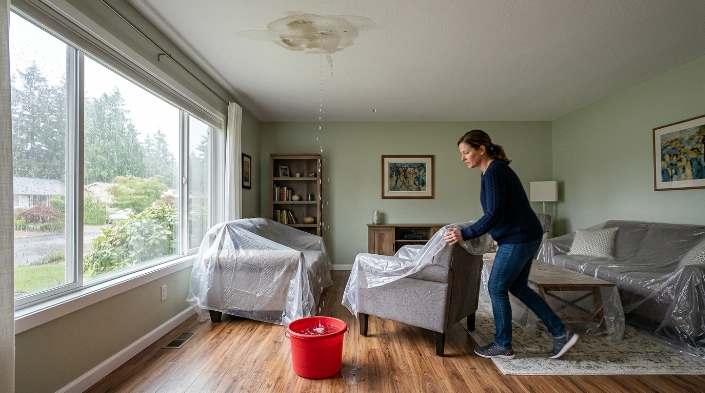
The first few minutes should focus on preventing injuries and limiting interior damage.
1. Keep People Away From the Damaged Area
Water can weaken drywall, ceiling materials, insulation, and sometimes structural components. A ceiling that begins sagging or bulging may contain trapped water and could fail without warning.
Keep children, pets, and other occupants away from the area beneath the leak.
Do not stand underneath a swollen or sagging ceiling.
If ceiling material begins falling, you hear cracking sounds, or the structure appears unstable, leave the affected room and seek professional assistance.
2. Watch for Electrical Hazards
Water and electricity are a dangerous combination.
Pay special attention when water is:
- Dripping through a light fixture
- Running near outlets or switches
- Entering around ceiling fans
- Reaching appliances or extension cords
- Pooling near electrical equipment
If it can be done safely from a dry location, turn off power to the affected circuit or area. Do not touch wet electrical equipment, breakers, fixtures, or wiring.
When there is uncertainty about electrical safety, contact an electrician or emergency service rather than attempting to investigate yourself.
3. Move Furniture and Valuables
Remove furniture, electronics, rugs, photographs, documents, clothing, and other valuable items from the leak area before they become soaked.
For objects that cannot easily be moved, cover them with waterproof plastic or another protective material.
Remember that water can spread farther than the visible drip. Check nearby walls, closets, furniture, and flooring for moisture.
4. Contain the Water
Place buckets, tubs, or waterproof containers beneath active dripping.
Protect hardwood, laminate, and other moisture-sensitive flooring with plastic sheeting or waterproof material before placing containers on top.
If dripping occurs in several areas, use multiple containers rather than allowing water to travel across the floor.
Check them frequently during heavy rain. An overflowing bucket simply creates another water problem.
Do Not Rush Onto the Roof
When homeowners discover a leak, the natural reaction is often to find the damaged spot outside immediately.
That can be extremely dangerous.
A wet roof may be slippery, and storm damage can leave panels, shingles, decking, flashing, or tree debris unstable. The National Roofing Contractors Association recommends that homeowners evaluate storm-related roof damage from ground level and leave closer inspection and repair to roofing professionals through its .
Professional roofing crews use fall-protection procedures and equipment because falls from roofs can cause severe or fatal injuries. OSHA’s describes the safeguards required for workers exposed to roof-related fall hazards.
If the roof is wet, icy, steep, storm-damaged, or difficult to access, stay off it.
Even an apparently minor metal roof leak is not worth risking a serious fall.
The Visible Leak May Not Be Directly Below the Roof Problem
One of the most confusing things about roof leaks is that the location where water appears inside the house may not reveal where water entered the roof.
Water can travel along:
- Roof decking
- Rafters or trusses
- Underlayment
- Metal panels
- Pipes
- Fasteners
- Insulation
- Electrical or mechanical penetrations
For example, rain may enter beside a metal roof vent, travel several feet along the underside of the roof deck, and finally drip through drywall in another room.
That is why repeatedly sealing the area directly above an interior stain may not solve the problem.
Professional leak investigation involves tracing the water path and inspecting the roofing system rather than simply treating the visible symptom. The similarly emphasizes identifying the actual water-entry path before determining the appropriate repair.
Protect the Attic and Interior From Further Water Damage
If you can safely enter the attic without approaching unstable materials or exposed electricity, look from a stable walking surface for signs of moisture.
Never step between ceiling joists onto drywall.
Possible warning signs include darkened decking, wet insulation, dripping fasteners, damp rafters, rust marks, water trails, and musty odors.
Wet insulation may lose effectiveness and can hold moisture against wooden framing or roof decking.
If insulation is heavily saturated, removal or replacement may eventually be necessary. The extent of the work depends on the material, amount of contamination, and how long it remained wet.
Dry Wet Areas as Quickly as Possible
Stopping visible dripping is only part of protecting your home.
Moisture remaining inside drywall, carpet, insulation, wood, or furnishings can create additional problems.
Use towels, water extraction equipment, dehumidifiers, or ventilation when these methods can be operated safely. Avoid placing electrical fans or equipment where they could contact active water.
The EPA’s recommends drying wet or damp materials within approximately 24 to 48 hours when possible to reduce the likelihood of mold growth.
A persistent musty smell after a leak can indicate that moisture remains somewhere you cannot easily see.
Common Signs That a Roof Leak Is More Serious Than It Looks
Not every leak produces a steady stream of water.
Watch for these warning signs:
| Warning Sign | What It May Mean | Recommended Response |
|---|---|---|
| Small brown ceiling stain | Slow or intermittent water entry | Schedule a roof inspection |
| Active dripping during rain | Current roof-system leak | Contain water and call a roofer |
| Sagging ceiling | Significant trapped moisture | Keep people away and seek help |
| Wet attic insulation | Water has reached the roof assembly | Dry and inspect affected materials |
| Musty odor | Hidden moisture may remain | Investigate and dry the area |
| Rust around metal fasteners | Possible fastener or washer failure | Have the metal roof inspected |
| Water around a chimney or vent | Flashing or penetration problem | Professional repair is recommended |
| Multiple leak locations | Larger roof or flashing failure possible | Request a comprehensive inspection |
| Leak after high winds or hail | Storm-related roof damage possible | Document damage before repairs |
A small stain should not automatically be considered harmless. Water can remain hidden behind drywall or inside insulation even when the ceiling surface looks relatively dry.
Why Metal Roofs Leak

Metal roofing can provide decades of service when properly designed and installed, but no roofing system is completely immune to leaks.
The most common metal roof leak locations are usually joints and penetrations rather than the middle of the panel.
Loose or Failed Fasteners
Exposed-fastener metal roofs typically use screws with washers that help seal the penetration.
Over time, thermal movement, improper installation, deteriorated washers, or loose screws may create an opening for water.
Replacing random screws without understanding the roofing system can cause additional problems, so widespread fastener issues should be evaluated professionally.
Seams and Panel Connections
Metal expands and contracts as temperatures change.
Standing seam systems are designed to accommodate movement, but improper installation, damaged seams, incorrect clips, or failed details can eventually allow water entry.
Flashing Problems
Flashing helps redirect water around vulnerable areas such as:
- Chimneys
- Skylights
- Valleys
- Walls
- Roof edges
- Plumbing vents
- HVAC penetrations
Poor flashing is a frequent source of roof leaks because these areas experience concentrated water flow and contain multiple joints.
Failed Sealant
Sealants are used at selected metal roof details, but they should not substitute for proper flashing or mechanical installation.
Sealant can crack, separate, or deteriorate with age and movement.
Simply covering a suspicious area with more caulk is often a temporary approach rather than a proper repair.
Corrosion
Scratches, incompatible metals, coastal exposure, trapped moisture, or deterioration of protective coatings can eventually allow corrosion.
Minor surface discoloration is not always a leak, but advanced rust around seams, screws, or flashing deserves professional evaluation.
Condensation Mistaken for a Roof Leak
Not every drop of water under a metal roof comes from rain.
Warm, moist indoor air may contact a cold roof assembly and create condensation when insulation, vapor control, or ventilation is inadequate.
If moisture occurs even without rain, condensation should be considered as a possible cause.
How Roof Material Changes Leak Diagnosis
Different roofing systems tend to develop different vulnerabilities.
Asphalt shingles may leak after shingles crack, loosen, blow off, or deteriorate with age. Tile roofs can develop leaks when tiles break or when the waterproofing layer underneath fails.
Low-slope roofs using EPDM or TPO membranes may leak around seams, drains, edges, punctures, or penetrations.
Metal roofs commonly require inspection of seams, fasteners, flashing, penetrations, sealant details, and corrosion.
The material matters because the correct repair for one roofing system may be completely inappropriate for another.
Should You Temporarily Tarp a Leaking Roof?
A properly installed temporary tarp can reduce water intrusion until permanent repairs are completed.
However, placing a tarp normally requires roof access, and climbing onto a wet or damaged roof can expose homeowners to greater risk than the leak itself.
Temporary coverings can also fail in high wind if they are installed incorrectly.
For these reasons, significant emergency tarping is usually better handled by an experienced roofing contractor or emergency mitigation company.
From inside the home, focus on water containment and property protection instead.
Document the Leak Before Cleanup and Repairs
Take photographs and video as soon as it is safe.
Document:
- Ceiling stains
- Active dripping
- Damaged flooring
- Wet furniture
- Damaged belongings
- Attic moisture
- Visible exterior storm damage from ground level
- Fallen branches or debris
- The date and approximate time the leak began
Keep receipts for emergency services, drying equipment, temporary protection, and repairs.
If you may submit an insurance claim, contact your insurance company promptly and ask what documentation it requires before permanent work begins.
Coverage depends on the policy and cause of loss. A storm-created opening, gradual deterioration, poor maintenance, and installation defects may be treated differently, so avoid assuming that every roof leak will automatically be covered.
Repair Cost: What Determines the Final Price?
The cost of fixing a roof leak depends much more on the cause than on the size of the interior stain.
Major cost factors include:
- Roofing material
- Roof height and pitch
- Accessibility
- Size of the damaged area
- Flashing complexity
- Number of penetrations involved
- Condition of the roof decking
- Water-damaged insulation or drywall
- Emergency or after-hours service
- Local labor rates
- Whether specialty metal fabrication is required
A loose flashing component may require a relatively localized repair. A long-term leak involving rotten decking, wet insulation, structural damage, and interior reconstruction can become substantially more expensive.
Ask contractors to explain both what failed and what the proposed repair actually includes.
Repair or Replace the Roof?
A leak does not automatically mean you need a new roof.
Repair is often reasonable when damage is localized, the surrounding roofing is in good condition, and the contractor can correct the underlying cause reliably.
Replacement becomes more reasonable when there are widespread failures, major corrosion, extensive storm damage, deteriorated decking, repeated leaks, or a roof that is already near the end of its useful service life.
Material type also matters. Asphalt shingles generally have a shorter expected service life than many properly installed metal, tile, or premium roof systems.
For an older metal roof, the contractor should determine whether one flashing or fastener area has failed or whether movement, corrosion, coatings, and multiple details are deteriorating throughout the system.
Do not replace an otherwise serviceable roof solely because one repairable leak occurred. Likewise, do not repeatedly patch a failing roof when broader replacement is clearly becoming necessary.
Consider Warranty Requirements Before Authorizing Repairs
If your roof is still covered by a manufacturer or workmanship warranty, review the warranty before hiring someone to modify the system.
Some warranties require approved materials, particular repair methods, notification procedures, or authorized contractors.
Using incompatible sealants, coatings, fasteners, or repair materials on a metal roof may create future problems and could affect available warranty coverage.
Keep your original contract, product information, warranty documents, inspection reports, and repair invoices together.
When to Consult a Licensed Roofing Contractor
Professional evaluation is recommended when you have an active leak that cannot be controlled safely from indoors, recurring leaks, storm or hail damage, loose metal panels, damaged flashing, significant rust, soft decking, structural movement, or leaks around chimneys, skylights, vents, and other penetrations.
You should also call a professional when:
- The leak source cannot be identified
- Several rooms are affected
- The ceiling is sagging
- The roof is steep or difficult to access
- Wind has lifted panels or shingles
- A tree or large object struck the roof
- Insurance documentation may be required
- Your roof is under warranty
- Previous repairs have failed
- Structural damage is suspected
Ask whether the contractor is properly licensed where licensing is required, carries appropriate insurance, and has experience with your specific roofing material.
For a metal roof, experience with the exact panel system is especially valuable because standing seam, exposed-fastener panels, metal shingles, and specialty metals use different details.
Expert Tip: During the inspection, ask the contractor to show you photographs of the actual leak source—not just the interior stain. A good diagnosis should explain how water is entering, how it is traveling, and why the proposed repair should stop it.
Common Mistakes Homeowners Should Avoid
- Climbing onto a wet roof. The potential property savings do not justify a serious fall.
- Assuming the ceiling stain is directly below the leak. Water frequently travels before becoming visible.
- Applying large amounts of roof cement or caulk. This can hide the real problem and complicate proper repair.
- Ignoring a leak after the rain stops. Materials inside the roof assembly may remain wet.
- Waiting for the next storm to test the roof. A small opening can become more damaging during heavier weather.
- Throwing away damaged materials before documenting them. Photographs and receipts may matter for insurance.
- Hiring solely on the lowest price. Diagnosis, workmanship, materials, safety practices, and warranties also matter.
- Assuming every metal roof leak means the panels must be replaced. Many leaks begin at flashing, seams, fasteners, or penetrations.
- Ignoring warranty conditions. Unauthorized repairs can create complications later.
FAQs
Can I stay in my house when the roof is leaking?
A minor contained leak does not always require leaving the home. However, leave the affected area if water reaches electrical equipment, ceilings begin sagging, structural damage is suspected, or conditions become unsafe. Call emergency services when there is an immediate danger.
What should I put under a roof leak?
Use a waterproof bucket, tub, or similar container. Protect moisture-sensitive flooring beneath it and check the container regularly so it does not overflow.
Should I climb into the attic to find the leak?
Only enter an attic if access is safe, the walking surface is clearly identifiable, and there are no electrical or structural hazards. Never step directly onto ceiling drywall. When conditions are uncertain, leave the inspection to a professional.
Why is my metal roof leaking around the screws?
Exposed-fastener roofs may leak when screws loosen, washers deteriorate, fasteners are incorrectly installed, or panel movement affects the seal. A roofer should determine whether the issue is isolated or occurring throughout the roof.
Can roof sealant permanently stop a metal roof leak?
Sometimes sealant is one component of a proper repair, but it is not a universal solution. Failed flashing, seams, movement, penetrations, damaged fasteners, or corrosion may require mechanical repairs or replacement components.
How quickly should I dry the house after a roof leak?
Start drying safe-to-access wet materials as soon as possible. EPA guidance recommends drying water-damaged materials within roughly 24–48 hours where possible to help reduce mold growth.
Does one roof leak mean I need a complete roof replacement?
No. Many roof leaks can be repaired. Replacement is more likely when the roof has widespread deterioration, repeated leaks, significant structural or storm damage, extensive corrosion, or is already approaching the end of its useful service life.
Conclusion
Learning how to protect your home during a roof leak starts with protecting people rather than trying to repair the roof during bad weather.
Move belongings away from water, contain active dripping, watch carefully for electrical and ceiling hazards, document the damage, and begin drying wet materials as quickly as conditions safely allow.
For a metal leak, do not assume the panel itself has failed. Fasteners, seams, flashing, roof penetrations, sealants, corrosion, and even condensation can produce similar symptoms.
Most importantly, avoid climbing onto a wet or damaged roof. Have a qualified roofing contractor identify the actual source and determine whether a targeted repair or broader roofing work is appropriate.
If your roof is leaking now, protect the interior first and schedule a professional inspection before the next storm gives the problem a chance to become more expensive.