
Roof Maintenance Checklist to Prevent Leaks: A Homeowner Guide for Metal Roofs

A metal roof can look perfectly fine from the driveway while a loose screw, cracked sealant, clogged gutter, or damaged flashing quietly allows water underneath it.
That is why following a roof maintenance checklist to prevent leaks matters. Small roofing problems are usually easier to deal with before water reaches the roof decking, insulation, drywall, or electrical fixtures inside your home.
Metal roofing is durable, but it is not maintenance-free. Fasteners can loosen. Sealants age. Debris can trap moisture. Flashing can shift after storms. Regular checks help you catch those problems early.
This guide explains what roof maintenance prevents leaks, what homeowners can safely inspect, which warning signs deserve professional attention, and when repair or replacement may make more sense.
Quick Answer
A roof maintenance checklist to prevent leaks should include checking flashing, seams, fasteners, sealants, gutters, roof penetrations, debris, corrosion, attic moisture, and storm damage. Inspect the roof at least seasonally and after severe weather. Address small defects promptly, but leave steep, slippery, damaged, or complicated metal roof repairs to a qualified roofing contractor.
What Roof Maintenance Prevents Leaks?
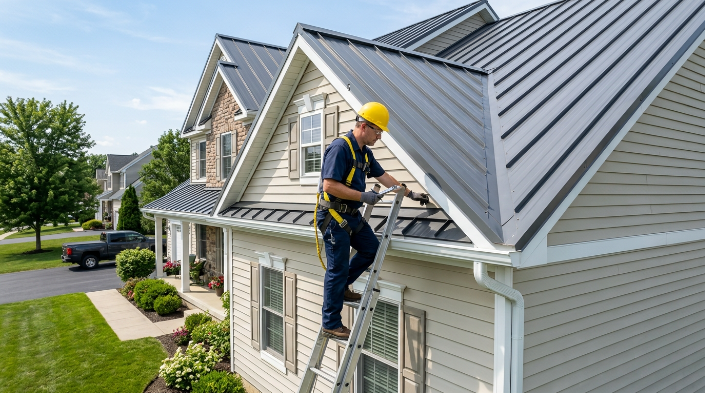
The most useful maintenance focuses on places where water is most likely to enter.
On a metal roof, an undamaged panel rarely develops a leak in the middle for no reason. Problems are more likely to develop around connections, penetrations, drainage areas, and damaged components.
Maintenance that helps prevent leaks includes:
- Checking roof flashing for movement or corrosion
- Watching exposed screws and fasteners for failure
- Inspecting panel seams and joints
- Looking for cracked or shrinking sealant
- Clearing leaves, branches, and other debris
- Keeping gutters and downspouts flowing
- Checking vents, skylights, chimneys, and pipe penetrations
- Looking for scratches, rust, dents, or punctures
- Monitoring attic moisture and water stains
- Inspecting the property after strong wind, hail, and falling branches
The National Roofing Contractors Association recommends regular inspections and notes that preventive maintenance can reveal small problems before they lead to more serious roof failure. NRCA roof maintenance resources
Metal Roof Maintenance Checklist
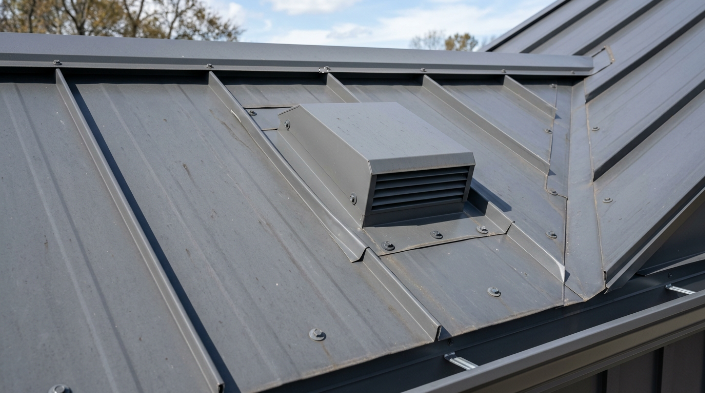
Use this checklist as a practical starting point. Most visual checks can be made from the ground, inside the attic, or from a safely positioned ladder.
| Maintenance item | What to look for | Suggested timing | When to call a roofer |
|---|---|---|---|
| Metal panels | Dents, punctures, buckling, loose edges | Spring, fall, after storms | Panels are loose, torn, or badly damaged |
| Fasteners | Raised screws, rust, damaged washers | Twice yearly | Many fasteners are failing |
| Flashing | Loose metal, gaps, rust, failed sealant | Twice yearly | Flashing is displaced or leaking |
| Seams | Separation or visible openings | Twice yearly | Seams have opened |
| Sealants | Cracks, shrinkage, peeling | Twice yearly | Large areas need resealing |
| Gutters | Leaves, standing water, loose sections | Several times yearly | Drainage remains poor after cleaning |
| Roof penetrations | Gaps around pipes, vents, skylights | Twice yearly | Water stains appear below them |
| Attic | Damp insulation, stains, mold, rust | Several times yearly | Active moisture or damaged wood appears |
| Corrosion | Rust spots, peeling coating | Yearly | Metal is deeply corroded |
| Storm damage | Loose panels, dents, debris impacts | After severe storms | Damage may affect waterproofing |
Do not treat this checklist as a reason to walk across your roof. Metal becomes extremely slippery when wet, dusty, frosty, or covered with algae.
1. Start With a Ground-Level Inspection
You can learn a surprising amount without leaving the ground.
Walk around your home during daylight and look at each visible roof slope.
Watch for:
- Lifted panel edges
- Missing trim
- Bent ridge caps
- Loose gutters
- Rust streaks
- Tree branches touching the roof
- Visible dents
- Pieces of metal or fasteners on the ground
- Areas where panels appear uneven
Binoculars or a camera with a zoom lens can make this easier.
Pay extra attention after a windstorm. A small piece of displaced trim may expose an edge where wind-driven rain can enter.
If something looks different from your previous inspection, take a picture. A simple photo record makes gradual changes easier to spot.
2. Check the Attic for Early Leak Signs
Your attic may show a roof problem before the ceiling below does.
During or shortly after rain, look for:
- Damp roof decking
- Wet insulation
- Dark stains
- Water trails
- Rusted fasteners
- Musty odors
- Mold-like growth
- Dripping water
- Daylight where it should not be visible
Roof decking is the structural surface beneath the roofing system. If this wood repeatedly becomes wet, it can eventually soften, rot, or lose strength.
Do not assume every attic moisture problem is a roof leak. Condensation can produce similar symptoms.
ENERGY STAR explains that attic ventilation, insulation, and air sealing all play roles in controlling attic moisture and reducing conditions that can contribute to roof problems. ENERGY STAR guidance on attic ventilation
If insulation is wet or roof framing looks damaged, professional evaluation is the safer choice.
3. Inspect Flashing Carefully
Flashing is one of the most important parts of your roof.
It is usually made from shaped metal installed where the roof meets another surface or where something passes through the roof.
Common flashing locations include:
- Chimneys
- Skylights
- Plumbing vents
- Sidewalls
- Dormers
- Valleys
- Roof edges
- HVAC penetrations
Flashing helps direct water away from joints that would otherwise be vulnerable.
Look for metal that appears loose, bent, rusty, separated, or pulled away from the surrounding surface.
Also look for old sealant that has cracked around flashing.
A minor flashing defect can create a surprisingly persistent leak because every rain sends water through the same vulnerable point.
The Insurance Institute for Business & Home Safety specifically recommends checking loose or missing flashing because poor flashing can contribute to water intrusion, particularly during severe weather. IBHS roof maintenance guidance
4. Watch Exposed Fasteners and Washers
Some metal roofs use exposed screws to hold panels to the roof deck.
These screws normally include washers that help create a watertight seal.
Over time, several problems can occur:
- Screws can loosen.
- Washers can crack.
- Fasteners can corrode.
- Screws may have been installed too tightly.
- Screws may have been installed too loosely.
- Repeated expansion and contraction can stress attachment points.
A raised screw head does not automatically mean your entire roof is failing. However, numerous loose or deteriorated fasteners deserve professional attention.
Avoid simply tightening every screw you see.
Overtightening can damage a washer and make the seal worse. A roofer can determine whether individual fasteners should be reset, replaced, or upgraded.
5. Check Seams, Joints, and Sealant
Metal expands when heated and contracts as it cools.
Roof systems are designed to accommodate this movement, but years of temperature changes can stress seams, fasteners, and sealants.
Check accessible areas visually for:
- Open seams
- Failed lap joints
- Dried sealant
- Cracking
- Peeling
- Shrinkage
- Gaps around penetrations
One common homeowner mistake is covering a suspicious area with a large amount of generic caulk.
That may hide the symptom without fixing the underlying detail.
Different metal roof systems require compatible sealants and repair materials. Using the wrong product can interfere with drainage, fail prematurely, or create warranty problems.
6. Keep Gutters and Downspouts Clear
Roof maintenance does not stop at the edge of the metal panels.
Your gutter system carries water away from the roof and foundation.
When gutters clog, water can overflow or back up near roof edges and fascia.
Check for:
- Leaves
- Pine needles
- Twigs
- Granular debris from nearby roofing
- Bird nests
- Sagging gutters
- Loose brackets
- Disconnected downspouts
- Water pooling near the foundation
During moderate rain, watch how water leaves the roof.
It should enter the gutters and move freely through the downspouts rather than spilling behind or over them.
Homes surrounded by mature trees may need gutter cleaning more often than homes in open areas.
7. Remove Roof Debris Before It Holds Moisture
Leaves and branches may seem harmless, but debris can trap moisture against a metal surface.
It can also block valleys and drainage paths.
Pay particular attention to areas:
- Behind chimneys
- Around skylights
- In valleys
- Near dormers
- Beneath overhanging trees
- Around roof-mounted equipment
IBHS recommends keeping roof surfaces clear of debris as part of routine roof care.
Do not climb onto a metal roof simply to sweep off leaves. If debris cannot be removed safely from the ground or roof edge, hire someone with proper roof-access equipment.
8. Look for Rust, Scratches, and Coating Damage
Modern metal roofing may have protective metallic coatings, paint systems, or both.
Damage to those protective surfaces can expose the underlying metal.
Inspect for:
- Small rust spots
- Scratches
- Flaking coatings
- Corrosion around cut edges
- Rust around fasteners
- Corrosion where different metals meet
- Damage caused by branches or tools
A small surface blemish may be manageable.
Deep corrosion, holes, widespread coating failure, or thinning metal is different. Those conditions can require panel repair or replacement.
Certain standing-seam metal systems can provide very long service lives when correctly designed, installed, and maintained, but the Metal Construction Association also recommends regular inspection so localized problems do not shorten that service life. Metal Construction Association service-life guidance
9. Keep Trees Away From the Roof
Trees can create several maintenance problems.
Branches may:
- Scrape protective coatings
- Drop leaves into valleys
- Clog gutters
- Strike panels during storms
- Keep sections of the roof damp and shaded
Trim branches that repeatedly contact the house.
Large tree work near a roof should normally be left to an arborist. Cutting a heavy branch incorrectly can cause far more roof damage than the branch was causing in the first place.
10. Check Ventilation and Insulation
Not every wet attic means rain entered through a hole.
Warm, moist indoor air can reach cold roof surfaces and condense.
Poor attic ventilation, blocked soffit vents, air leaks, and insulation problems can all contribute.
Warning signs include:
- Moisture appearing without rain
- Frost on roof nails in winter
- Mold or mildew
- Damp insulation
- Rusted metal components
- Repeated moisture near the roof deck
Correcting this problem may require more than roofing work. An insulation, ventilation, HVAC, or building-performance contractor may need to evaluate the attic.
11. Inspect After Wind, Hail, and Severe Storms
Your normal maintenance schedule should change after significant weather.
Inspect from a safe location after:
- High winds
- Large hail
- Falling branches
- Heavy snow
- Tropical storms
- Tornado-producing weather
Look for new dents, loose panels, displaced flashing, damaged gutters, missing trim, or interior moisture.
If storm damage may lead to an insurance claim, photograph visible conditions before temporary repairs whenever it is safe to do so.
Avoid unnecessary alterations that could make the original damage harder to document.
Expert Tip
Expert Tip: Keep a simple roof maintenance file containing dated photos, contractor invoices, warranty documents, previous repairs, and inspection notes. Comparing today’s roof with photographs from six or twelve months ago can make subtle movement, corrosion, or sealant deterioration much easier to recognize.
How Often Should You Inspect a Metal Roof?
A practical schedule is:
- Inspect in spring. Look for winter damage, blocked drainage, loose flashing, and moisture problems.
- Inspect in fall. Remove debris and check the roof before harsher winter weather.
- Check after major storms. Wind and hail can create damage between regular inspections.
- Look inside periodically. Attic inspections can reveal problems that are invisible from outside.
- Schedule professional inspections when needed. Complex, aging, storm-damaged, or previously leaking roofs deserve closer attention.
NRCA has long recommended periodic roof inspection, including inspections after severe weather.
Maintenance Cost vs. Leak Repair Cost
Roof maintenance costs vary widely.
Important factors include:
- Roof size
- Roof height
- Roof pitch
- Accessibility
- Metal roof system
- Local labor rates
- Number of penetrations
- Extent of corrosion
- Amount of failed sealant
- Whether panels must be removed
A straightforward professional inspection may require relatively little work. Repairing rotten decking, wet insulation, interior drywall, flashing, and damaged panels after a long-term leak is a much larger project.
Do not choose a repair based only on the lowest price.
Ask what failed, what materials will be used, whether panels must be disturbed, and whether the repair affects existing warranty coverage.
Maintenance and Your Roof Warranty
A long roofing warranty does not mean maintenance can be ignored.
Warranty coverage varies by manufacturer and contractor.
It may contain requirements or exclusions involving:
- Periodic maintenance
- Unauthorized repairs
- Improper sealants
- Foot traffic
- Storm damage
- Corrosion
- Alterations
- Rooftop equipment
- Solar installations
- Failure to report problems promptly
Keep copies of both the manufacturer’s material warranty and the roofing contractor’s workmanship warranty.
Before making a significant repair, check whether the work should be completed or approved by the original installer.
When Repair Is No Longer Enough
Maintenance can extend the useful life of a roof, but it cannot reverse every problem.
A larger repair or replacement evaluation may be appropriate when you find:
- Widespread corrosion
- Multiple leaking areas
- Severely deteriorated panels
- Extensive failed fasteners
- Rotten roof decking
- Repeated seam failures
- Major storm damage
- Structural movement
- Recurring leaks after previous repairs
The age of the roof also matters, but age alone should not determine whether a metal roof needs replacement.
The condition of the panels, seams, fasteners, flashing, coatings, decking, and installation details matters more.
When to Consult a Licensed Roofing Contractor
Call a qualified roofing contractor when the inspection requires walking on the roof or when you find conditions you cannot diagnose safely.
Professional evaluation is especially important when:
- The roof is steep.
- The metal is wet or slippery.
- Panels appear loose.
- Storm damage is extensive.
- Water is entering near electrical wiring.
- Roof decking appears soft or rotten.
- Flashing needs to be removed.
- Multiple seams are failing.
- Corrosion has created holes.
- The source of a leak cannot be located.
- Insurance documentation is needed.
- Structural movement is suspected.
Roofing falls can cause severe injuries. OSHA’s residential roofing resources show why professional roof work requires careful fall-protection procedures and safe access. OSHA residential roofing fall-protection guidance
For most homeowners, a ground-level inspection is far safer than walking across a metal roof.
Common Mistakes Homeowners Should Avoid
- Ignoring a small ceiling stain. A minor stain may represent moisture traveling from a much larger hidden area.
- Covering everything with caulk. Sealant is not a substitute for correct flashing or seam repair.
- Overtightening screws. Crushing a sealing washer can create another leak path.
- Walking on wet metal roofing. Metal can become dangerously slippery.
- Letting gutters stay clogged. Poor drainage increases moisture exposure around roof edges.
- Ignoring attic moisture. Condensation can damage roof components even when rain is not entering.
- Using incompatible repair products. Some coatings and sealants do not work with every metal roofing system.
- Waiting until the next storm. Small defects generally do not improve on their own.
- Assuming a warranty covers everything. Maintenance, storm damage, workmanship, and material defects may be treated differently.
- Replacing the whole roof before finding the leak. Some leaks originate from a single flashing or penetration rather than widespread roof failure.
FAQs
How often should I perform roof maintenance to prevent leaks?
Inspect your roof at least in spring and fall, and check again after major wind, hail, or severe storms. Homes surrounded by trees may need more frequent gutter and debris checks.
What is the most common maintenance problem on a metal roof?
Fasteners, flashing, seams, sealants, penetrations, and drainage areas are common trouble spots. The exact weak point depends on whether you have an exposed-fastener, standing-seam, or another type of metal roof.
Can clogged gutters cause a metal roof leak?
They can contribute to water problems. Clogged gutters allow water to overflow or collect near roof edges, fascia, and other vulnerable details. Keeping drainage clear is an important part of leak prevention.
Should I reseal all metal roof screws every year?
No. Do not automatically cover every screw with sealant. A failed fastener may need adjustment or replacement, and the correct solution depends on the roofing system and condition of the washer.
Can I inspect my metal roof myself?
You can inspect much of it from the ground, attic, or a safely positioned ladder. Walking on metal roofing creates fall and roof-damage risks, particularly when the surface is wet, steep, loose, or unfamiliar.
Does a small roof leak mean I need a new roof?
Not necessarily. A small leak may come from a failed flashing detail, loose fastener, damaged sealant, or penetration. Widespread corrosion, deteriorated decking, repeated leaks, or extensive system failure makes replacement more likely.
Can regular maintenance extend a metal roof’s lifespan?
Yes. Catching drainage problems, corrosion, loose components, and failed waterproofing details early can reduce avoidable deterioration. Maintenance cannot correct poor design or severe structural damage, but it can help a sound roof continue performing as intended.
Conclusion
A good roof maintenance checklist to prevent leaks does not require homeowners to become roofing experts.
Focus on the areas most likely to cause problems: flashing, fasteners, seams, sealants, gutters, penetrations, debris, corrosion, attic moisture, and storm damage.
Inspect regularly. Keep records. Address changes promptly.
Most importantly, know where DIY inspection should stop. A steep or slippery metal roof, active leak, structural concern, major storm loss, or widespread deterioration calls for qualified professional help.
If you notice a new stain, loose component, corrosion, or other warning sign, document it and arrange an inspection before the next heavy rain turns a manageable roof problem into a larger water-damage repair.