
How to Prevent Roof Leaks in Winter: A Homeowner’s Guide

Winter can expose roof problems that stay hidden during warmer months. Snow, freezing rain, ice dams, clogged gutters, damaged flashing, and repeated freeze-thaw cycles can all give water a path into your home. Metal roofs can develop additional trouble around seams, fasteners, penetrations, and flashing if those details are damaged or poorly sealed.
Learning how to prevent roof leaks in winter can help you avoid stained ceilings, wet insulation, damaged roof decking, mold problems, and expensive emergency repairs.
The key is to prepare before severe weather arrives, control attic heat and moisture, keep drainage paths open, watch for early warning signs, and know when a roof problem requires a professional instead of a DIY fix.
Quick Answer
To prevent roof leaks in winter, inspect the roof before freezing weather, repair damaged flashing and seams, keep gutters clear, improve attic air sealing and insulation, maintain proper ventilation, and address ice dams safely. On metal roofs, pay special attention to fasteners, panel seams, penetrations, sealants, and areas where snow or ice can trap water.
Why Roofs Leak More Often During Winter
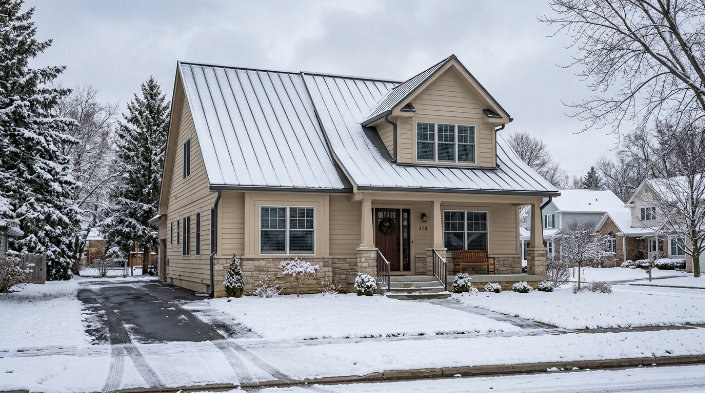
A winter roof leak is not always caused by a new hole in the roof.
Cold weather can turn a small weakness into a serious water problem. Snow may melt during the day, move beneath or across roofing materials, and refreeze when temperatures fall. Water expands as it freezes, while metal roofing components also move as temperatures change.
Common winter leak causes include:
- Ice dams at roof edges
- Loose or deteriorated flashing
- Aging roof sealant
- Damaged or missing shingles
- Loose metal-roof fasteners
- Open metal panel seams
- Leaks around chimneys, skylights, vents, and plumbing pipes
- Clogged gutters or downspouts
- Poor attic insulation or air sealing
- Inadequate attic ventilation
- Storm, wind, or falling-branch damage
A leak can also appear several feet away from its actual entry point. Water may travel along roof decking, rafters, metal panels, insulation, or framing before reaching the ceiling.
That is why simply patching the spot directly above an interior stain often fails.
How Ice Dams Cause Winter Roof Leaks
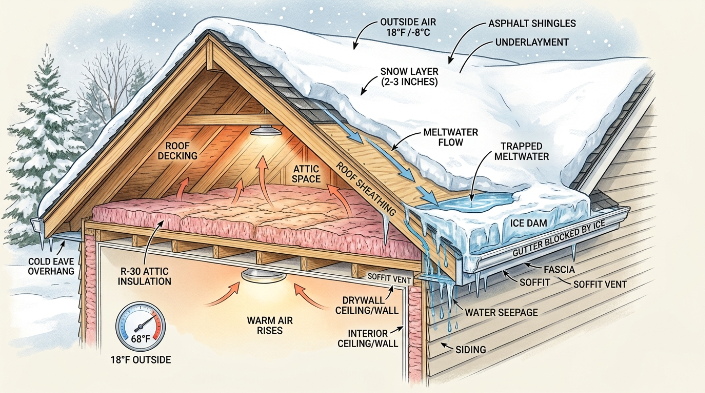
Ice dams are one of the most important winter roofing problems for homeowners in cold climates.
They usually develop when heat escaping from the living space warms part of the roof. Snow melts on the warmer roof surface and flows toward the colder eaves. There, the water freezes again.
Over repeated freeze-thaw cycles, a ridge of ice can grow along the roof edge.
Water then collects behind that ridge instead of draining normally. The backed-up water may eventually move beneath shingles, around flashing, or through vulnerable roof details.
The U.S. Department of Energy’s guidance on sealed roof eaves in cold climates explains that air sealing, adequate attic insulation, ventilation, and appropriate eave protection can help reduce ice-dam-related water intrusion.
Warning Signs of an Ice Dam
Watch for:
- Thick ice forming along the eaves
- Large or repeated icicles
- Snow melting unevenly across the roof
- Water stains near exterior walls
- Wet attic insulation near the eaves
- Peeling paint around upper walls or ceilings
- Ice building inside gutters
Do not assume that large icicles are harmless decoration. They can indicate melting and refreezing conditions that deserve attention.
1. Inspect Your Roof Before Winter
Prevention is much easier when roofing problems are repaired before snow and ice cover them.
A professional pre-winter inspection should pay particular attention to:
- Roof penetrations
- Flashing
- Valleys
- Roof edges
- Ridge details
- Chimneys
- Skylights
- Gutters
- Sealants
- Metal panel seams and fasteners
You can perform a basic visual inspection from the ground using binoculars or a camera with zoom.
Look for missing or lifted shingles, bent flashing, loose gutters, rust, displaced metal panels, damaged trim, or branches resting on the roof.
If you already have an unexplained ceiling stain or evidence of moisture in the attic, investigate it before the first major freeze.
2. Check Metal Roof Seams and Fasteners
Metal roofs are durable, but they are not immune to leaks.
On exposed-fastener metal roofing, screws and their sealing washers deserve particular attention. Over time, fasteners may loosen, washers may deteriorate, or movement of the panels may create small openings.
Standing-seam systems generally conceal most fasteners, but leaks can still develop at:
- Panel seams
- End laps
- Flashing connections
- Ridge caps
- Valleys
- Pipe penetrations
- Skylights
- Roof-wall transitions
Metal expands and contracts as temperatures change. A properly designed roof accounts for that movement. Poor fastening or flashing details may not.
Do not randomly tighten or coat every screw with sealant. Overtightening can damage washers, and incompatible sealants may interfere with coatings or manufacturer warranty requirements.
A metal-roof contractor should identify why a connection is leaking before deciding how to repair it.
3. Repair Flashing Before Snow Arrives
Flashing is the thin roofing material installed where different surfaces meet. Its job is to direct water away from vulnerable joints.
Typical flashing locations include:
- Chimneys
- Skylights
- Plumbing vents
- Roof-to-wall intersections
- Valleys
- Roof edges
Winter weather can expose small flashing defects because water may repeatedly melt, freeze, and work into gaps.
Bent, corroded, separated, poorly sealed, or improperly installed flashing should be repaired before winter whenever possible.
A bead of caulk may stop water temporarily in some situations, but sealant is not a substitute for correctly installed flashing.
If flashing has failed because of poor installation, replacing or rebuilding the detail may provide a much more reliable solution than repeatedly applying sealant.
4. Keep Gutters and Downspouts Clear
Your roofing system needs a clear path for water to leave the house.
Leaves, twigs, pine needles, roof granules, and other debris can block gutters and downspouts. During freezing weather, trapped water can become ice.
That can contribute to:
- Overflow
- Heavy gutter ice
- Detached gutters
- Water behind fascia boards
- Ice buildup at roof edges
- Poor drainage during thawing
FEMA’s winterizing guidance recommends keeping gutters clear so melting snow can drain properly and directing downspouts away from the foundation. FEMA’s homeowner winterizing recommendations also identify clogged gutters as a contributor to ice dams and roof leaks.
Clean the system before freezing weather, then inspect it again after leaves have finished falling.
5. Reduce Heat Loss Into the Attic
A surprisingly important part of preventing winter roof leaks happens inside your home.
Warm household air can escape through gaps around:
- Attic hatches
- Recessed lights
- Plumbing penetrations
- Electrical penetrations
- Ductwork
- Ceiling joints
- Exhaust-fan openings
That heat can warm the roof deck and contribute to uneven snow melting.
Improving attic air sealing and insulation helps keep the roof surface more consistently cold during freezing weather.
The goal is not simply to add the thickest insulation possible. Air leakage should also be controlled, and insulation should not block necessary ventilation openings.
For complicated attic assemblies, finished attics, cathedral ceilings, or persistent ice-dam problems, a qualified insulation or building-envelope professional may be useful.
6. Maintain Proper Roof and Attic Ventilation
Ventilation helps control heat and moisture in many vented attic systems.
A common arrangement allows outdoor air to enter near the soffits and leave near the ridge. This can help manage attic conditions when the system is designed correctly.
Problems develop when:
- Soffit vents are blocked by insulation
- Ridge vents are obstructed
- Intake ventilation is inadequate
- Bathroom fans exhaust into the attic
- Ductwork leaks warm air
- The roof assembly was not designed for the ventilation method being used
The Insurance Institute for Business & Home Safety cold-climate roofing guidance notes that proper ventilation is an important consideration in cold climates where ice dams and snow accumulation occur.
Do not add roof vents at random. Ventilation should suit the complete roof and attic assembly.
7. Remove Excess Snow Safely
Heavy snow can create several concerns.
Besides adding weight to the roof, it can supply more meltwater for ice dams and conceal damaged areas.
However, snow removal can be more dangerous than leaving the snow alone.
If conditions justify removal, a roof rake designed for use from the ground may sometimes allow snow to be reduced without climbing onto the roof.
Never:
- Walk on an icy roof
- Strike roofing materials with a shovel or axe
- Chip aggressively at ice
- Stand beneath heavy hanging ice
- Work near overhead electrical lines
- Use boiling water to remove an ice dam
Metal roofs require particular caution because snow and ice may release suddenly and slide from smooth panels.
For steep roofs, high roofs, heavy accumulations, or large ice dams, professional snow or ice removal is usually the safer choice.
Winter Roof Leak Prevention Checklist
| Area | What to Check | Best Time |
|---|---|---|
| Roof surface | Missing, lifted, cracked, or damaged material | Before winter and after storms |
| Metal roofing | Seams, fasteners, flashing, penetrations, rust | Before winter |
| Gutters | Leaves, debris, sagging, ice buildup | Late fall and during thaws |
| Flashing | Gaps, corrosion, separation | Before winter |
| Attic | Stains, damp insulation, condensation | Several times during winter |
| Insulation | Thin spots and disturbed insulation | Before winter |
| Ventilation | Blocked soffit or ridge vents | Before winter |
| Snow | Unusual drifting or excessive accumulation | After major storms |
Watch the Attic for Early Warning Signs
Your attic can reveal a leak before water reaches a finished ceiling.
Using a flashlight from a safe walking area, look for:
- Dark stains on roof decking
- Damp rafters
- Wet insulation
- Rusted fasteners
- Frost on nails or sheathing
- Musty odors
- Mold-like discoloration
- Dripping water
Be careful when interpreting attic moisture.
Not every damp area is a roof leak. Condensation can occur when warm, humid indoor air reaches cold attic surfaces.
A roofing contractor or building-envelope professional may need to distinguish exterior water intrusion from an indoor moisture problem.
What to Do If Your Roof Starts Leaking During Winter
If you discover an active leak, protect the interior first.
- Move furniture and electronics away from the wet area.
- Place a bucket or waterproof container beneath dripping water.
- Photograph stains, damaged materials, and visible roof conditions.
- Check the attic from a safe location if accessible.
- Contact a qualified roofer for diagnosis.
- Notify your insurer promptly when substantial storm-related damage may be involved.
Do not climb onto an icy or snow-covered roof to search for the opening.
A temporary professional repair may be appropriate when weather prevents a permanent repair. The final fix can then be completed when conditions allow proper installation.
Repair or Replace the Roof?
A winter leak does not automatically mean the entire roof needs replacement.
A repair may make sense when the problem is limited to:
- One damaged flashing detail
- A small group of loose fasteners
- A localized panel seam
- One penetration
- Minor storm damage
- A limited gutter or drainage problem
Replacement becomes more reasonable when:
- Leaks occur repeatedly in several areas
- Roof decking is extensively damaged
- Corrosion is widespread
- Roofing material is near the end of its service life
- Previous repairs keep failing
- Installation defects affect the entire system
Metal roofing can provide a long service life when properly designed, installed, and maintained, but lifespan varies substantially by metal type, coating, environment, installation quality, and maintenance.
Do not authorize a full replacement based solely on one ceiling stain. Ask the contractor to explain the actual failure and document why repair is or is not practical.
Winter Roof Repair Costs and Labor Considerations
There is no reliable single price for a winter leak repair.
Cost depends on:
- Roof height and pitch
- Roofing material
- Leak location
- Amount of damaged decking
- Flashing complexity
- Metal panel type
- Snow and ice removal needs
- Emergency service timing
- Accessibility
- Local labor rates
Winter conditions may increase labor requirements because crews need additional setup, weather protection, snow removal, or safety precautions.
A small fastener or flashing repair can cost far less than replacing wet decking, insulation, drywall, or entire roof sections after moisture damage spreads.
That is why early detection often matters more financially than finding the cheapest emergency repair.
Check Your Roofing Warranty Before Repairs
If the roof is relatively new, review the warranty before allowing someone to modify it.
Roofing coverage may include separate warranties for:
- Roofing materials
- Paint or metal coatings
- Manufacturer defects
- Contractor workmanship
Coverage usually has exclusions and maintenance requirements.
Unauthorized coatings, incompatible sealants, incorrect replacement fasteners, or unapproved modifications may complicate a future warranty claim.
Document the problem with photos and contact the original installer or manufacturer when appropriate.
Expert Tip
Expert Tip: When a winter leak appears, mark the interior location and record the weather conditions—snow depth, wind direction, temperature, and whether the leak happened during snowfall or a thaw. Those details can help a roofer identify whether the problem involves ice damming, wind-driven moisture, flashing, or another roof detail.
Common Mistakes Homeowners Should Avoid
- Walking on a snowy or icy roof. Even experienced workers require appropriate fall protection.
- Breaking ice with sharp tools. You may puncture roofing, damage coatings, or destroy flashing.
- Assuming the ceiling stain is directly below the leak. Water frequently travels before becoming visible.
- Using excessive sealant. Caulk may conceal the symptom without repairing the underlying flashing or seam problem.
- Ignoring attic moisture. Small leaks can damage insulation and decking before ceilings show obvious staining.
- Blocking attic ventilation with insulation. More insulation is not automatically better if airflow paths are unintentionally closed.
- Waiting until spring after finding an active leak. Temporary professional stabilization may prevent months of additional damage.
- Hiring solely on the lowest emergency quote. Diagnosis, repair method, safety practices, warranty terms, and contractor qualifications also matter.
When to Consult a Licensed Roofing Contractor
Contact a qualified roofing contractor when:
- An active leak continues
- Ice dams repeatedly form
- Metal seams or panels appear loose
- Flashing has separated
- Storm damage is visible
- Roof decking feels or looks damaged
- Multiple rooms show water stains
- A chimney or skylight is leaking
- Snow or ice must be removed from a steep roof
- The roof is too high to inspect safely
- You are considering replacement
Roof work involves serious fall hazards. OSHA’s residential roofing fall-protection guidance emphasizes fall protection during roofing work and identifies falls as a major hazard in residential construction.
For homeowners, the practical lesson is simple: ground-level observation and safe attic checks are reasonable; climbing onto an icy roof is not.
Structural sagging, cracking sounds, severe storm damage, or concern about excessive snow loading may also justify evaluation by an engineer or other qualified structural professional rather than a routine DIY inspection.
FAQs
What is the best way to prevent roof leaks in winter?
Inspect and repair the roof before winter, keep gutters clear, maintain good attic air sealing, insulation, and appropriate ventilation, and correct flashing, seam, or fastener problems before snow and ice arrive.
Can a metal roof leak in winter?
Yes. Metal roofs can leak around seams, fasteners, flashing, penetrations, valleys, or transitions. Temperature-related movement and damaged sealants can also expose weak details.
Do ice dams always cause roof leaks?
No. An ice dam does not guarantee that water will enter the home, but it can trap meltwater and increase the risk of intrusion through vulnerable roofing details.
Should I knock icicles off my roof?
Avoid standing beneath large icicles or aggressively breaking ice attached to the roof. Falling ice can injure people, and tools can damage gutters and roofing.
Can I repair a winter roof leak myself?
Minor interior damage control can be reasonable, but exterior roof work during winter can be dangerous. Steep, icy, damaged, or high roofs should generally be handled by trained professionals.
Does attic insulation prevent ice dams?
Proper insulation can help by reducing heat transfer to the roof deck, but insulation works best with good air sealing and a correctly designed attic or roof assembly.
Does one winter leak mean I need a new roof?
Not necessarily. Localized flashing, fastener, penetration, or seam problems may be repairable. Replacement becomes more likely when deterioration, structural damage, or recurring leaks are widespread.
Conclusion
Knowing how to prevent roof leaks in winter starts before the first snowstorm.
Inspect vulnerable roof details, repair damaged flashing and seams, clean gutters, control attic heat loss, maintain the appropriate ventilation strategy, and monitor both the roof and attic throughout the season.
Metal-roof owners should pay special attention to seams, fasteners, penetrations, flashing, sealants, and areas where snow or ice can collect.
Most importantly, do not turn preventive maintenance into a fall hazard. Observe what you safely can from the ground or attic, document warning signs early, and call a qualified roofing contractor when exterior inspection or repair requires roof access.
A small problem addressed before or early in winter is usually easier to manage than a leak discovered after months of snow, ice, and hidden moisture.
Your best next step is to schedule a pre-winter roof and attic inspection, correct any known drainage or flashing problems, and keep photos and warranty information available in case winter weather exposes a hidden weakness.