
How to Prepare Your Roof for Heavy Rain

Heavy rain can turn a small roofing weakness into an expensive leak surprisingly quickly. A loose shingle, failed metal-roof fastener, clogged gutter, cracked seal around a vent, or damaged piece of flashing may seem minor in dry weather. Once hours of wind-driven rain arrive, however, water can find its way into the roof deck, attic, insulation, ceilings, and walls.
Knowing how to prepare your roof for heavy rain gives you a chance to catch these problems before the storm exposes them. The most important steps are inspecting visible roof surfaces, clearing drainage systems, checking flashing and penetrations, looking for metal-roof leak risks, trimming hazardous branches, and addressing existing moisture problems before more rain arrives.
Quick Answer
To prepare your roof for heavy rain, inspect it for damage, clean gutters and downspouts, check flashing and roof penetrations, clear debris, trim dangerous branches, and look for indoor leak signs. Metal roofs also need seams, fasteners, sealants, and corrosion checked. Repair questionable areas before the storm rather than during it.
Why Heavy Rain Can Expose Roof Problems
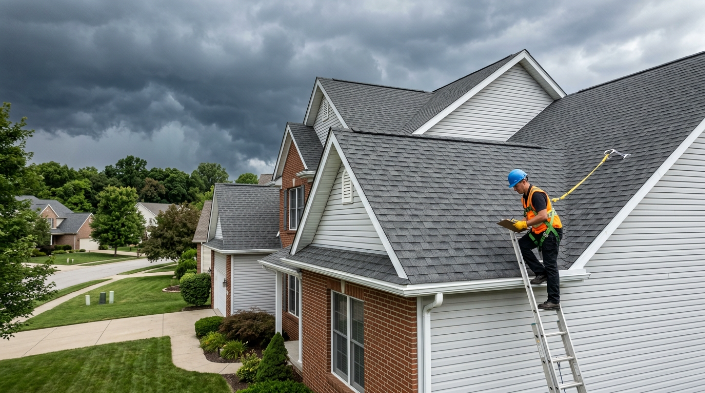
A roof does not have to contain a large hole to leak during a storm.
Water usually enters through vulnerable details such as:
- Damaged or missing shingles
- Loose metal panels or fasteners
- Failed seams and sealants
- Worn flashing
- Chimneys, skylights, and vents
- Clogged roof valleys
- Overflowing gutters
- Damaged underlayment
- Low spots on flat or low-slope roofs
Wind makes the situation worse because rain may be pushed sideways or upward beneath roofing components instead of simply falling vertically onto the roof.
Research on wind-driven rain entry from the Insurance Institute for Business & Home Safety (IBHS) shows why roof openings and vulnerable details become particularly important when wind accompanies rainfall. IBHS research on wind-driven rain entry
A roof that stays dry during a light shower can therefore leak during a strong thunderstorm.
1. Inspect the Roof Before the Rain Arrives
Start with a visual inspection while the weather is dry.
For most homeowners, the safest approach is to inspect from the ground rather than walking on the roof. Binoculars or a phone camera with zoom can help you see questionable areas without exposing yourself to a fall.
Look for:
- Missing, cracked, curled, or lifted shingles
- Uneven or displaced metal panels
- Rust or corrosion
- Loose ridge caps
- Damaged flashing
- Debris trapped in valleys
- Sagging roof sections
- Tree limbs touching the roof
- Gutters pulling away from the fascia
- Visible damage around vents or skylights
Also check the roof after recent wind or hail. A roof may have sustained storm damage even when you cannot see an active leak yet.
Do not climb onto a wet, steep, damaged, or metal roof simply to investigate a suspected problem.
2. Clean Gutters and Downspouts
Your roofing material is only part of your home’s rain-management system. Gutters and downspouts have to move the water away after it reaches the roof edge.
Leaves, pine needles, twigs, roofing granules, dirt, and other debris can reduce the amount of water a gutter can handle. During intense rainfall, that may cause water to overflow onto fascia boards, walls, landscaping, or areas near the foundation.
Before storm season:
- Remove visible gutter debris.
- Check downspout openings for blockages.
- Confirm gutters are securely attached.
- Look for separated or leaking gutter joints.
- Make sure downspouts discharge water away from the structure.
- Watch the system during an ordinary rain to identify overflow points.
FEMA guidance on sloped roof systems notes that gutters and downspouts can become overwhelmed or clogged during extreme rainfall and emphasizes adequate drainage as an important water-damage mitigation measure. FEMA guidance on roof drainage and heavy rainfall
If your gutters repeatedly overflow even when clean, the problem could involve improper slope, inadequate capacity, too few downspouts, or a roof layout that concentrates large amounts of runoff in one location.
3. Check Roof Valleys and Drainage Paths
A roof valley is the channel created where two sloping roof sections meet.
Valleys often carry much more water than the surrounding roof surface. Leaves and branches trapped there can slow drainage and hold moisture against the roofing material.
From a safe location, look for:
- Leaf piles
- Branches
- Damaged shingles
- Rusted metal valley flashing
- Loose materials
- Signs that water has been flowing outside the intended path
Low-slope and flat roofs require special attention because drainage is slower. Ponding water—water that remains standing after rainfall—may indicate a drainage, slope, or structural problem.
Persistent ponding deserves professional evaluation rather than simply adding sealant to the area.
4. Inspect Flashing Around Roof Openings
Flashing is thin waterproof material installed around areas where the roof changes direction or meets another building component.
You will commonly find flashing around:
- Chimneys
- Skylights
- Plumbing vents
- Dormers
- Roof-to-wall intersections
- Valleys
- HVAC penetrations
- Roof edges
These locations are frequent leak points because they involve joints between different materials.
Watch for lifted edges, missing pieces, corrosion, cracked sealant, gaps, or flashing that appears separated from the adjoining surface.
Caulk alone is not a substitute for correctly installed flashing. If a flashing assembly has failed, repeatedly covering it with roofing cement or sealant may hide the problem without fixing the underlying water path.
5. Check Metal Roofs for Leak-Prone Areas
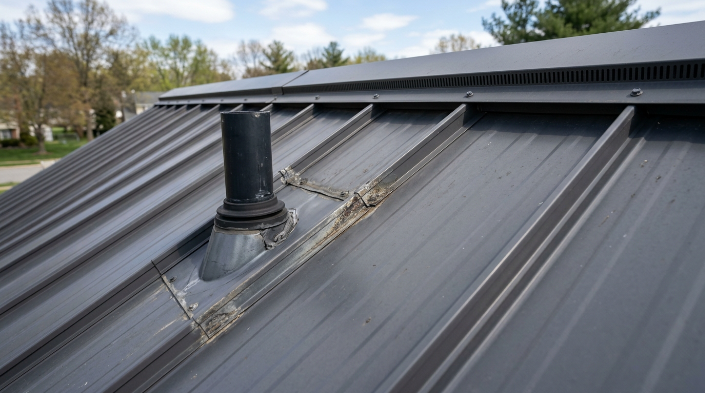
Metal roofs can handle heavy rainfall very well when correctly installed, but they have their own vulnerable details.
A metal roof leak commonly develops around seams, fasteners, penetrations, transitions, or flashing rather than through the middle of an undamaged panel.
Exposed Fasteners
Some metal roofing systems use screws with washers that seal the fastener opening.
Over time, fasteners can loosen, washers can deteriorate, and thermal movement can affect the connection.
From a safe viewing position, look for:
- Missing screws
- Raised fasteners
- Deteriorated washers
- Rust around fastener heads
- Fasteners that appear noticeably different from neighboring ones
Do not randomly tighten every visible screw. Overtightening can damage a washer or distort the panel, while an incorrectly sized replacement fastener may not seal properly.
Standing Seams and Panel Joints
Standing-seam systems usually conceal their primary fasteners, but seams and transitions still matter.
Watch for:
- Open or distorted seams
- Displaced panels
- Loose ridge or edge trim
- Failed sealant at approved locations
- Damage where different roof planes meet
Rust and Corrosion
Surface discoloration does not automatically mean the roof is failing. However, active corrosion may eventually compromise a panel, fastener, flashing component, or exposed cut edge.
Pay particular attention to rust around penetrations, scratches, panel overlaps, and places where water or debris remains trapped.
Penetrations
Plumbing vents, chimneys, skylights, HVAC equipment, antennas, and other penetrations interrupt an otherwise continuous metal roof.
Because metal expands and contracts as temperatures change, penetration details must accommodate movement while remaining watertight.
Persistent leaking around one of these areas should be evaluated by a contractor familiar with the specific metal roofing system.
6. Check the Attic Before the Storm
An exterior inspection tells only half the story.
If your attic can be entered safely, examine it during dry weather for evidence of previous water intrusion.
Look for:
- Dark stains on roof decking
- Damp or compressed insulation
- Rusted fasteners
- Mold-like growth
- Musty odors
- Water marks on rafters or trusses
- Discolored wood
- Daylight where it should not be visible
Roof decking is the structural wood surface beneath the roof covering. Water that reaches the decking may travel along wood, framing, or underlayment before it finally appears on a ceiling.
That is why the location of an indoor stain does not always identify the actual entry point.
7. Make Sure Roof Ventilation Components Are Secure
Roof and attic ventilation helps manage heat and moisture, but vents also create openings through the roof system.
Inspect accessible soffit, ridge, box, turbine, and gable vents for damage.
During wind-driven rain, poorly designed, damaged, or displaced vents may allow moisture into the attic.
IBHS’s FORTIFIED Roof guidance specifically addresses wind- and rain-resistant attic vents as part of improving roof performance in severe weather. IBHS FORTIFIED Roof severe-weather guidance
Do not block ventilation simply because you are worried about rain. Improperly reducing attic ventilation can create other moisture and heat problems.
8. Trim Branches and Remove Potential Storm Debris
Trees can create several roofing problems during heavy rain and wind.
Branches may:
- Strike roofing materials
- Scratch metal coatings
- Break shingles
- Damage gutters
- Block roof valleys
- Deposit leaves into drainage systems
Remove dead or obviously unstable limbs near the home before storm season.
Large branches, branches near electrical lines, or major tree-removal work should be handled by qualified professionals rather than treated as a homeowner roofing project.
IBHS storm-preparation guidance recommends both clearing gutters and trimming branches near roofs before severe weather. IBHS homeowner storm-preparation guidance
Heavy-Rain Preparation by Roofing Material
| Roof material | What to check before heavy rain | Common concern |
|---|---|---|
| Asphalt shingles | Missing, cracked, curled, or lifted shingles; exposed nails; flashing | Wind-lifted or aging shingles allowing water beneath the covering |
| Metal | Seams, fasteners, flashing, penetrations, corrosion, sealants | Water entering around connections or damaged details |
| Tile | Broken, cracked, slipped, or missing tiles | Water reaching the underlayment beneath damaged tiles |
| Wood shake | Split, missing, curled, or deteriorated shakes | Aging wood and vulnerable underlayment |
| EPDM/TPO or other low-slope membrane | Seams, penetrations, drains, punctures, ponding | Standing water or failure at seams and penetrations |
The condition of the underlying roof system matters as much as the visible covering. A roof can look reasonably good from the street while aging underlayment, deteriorated flashing, or damaged decking creates a hidden vulnerability.
Expert Tip
Expert Tip: Photograph questionable roof areas before storm season. If a leak or storm-damage claim occurs later, dated photos can help you explain what changed and give your roofing contractor a useful reference point.
Consider Roof Age, Lifespan, and Repair Costs
Heavy-rain preparation should reflect the age and overall condition of the roof.
Roof service life varies substantially with material, climate, workmanship, ventilation, storm exposure, maintenance, product quality, and roof design. An older roof approaching the end of its useful life deserves closer attention than a recently installed system with no visible defects.
Cost decisions also depend on the problem:
| Situation | Typical decision approach |
|---|---|
| Small isolated defect on an otherwise sound roof | Targeted professional repair may make sense |
| Failed flashing around one penetration | Repair or replace the affected flashing assembly |
| Recurring leaks in several areas | Investigate the entire roof system rather than repeatedly patching stains |
| Widespread corrosion or damaged metal panels | Evaluate repair extent versus replacement |
| Aging shingles with widespread deterioration | Replacement may be more practical than repeated repairs |
| Sagging decking or structural movement | Structural assessment may be necessary |
Labor can represent a substantial part of repair cost because locating the source of a leak often requires more work than replacing the visibly damaged component.
Metal roofing can also require specialized labor. A contractor accustomed primarily to asphalt shingles may not have the same experience with standing seams, clips, expansion details, exposed-fastener systems, or manufacturer-specific metal repairs.
Before authorizing work, ask whether the repair could affect your manufacturer material warranty or contractor workmanship warranty. Unauthorized modifications, incompatible sealants, or incorrect fasteners may create future problems.
What to Do If the Roof Starts Leaking During Heavy Rain
Do not climb onto the roof while it is raining.
Instead:
- Move people, electronics, and valuables away from the leaking area.
- Place a container beneath active dripping when safe.
- Photograph visible interior damage.
- Check the attic only if it can be entered safely and there is no electrical hazard.
- Contact a qualified roofer if the leak is significant or continuing.
- Notify your insurer promptly when substantial storm damage may be involved.
Do not stand beneath a bulging ceiling. Water collecting above drywall can make the material heavy enough to collapse.
Also keep away from wet electrical fixtures, outlets, wiring, or appliances.
Roof Safety During Heavy-Rain Preparation
Roof preparation is useful only when it can be done safely.
Roof surfaces can be steep, fragile, hot, slippery, or difficult to access. Metal roofing is particularly unforgiving when wet.
OSHA publishes extensive fall-prevention and ladder-safety materials because falls during roofing work can result in severe or fatal injuries. OSHA fall-prevention and roofing safety resources
For homeowners, the practical rule is simple: if inspecting or repairing the problem requires walking on a roof, working near a dangerous edge, or using equipment you are not trained to use, hire a professional.
When to Consult a Licensed Roofing Contractor
Contact a licensed or appropriately qualified roofing contractor when you notice:
- Active or recurring leaks
- Sagging roof areas
- Loose or displaced metal panels
- Significant corrosion
- Multiple missing shingles
- Damaged flashing around several penetrations
- Storm or hail damage
- Water-damaged decking
- Persistent ponding on a low-slope roof
- Large areas of aging roofing material
- Damage that may involve an insurance claim
- A leak source you cannot identify safely
A professional inspection becomes especially valuable when the roof is older or has leaked repeatedly.
A contractor should determine whether the problem is a localized repair, a failure of a larger roof detail, deteriorated decking, or evidence that replacement is becoming more economical than repeated repairs.
Common Mistakes Homeowners Should Avoid
- Waiting for a major storm to reveal a known problem. Small defects are usually easier to address while conditions are dry.
- Walking on a wet roof. Rain dramatically increases slip and fall hazards.
- Assuming every ceiling stain is directly below the leak. Water can travel before becoming visible.
- Covering every metal-roof problem with sealant. Correct flashing and movement details matter more than simply adding caulk.
- Ignoring clogged gutters. A sound roof can still experience water problems when drainage fails.
- Pressure-washing roofing materials without understanding the risks. High-pressure water can damage some roof coverings and force water where it normally would not enter.
- Randomly tightening metal-roof fasteners. Incorrect tightening can damage washers or panels.
- Ignoring roof age. Repeated patching may stop making financial sense when deterioration is widespread.
- Making permanent repairs before documenting storm damage. Take reasonable photos first when an insurance claim may be involved, while still taking necessary steps to prevent additional damage.
FAQs
How early should I prepare my roof for heavy rain?
Ideally, inspect and maintain the roof during a dry period well before severe weather is forecast. This gives you time to schedule repairs rather than trying to find a contractor immediately before or after a major storm.
Can clogged gutters really cause a roof leak?
Yes. Blocked gutters can cause water to back up or overflow near roof edges and fascia. They can also concentrate water in places where the roof system was not designed to handle it.
What should I check on a metal roof before heavy rain?
Check visible seams, fasteners, flashing, penetrations, panel edges, sealant, ridge components, and areas of corrosion. Because walking on metal roofing can be hazardous, many of these checks should be performed from the ground or by a professional.
Should I seal my roof before heavy rain?
Only use sealants where they are appropriate for the specific roof system. Applying sealant over an unidentified problem can hide a failed seam, flashing detail, or damaged component instead of repairing it correctly.
Why does my roof leak only during very heavy rain?
Heavy or wind-driven rain can reach areas that ordinary rainfall does not. It can also overwhelm drainage systems. A leak that appears only during strong storms may involve flashing, penetrations, gutters, vents, seams, valleys, or wind-driven water entry.
Should I replace an old roof before storm season?
Not automatically. Roof condition matters more than age alone. However, widespread deterioration, recurring leaks, damaged decking, extensive corrosion, or repeated repairs may justify discussing replacement with a qualified contractor before another severe-weather season.
Can I inspect my own roof?
A ground-level visual inspection and safe attic check can be useful. Walking on the roof is different. Steep slopes, metal surfaces, damaged materials, wet conditions, and roof edges create serious fall hazards, so professional inspection is often the safer choice.
Conclusion
Learning how to prepare your roof for heavy rain comes down to finding weak points before water does.
Inspect visible roofing materials, keep gutters and downspouts clear, check flashing and penetrations, remove debris, watch roof valleys, evaluate attic moisture, and pay special attention to seams, fasteners, corrosion, and other potential metal roof leak locations.
Most importantly, treat safety and recurring leaks seriously. A small repair may be enough when the rest of the roof is sound, but widespread deterioration, structural concerns, or repeated water intrusion can require professional assessment or replacement.
Prepare while the weather is dry. If you find damage you cannot safely inspect or repair, have a qualified roofing contractor evaluate it before the next heavy storm arrives.