
How to Prevent Future Roof Leaks on a Metal Roof

A metal roof can last for decades, but that does not mean it will remain leak-free without attention. Loose fasteners, aging sealants, damaged flashing, clogged drainage, storm damage, and improper repairs can all create paths for water.
Learning how to prevent future roof leaks is usually easier and less expensive than repeatedly repairing interior water damage. The key is to catch small roofing problems before moisture reaches the roof decking, insulation, ceilings, or walls.
This guide explains the most important preventive steps for metal roofs, what homeowners can safely inspect, which maintenance tasks require a professional, and when recurring leaks may signal a larger roofing problem.
Quick Answer
To prevent future roof leaks, inspect your metal roof regularly, keep gutters and drainage paths clear, repair damaged flashing and fasteners promptly, use roof-compatible sealants, monitor attic moisture, and address storm damage quickly. Avoid random DIY patches. Recurring leaks should be evaluated by a licensed roofing contractor.
Why Metal Roof Leaks Often Come Back
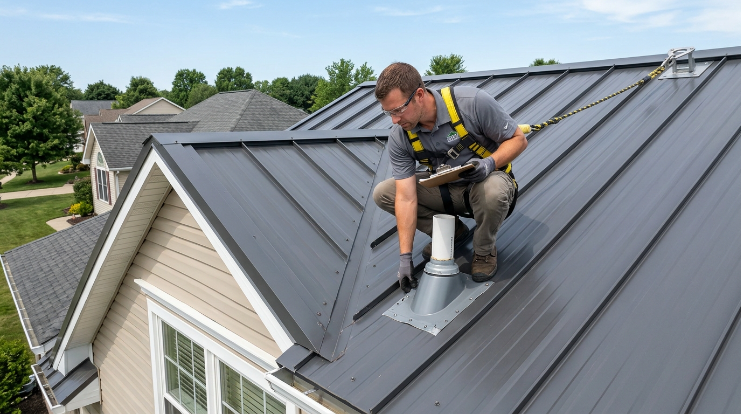
Stopping visible dripping does not always solve the actual roofing problem.
Water can enter through one location, move underneath a metal panel or along framing, and appear several feet away inside the house. That is why simply applying caulk above a ceiling stain may not prevent another leak.
Common recurring leak sources include:
- Loose or incorrectly installed fasteners
- Cracked sealing washers
- Failed flashing
- Deteriorated sealant
- Open panel seams
- Roof penetrations
- Corrosion
- Poor drainage
- Storm-damaged panels
- Improper previous repairs
A lasting repair starts by identifying why water entered, not merely where it became visible indoors.
1. Schedule Regular Roof Inspections
Routine inspection is one of the most effective ways to prevent a minor defect from becoming an expensive leak.
You do not necessarily need to walk on the roof yourself. In fact, doing so may create unnecessary risk and can damage some metal roofing systems.
From the ground, an upper window, or another safe location, watch for:
- Bent or lifted panels
- Loose trim
- Rust or discoloration
- Missing fasteners
- Damaged gutters
- Debris accumulation
- Loose flashing
- Tree branches touching the roof
- Storm-related damage
Inside the attic, when access is safe, look for darkened decking, wet insulation, rust stains, moisture around penetrations, or daylight entering through unexpected openings.
Do not assume that the stain directly above a ceiling leak is the water-entry point. Water can travel before it becomes visible.
How Often Should a Metal Roof Be Checked?
There is no single maintenance schedule that fits every roof.
Inspection frequency depends on:
- Roof age
- Local weather
- Roof pitch
- Tree coverage
- Type of metal roofing system
- Previous leak history
- Manufacturer requirements
- Warranty conditions
At minimum, pay special attention after severe wind, hail, fallen branches, or other events that may have damaged the roof.
2. Keep Flashing in Good Condition
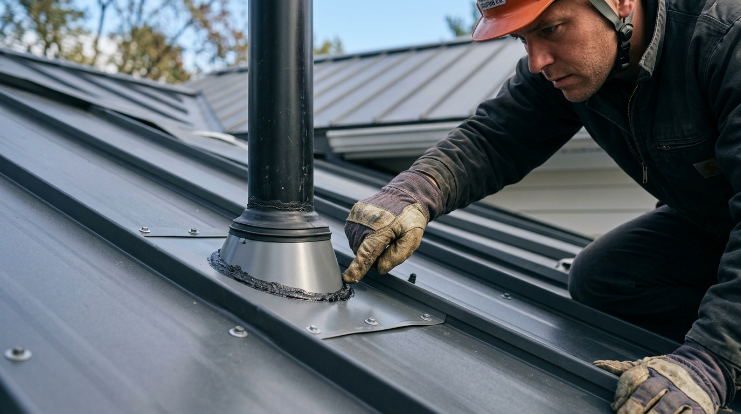
Flashing is the shaped metal installed around areas where water is more likely to enter, including:
- Chimneys
- Skylights
- Vent pipes
- Walls
- Roof valleys
- HVAC equipment
- Roof edges
- Changes in roof slope
Even when metal panels remain in excellent condition, damaged flashing can cause leaks.
Watch for flashing that appears:
- Loose
- Bent
- Separated
- Corroded
- Improperly sealed
- Pulled away from adjoining materials
A contractor may need to remove and reinstall defective flashing rather than simply covering it with sealant.
Repeatedly caulking failed flashing is rarely a good long-term strategy.
3. Inspect Fasteners Without Overtightening Them
Exposed-fastener metal roofs use screws with washers designed to seal the openings where the fasteners pass through the panels.
Over years of heating and cooling, metal naturally expands and contracts. Fasteners and washers can eventually loosen, deteriorate, or become damaged.
Possible warning signs include:
- Raised screw heads
- Missing screws
- Cracked washers
- Rust around a fastener
- Distorted metal around the screw
- Evidence of water below fastener locations
However, tightening every visible screw is not necessarily preventive maintenance.
Overtightening can crush a washer or deform the metal panel, potentially creating another leak path.
Fasteners should match the roofing system and be installed according to manufacturer requirements.
4. Use the Correct Sealant for a Metal Roof
One of the most common homeowner mistakes is treating roof sealant as a universal repair material.
It is not.
Metal panels move as temperatures change. Roof joints and penetrations therefore require sealants designed to remain compatible with both the roofing material and the expected movement.
The Metal Construction Association’s guidance on metal-roof sealants notes that more sealant is not necessarily better and stresses using compatible products recommended for the roofing system.
Avoid automatically applying generic caulk over:
- Standing seams
- Fastener heads
- Panel laps
- Flashing joints
- Pipe boots
- Skylights
A sealant that appears effective today may crack, separate, trap water, react with roofing materials, or interfere with panel movement later.
Always check the metal-roof manufacturer’s repair and sealant specifications before permanent work.
5. Keep Gutters, Valleys, and Drainage Paths Clear
A roof is designed to shed water.
When drainage becomes restricted, water can remain against seams, flashing, fasteners, roof edges, and other vulnerable areas longer than intended.
Keep these areas clear:
- Gutters
- Downspouts
- Roof valleys
- Scuppers on applicable low-slope roofs
- Drain openings
- Areas behind chimneys
- Low spots where leaves collect
Trees can create additional problems by dropping leaves, twigs, pine needles, and branches onto the roof.
Overflowing gutters can also allow water to reach fascia, soffits, walls, and roof edges.
If a metal roof repeatedly holds standing water, have the drainage design and roof condition evaluated rather than treating each leak separately.
6. Pay Attention to Roof Penetrations
Every opening through a roof creates a potential water-entry point.
Common penetrations include:
- Plumbing vents
- Exhaust vents
- Chimneys
- Skylights
- Satellite or antenna mounts
- Electrical penetrations
- HVAC lines
- Roof-mounted equipment
These components often depend on flashing, boots, collars, sealants, or curbs to remain watertight.
A small crack around a penetration can allow considerable water intrusion during wind-driven rain.
If equipment is added to the roof, make sure the installer understands the existing metal roofing system. Improper drilling or fastening can create a leak even when the equipment itself is installed correctly.
7. Control Attic Moisture and Condensation
Not every wet spot beneath a metal roof comes from rain.
Condensation can occur when warm, moist indoor air reaches a colder roof surface. It may then drip onto insulation or framing and resemble an exterior roof leak.
Possible signs include:
- Moisture when it has not rained
- Damp insulation
- Rust on metal components
- Mold or musty odors
- Moisture spread across a broad attic area
- Seasonal moisture problems
ENERGY STAR’s attic ventilation guidance explains that proper attic airflow helps remove moisture and that soffit vents should remain unobstructed by insulation.
Check that:
- Soffit vents are open
- Ridge or other exhaust vents are unobstructed
- Bathroom fans vent outdoors
- Dryer vents terminate outdoors
- Attic insulation is not blocking airflow
Persistent attic condensation may require both roofing and ventilation assessment.
8. Respond Quickly After Storm Damage
Metal roofs can withstand severe weather well, but strong winds, hail, tree limbs, or flying debris can still damage them.
After a major storm, look safely from the ground for:
- Lifted panels
- Loose ridge caps
- Bent flashing
- Dents or punctures
- Damaged gutters
- Fallen branches
- Missing components
- New ceiling stains
Photograph visible damage before permanent repairs if an insurance claim may be necessary.
Do not climb onto a wet, storm-damaged, or icy metal roof.
9. Protect the Roof From Unnecessary Foot Traffic
Metal roofing can be slippery, especially when wet, dusty, frosted, or covered with loose debris.
Walking in the wrong locations can also damage certain panels or seams.
Improper foot traffic can potentially:
- Dent panels
- Scratch protective coatings
- Distort seams
- Damage flashing
- Loosen fasteners
- Create new leak paths
OSHA’s roof inspection and repair safety guidance highlights ladder stability, proper ladder setup, fall hazards, and other risks associated with roof access.
For homeowners, the safest preventive strategy is often to inspect from the ground and let a properly equipped roofing professional perform close roof-level inspections.
Metal Roof Leak Prevention Checklist
| Roof Area | What to Watch For | Recommended Response |
|---|---|---|
| Metal panels | Bending, punctures, lifted edges | Professional inspection if damaged |
| Fasteners | Loose screws, failed washers, rust | Correct or replace using approved fasteners |
| Flashing | Separation, corrosion, movement | Repair or replace properly |
| Sealant | Cracking, shrinking, separation | Use compatible manufacturer-approved product |
| Gutters | Leaves, overflow, loose sections | Clean and correct drainage |
| Penetrations | Failed boots, collars, sealant | Repair appropriate flashing assembly |
| Attic | Wet insulation, stains, condensation | Identify leak vs. moisture source |
| Roof edges | Wind damage, loose trim | Secure professionally |
| Coating | Scratches, corrosion, deterioration | Follow manufacturer repair requirements |
| Storm damage | Lifted or damaged components | Document and inspect promptly |
Consider Roof Age and Overall Condition
Preventive maintenance makes the most sense when the underlying roof remains structurally sound.
Metal roofing systems can provide multi-decade service, but actual lifespan varies based on:
- Metal type
- Protective coating
- Installation quality
- Climate
- Maintenance
- Roof design
- Fastener system
- Exposure to salt or pollutants
- Previous repairs
An isolated flashing problem on an otherwise sound roof may justify a localized repair.
By contrast, widespread corrosion, repeated seam failures, numerous failing fasteners, deteriorated decking, or leaks throughout several roof areas may indicate that continuing to patch individual problems is becoming poor value.
How Prevention Affects Roofing Costs
Preventive maintenance has costs, but unresolved water intrusion can become considerably more complicated.
A small roofing problem may initially involve:
- Inspection labor
- Fastener replacement
- Sealant replacement
- Minor flashing work
- Gutter cleaning
Once moisture travels beneath the roofing system, additional work may involve:
- Removing panels
- Replacing underlayment
- Replacing wet insulation
- Repairing roof decking
- Replacing drywall
- Mold remediation
- Structural repairs
Underlayment is the protective layer installed beneath the primary roof covering. Decking is the structural surface, usually plywood or similar sheathing, that supports the roof system.
Roofing labor costs can also increase with height, steepness, difficult access, custom metal fabrication, special equipment, and fall-protection requirements.
The goal of preventive maintenance is not to spend money unnecessarily. It is to correct small, legitimate defects before they spread.
Check Your Warranty Before Making Repairs
Before drilling, coating, sealing, or modifying a metal roof, review both:
- Manufacturer material warranties
- Contractor workmanship warranties
Some warranties specify:
- Approved sealants
- Fastener types
- Coating products
- Maintenance requirements
- Acceptable repair procedures
- Contractor qualifications
- Documentation requirements
A seemingly harmless DIY repair could complicate warranty coverage.
If the roof is relatively new, contacting the original installer before altering it is often the safest approach.
Expert Tip: Photograph your metal roof’s vulnerable areas during professional inspections. Keeping dated photos of flashing, penetrations, fasteners, and previous repairs makes it much easier to spot changes before they develop into leaks.
Common Mistakes Homeowners Should Avoid
Preventing leaks is partly about maintenance and partly about avoiding repairs that create new problems.
Common mistakes include:
- Covering everything with caulk. Sealant cannot correct every flashing, seam, or installation defect.
- Overtightening screws. This may crush washers and deform panels.
- Adding random fasteners. Every new hole becomes another penetration.
- Ignoring small ceiling stains. Minor leaks can damage insulation and decking over time.
- Assuming every moisture problem is a roof leak. Condensation and plumbing can create similar symptoms.
- Walking on the roof without knowing safe foot-placement areas.
- Using incompatible metals or repair materials. Certain material combinations can accelerate corrosion.
- Ignoring gutters and drainage.
- Repairing before documenting storm damage. Documentation may matter for insurance.
- Continuing to patch a recurring leak without diagnosing its underlying cause.
When to Consult a Licensed Roofing Contractor
Some preventive maintenance can be performed from the ground, but metal roof repairs are not appropriate DIY projects for every homeowner.
Call a qualified roofing contractor when you notice:
- A recurring leak
- Loose or lifted panels
- Major flashing failure
- Widespread corrosion
- Significant storm damage
- Sagging roof areas
- Rotten or soft decking
- Multiple failing fasteners
- Large amounts of wet insulation
- Water around electrical components
- Repeated failed repairs
- Damage near skylights, chimneys, or rooftop equipment
You should also seek professional help when the roof is steep, high, wet, icy, difficult to access, or otherwise unsafe.
If structural movement or severe decking deterioration is suspected, the contractor may recommend further structural assessment.
Do not risk a fall to save the cost of an inspection.
Repair or Replace: Which Prevents the Next Leak?
Repair is generally reasonable when the defect is isolated and the rest of the metal roofing system remains serviceable.
Replacement or major restoration deserves consideration when:
- Leaks occur in many areas
- Corrosion is widespread
- Panels are badly damaged
- Installation defects affect the entire system
- Roof decking has extensive deterioration
- Repairs repeatedly fail
- Compatible replacement components are unavailable
- Repair costs are becoming disproportionate to the roof’s remaining service life
Ask the contractor to explain whether the recommendation addresses one defect or a system-wide problem.
When comparing quotes, evaluate the scope of work, not only the total price.
A more complete proposal may include flashing replacement, damaged decking, compatible sealants, custom metal work, drainage corrections, and warranty protection that a cheaper surface patch excludes.
FAQs
How often should I inspect my metal roof for leaks?
Check it visually after major storms and monitor it regularly for changes. Professional inspection frequency should reflect the roof’s age, condition, manufacturer recommendations, climate, and previous leak history.
What is the most common cause of metal roof leaks?
There is no single cause for every system. Fasteners, flashing, penetrations, failed sealants, seams, storm damage, and installation defects are all common areas to investigate.
Can I prevent a roof leak by applying more sealant?
Not necessarily. Excess or incompatible sealant may fail and can sometimes interfere with the roof system. Identify the underlying problem and use products approved for the specific application.
Should I tighten loose metal roof screws myself?
Be cautious. A loose fastener may require replacement rather than tightening, and overtightening can damage the washer or panel. Professional evaluation is safer when you are unsure.
Can clogged gutters cause metal roof leaks?
Poor drainage can contribute to water problems by allowing water and debris to accumulate near roof edges and other vulnerable locations. Keeping gutters and downspouts clear is an important part of prevention.
Why does my metal roof seem to leak when it has not rained?
The moisture may be condensation rather than rainwater. Poor attic ventilation, high indoor humidity, or improperly vented bathrooms and dryers can contribute to moisture beneath the roof.
Does one leak mean I need a new metal roof?
Usually not. An isolated flashing, fastener, penetration, or sealant problem may be repairable. Replacement becomes more reasonable when damage is widespread, structural deterioration exists, or repeated repairs keep failing.
Conclusion
Understanding how to prevent future roof leaks comes down to consistent inspection, proper drainage, sound flashing, correct fasteners, compatible sealants, moisture control, and timely repairs.
The biggest mistake is waiting until a small warning sign becomes major interior damage—or repeatedly patching the visible symptom without locating the true water-entry point.
Monitor your roof from safe locations, document changes, review your warranty, and have questionable conditions evaluated by a qualified roofer. A properly diagnosed repair today can protect your metal roof, attic, ceilings, and structure for years to come.
If you notice recurring water stains, damaged flashing, loose panels, or evidence of moisture in the attic, schedule a professional inspection before the next major storm.