
How Can You Reduce Roof Leak Repair Costs? Smart Ways to Spend Less on Metal Roof Leaks

A roof leak can turn into an expensive problem fast. What starts as a small drip around a screw, seam, vent, or flashing detail can eventually damage insulation, ceiling drywall, roof decking, and even framing.
So, how can you reduce roof leak repair costs?
The best approach is usually to find the real source early, stop water before it spreads, maintain vulnerable roof areas, compare repair quotes carefully, and avoid temporary fixes that create a larger problem later.
This is especially important with metal roofs. Water can travel along panels, framing, and insulation before appearing inside your home. The stain you see on the ceiling may not be directly below the actual leak.
This guide explains practical ways to control metal roof leak repair costs without sacrificing safety or repair quality.
Quick Answer
How can you reduce roof leak repair costs? Catch leaks early, document the problem, keep gutters and drainage clear, repair damaged flashing or fasteners promptly, check warranty coverage, and get detailed quotes from qualified roofers. Avoid repeated DIY patches when the leak source is unknown, because failed repairs can increase long-term costs.
Why Metal Roof Leak Repair Costs Can Increase Quickly
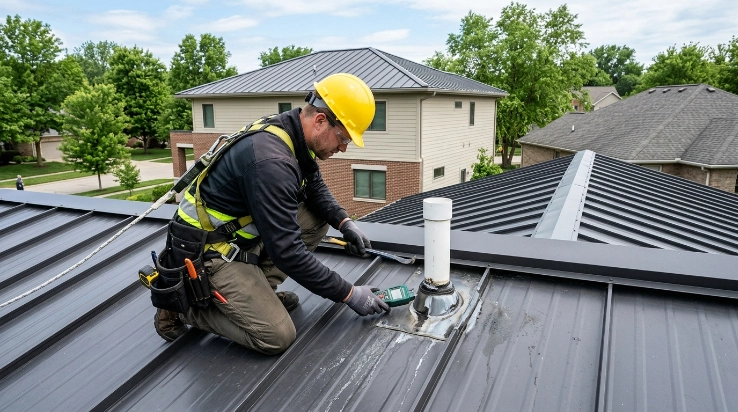
Metal roofs can provide long service life, but they are still complete roofing systems with seams, fasteners, flashing, underlayment, penetrations, and drainage details.
A small failure in one of those areas can allow water into the roof assembly.
The repair becomes more expensive when water reaches:
- Roof decking
- Insulation
- Rafters or trusses
- Interior drywall
- Electrical components
- Attic finishes
- Wall cavities
The National Roofing Contractors Association recommends periodic roof inspections and notes that additional inspections may be appropriate after severe weather. Its guidance also warns inexperienced homeowners against walking on roofs without proper experience and equipment. NRCA residential roof maintenance guidance
The cheapest roof leak is usually the one found before hidden damage develops.
1. Deal With a Leak as Soon as You Notice It
Waiting is one of the easiest ways to make a repair more expensive.
You may see only a small ceiling stain and assume the leak is minor. However, water may already be soaking insulation or spreading across the underside of the roof deck.
Watch for signs such as:
- Brown or yellow ceiling stains
- Damp attic insulation
- Musty attic odors
- Peeling ceiling paint
- Water near vents or chimneys
- Rust around metal fasteners
- Open or lifted seams
- Loose flashing
- Missing or damaged screws
- Corroded panels
- Water appearing after wind-driven rain
Take photographs and write down when the leak occurs.
For example, does it happen during every rainfall or only during heavy wind? Does it appear after snow melts? Does it occur near an HVAC unit, skylight, chimney, or plumbing vent?
Those details can help a contractor narrow down the source more efficiently.
2. Find the Actual Leak Before Paying for Repairs
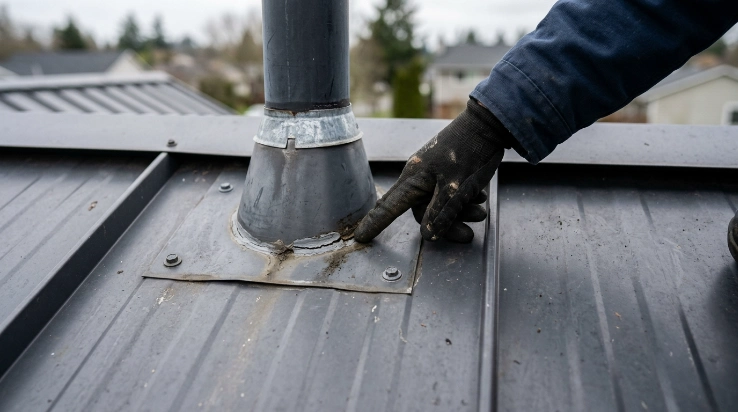
One of the biggest ways to waste money is repairing the visible symptom instead of the entry point.
Water does not always travel straight down.
On a metal roof, it may move along:
- Panel seams
- Roof decking
- Rafters
- Underlayment
- Insulation
- Pipes
- Fasteners
That means a ceiling stain ten feet from a chimney does not automatically prove the roof is leaking directly above the stain.
Common metal roof leak locations include:
Fasteners
Exposed-fastener metal roofs use screws with sealing washers. Over time, movement, improper installation, deterioration, or damage can affect their ability to keep water out.
Panel Seams
Metal expands and contracts as temperatures change. A poorly installed or damaged seam may eventually become vulnerable.
Flashing
Flashing is shaped material that directs water away from roof transitions and penetrations.
Problem areas can include:
- Chimneys
- Vent pipes
- Skylights
- Sidewalls
- Roof valleys
- HVAC curbs
- Roof-to-wall connections
Roof Penetrations
Any opening through the roofing system creates an area that requires careful waterproofing.
Corrosion and Physical Damage
Rust, falling branches, severe hail, careless foot traffic, or previous repairs can damage panels and protective coatings.
Do not assume that spreading sealant over every suspicious area will solve the problem. Correct diagnosis can save more money than a cheap but inaccurate patch.
3. Prevent Water Damage Inside the House
You may not be able to repair the roof immediately, but you can sometimes reduce secondary damage while arranging professional help.
Move furniture, electronics, rugs, and valuables away from the wet area.
Use containers to catch dripping water when practical.
If the ceiling is bulging because water is collecting above it, keep people away from the area. Wet drywall can become heavy and may fail.
Do not enter an attic if water is near exposed electrical wiring or other electrical equipment.
Most importantly, do not climb onto a wet metal roof to perform an emergency repair.
Metal surfaces can be extremely slippery.
OSHA’s roofing safety materials emphasize the serious fall hazards involved in residential construction and the importance of appropriate fall-protection systems for workers. OSHA residential roofing fall-protection guidance
Saving a service-call fee is not worth risking a serious fall.
4. Use Preventive Maintenance to Reduce Future Repair Costs
Maintenance will not prevent every leak, but it can help identify developing problems before they become major repairs.
A practical homeowner maintenance routine can include checking visible roof areas from the ground after storms and watching for:
- Bent or displaced metal
- Loose trim
- Damaged flashing
- Fallen branches
- Clogged gutters
- Overflowing downspouts
- Rust
- Debris buildup
- Interior moisture
Keeping gutters and drainage paths clear is particularly important.
Water that cannot drain correctly may overflow, back up, or remain against vulnerable roof details.
The NRCA notes that regular inspections can uncover deterioration and other visible roof problems before more serious leakage is discovered. NRCA homeowner roofing resources
You do not necessarily need to walk on the roof to perform basic monitoring.
Binoculars, ground-level observations, attic inspections, and professional roof inspections can provide useful information without unnecessary roof access.
5. Repair Small Problems Before They Spread
A localized repair is usually easier to manage than widespread moisture damage.
For example, correcting one damaged flashing detail may involve substantially less work than later replacing:
- Flashing
- Wet insulation
- Rotten decking
- Interior ceiling materials
- Multiple damaged panels
The same principle applies to corrosion.
A small damaged coating area may be manageable when identified early. Extensive corrosion around seams, edges, fasteners, or panels may require much more work.
Early repair does not mean rushing into the first repair offered. It means investigating promptly and fixing the correct problem.
6. Get More Than One Detailed Repair Quote
For a significant roof repair, comparing quotes can help prevent unnecessary spending.
Do not compare only the final totals.
Ask each contractor to explain:
- Where the leak is believed to originate.
- How the source was identified.
- Which materials will be removed.
- Which materials will be replaced.
- Whether decking damage is suspected.
- Whether new flashing will be fabricated.
- Whether the repair affects an existing warranty.
- What workmanship warranty applies.
- Whether permits are required.
- What happens if hidden damage is discovered.
A $900 estimate and a $1,500 estimate may not describe the same repair.
One contractor may be quoting a surface reseal while another plans to remove panels and rebuild failed flashing.
The lower number is not automatically the better value.
The Federal Trade Commission recommends getting multiple estimates for home improvement work and reviewing written estimates carefully rather than automatically selecting the lowest bidder. FTC guidance for hiring home-improvement contractors
7. Ask for an Itemized Scope of Work
An itemized estimate makes it easier to understand where your money is going.
Roof leak repair costs may include:
| Cost Factor | Why It Changes the Price | Potential Cost-Saving Approach |
|---|---|---|
| Leak diagnosis | Hidden leaks take longer to locate | Document when and where water appears |
| Roof access | Tall or steep roofs need more safety setup | Combine inspection with needed maintenance |
| Panel removal | Some leaks require opening the roof system | Confirm removal is actually necessary |
| Flashing | Custom metal details require skilled labor | Repair problems before surrounding materials deteriorate |
| Decking | Rotten wood must be replaced | Address leaks before long-term saturation develops |
| Materials | Metal type and finish affect availability | Provide original roof documentation if available |
| Labor | Metal roofing requires specialized skills | Compare detailed quotes, not hourly rates alone |
| Emergency service | After-hours work may cost more | Act at the first warning signs when possible |
A detailed scope also reduces misunderstandings once work begins.
Expert Tip
Expert Tip: Ask the roofer to show you photographs of the suspected leak entry point and explain exactly how the proposed repair will stop water. A clear diagnosis is often more valuable than the cheapest patch.
8. Check Your Roof Warranty Before Approving Work
Before anyone modifies your metal roofing system, find your installation documents.
You may have:
- A manufacturer material warranty
- A paint or coating warranty
- A contractor workmanship warranty
- Special warranty requirements for penetrations or repairs
Read the exclusions carefully.
Using incompatible sealants, drilling new holes, installing improper fasteners, or allowing an unauthorized contractor to modify certain components could affect coverage depending on the warranty terms.
Contact the manufacturer or original installer when you are unsure.
Do not assume a roof warranty covers every leak.
Material warranties and workmanship warranties often cover different problems.
9. Avoid Cheap Materials That Do Not Match the Roof System
Metal roofs move as temperatures change.
Repair products should be compatible with the specific metal, coating, panel design, flashing, and movement requirements.
General-purpose household caulk may not be appropriate for a roofing seam or penetration.
Likewise, installing random screws simply because they fit the hole may create another leak.
A proper repair might require:
- Compatible replacement fasteners
- New sealing washers
- Metal-specific sealant
- Butyl tape
- Custom flashing
- Matching metal panels
- Appropriate coatings
Spending slightly more on the correct repair material can prevent repeated labor costs.
10. Do Not Turn a Small Repair Into a DIY Experiment
Some homeowners try several products before calling a roofer.
They may apply:
- Roofing cement
- Silicone
- Spray foam
- Tape
- Multiple layers of caulk
- Improvised patches
Sometimes this appears to stop water temporarily.
But a surface patch can also make the actual leak harder to locate. It may interfere with panel movement or complicate the professional repair.
DIY work is especially risky when you do not know:
- Where the water enters
- What metal the roof uses
- Which coating is present
- How the panel system is designed
- Whether the roof is under warranty
A temporary measure should not be confused with a permanent repair.
11. Schedule Work Before Damage Becomes an Emergency
Emergency roof work may involve additional scheduling, labor, temporary protection, or safety costs.
You cannot control when every leak appears, but preventive inspections can sometimes identify loose flashing, damaged panels, deteriorating fasteners, or storm damage before water reaches the interior.
Consider scheduling an inspection after significant:
- Hail
- Wind
- Falling branches
- Severe thunderstorms
- Other events that visibly affect the roof
You should also investigate new interior stains even if they appear to dry out.
A leak that disappears when the weather changes has not necessarily repaired itself.
12. Understand When Repair Is Better Than Replacement
A leak does not automatically mean you need an entirely new roof.
Localized repair may make sense when:
- The problem is isolated
- Most panels are in good condition
- Corrosion is limited
- Decking remains sound
- The roof has not developed widespread recurring leaks
- Matching repair materials are available
Replacement becomes more reasonable when the roof has extensive deterioration, structural damage, repeated failures, widespread corrosion, or multiple areas where the system is no longer performing properly.
Roof age matters, but condition matters more than age alone.
Metal roofing can remain serviceable for decades when the system, installation, environment, and maintenance are favorable. However, no advertised lifespan guarantees how long a particular roof will last.
What About Aging Shingles, Ventilation, and Other Roof Problems?
Not every water stain is caused by a hole in a metal panel.
Homes can have mixed roofing materials, attached additions, porch roofs, or older asphalt-shingle sections. Aging or storm-damaged shingles in those areas may also leak.
Poor attic ventilation can create another confusing problem.
Warm, moisture-filled indoor air can sometimes condense on cold roof components. That moisture may resemble a roof leak.
A contractor may need to determine whether the problem involves:
- Exterior water intrusion
- Condensation
- Ventilation
- Insulation
- Plumbing
- HVAC equipment
Paying to repair the wrong system wastes money.
When to Consult a Licensed Roofing Contractor
Professional help is usually the smarter choice when the leak involves:
- A steep roof
- A high roof
- Standing seam panels
- Large areas of corrosion
- Structural sagging
- Rotten decking
- Multiple active leaks
- Chimneys or complicated flashing
- Skylights
- HVAC curbs
- Large storm damage
- Insurance claims
- Electrical hazards
- Repeated previous repairs
- Uncertain leak locations
Metal roofing often requires specialized knowledge.
A contractor familiar with the exact panel system can evaluate seam movement, fasteners, flashing, penetrations, coatings, and hidden moisture without relying on guesswork.
Check licensing requirements in your state or locality and ask for proof of appropriate insurance.
Common Mistakes Homeowners Should Avoid
Reducing repair costs is not the same as buying the cheapest possible repair.
Avoid these common mistakes:
- Waiting for the leak to get worse. Hidden water damage can increase the repair scope.
- Assuming the ceiling stain identifies the roof opening. Water can travel before it becomes visible.
- Covering everything with sealant. The real defect may remain underneath.
- Hiring only by price. Compare the actual repair scope.
- Ignoring warranties. Unauthorized modifications may affect coverage.
- Walking on a wet metal roof. Metal roofing can be dangerously slippery.
- Ignoring gutters and drainage. Poor drainage can contribute to moisture problems.
- Failing to document storm damage. Photographs can be useful when discussing repairs or insurance.
- Accepting vague estimates. Ask what will actually be repaired.
- Repeating unsuccessful patches. Multiple failed repairs may eventually cost more than proper diagnosis.
FAQs
How can you reduce roof leak repair costs most effectively?
Act early. Document the leak, identify the real entry point, prevent additional interior damage, compare detailed contractor quotes, and check warranty coverage before approving work. Avoid repeatedly paying for temporary patches that do not address the underlying cause.
Is it cheaper to repair a metal roof yourself?
Not necessarily. A simple DIY patch may appear cheaper, but incorrect materials or diagnosis can create additional leaks, roof damage, safety risks, or warranty problems. Professional help is usually appropriate for roof-level repairs.
Should I repair every leaking metal roof or replace it?
No single answer fits every roof. An isolated flashing, fastener, or penetration problem may be repairable. Widespread corrosion, repeated leaks, rotten decking, structural problems, or extensive system failure may make larger repairs or replacement more practical.
Can clogged gutters increase roof repair costs?
They can contribute to drainage and moisture problems. Gutters and downspouts should move water away efficiently. Keeping drainage paths clear is inexpensive compared with repairing moisture-related damage later.
Does homeowners insurance pay for metal roof leaks?
Coverage depends on the cause of the damage and your individual policy. Sudden storm damage may be treated differently from deterioration, neglected maintenance, improper installation, or long-term leakage. Review your policy and document damage before major repairs when a claim may be involved.
Can roof sealant permanently fix a metal roof leak?
Sometimes sealant is a legitimate part of a professional repair, but it is not a universal solution. Flashing failures, damaged panels, corrosion, open seams, and structural problems may require more than sealant.
Should I always choose the lowest roofing estimate?
No. Compare the diagnosis, materials, repair method, warranties, exclusions, and treatment of hidden damage. A higher quote may include necessary work missing from a cheaper estimate.
Conclusion
So, how can you reduce roof leak repair costs?
Start by dealing with water problems early. Find the true leak source before paying for repairs. Maintain drainage, inspect vulnerable areas, check warranties, document storm damage, and compare detailed contractor estimates instead of choosing a price alone.
With a metal roof, the goal should not be the cheapest short-term patch. It should be the smallest correct repair that solves the underlying problem safely.
If you are seeing new ceiling stains, damp insulation, loose metal, damaged flashing, rust, or recurring leaks, arrange a proper inspection before additional water damage expands the job.
A little attention today can prevent a much larger roofing bill tomorrow.