
Does Roof Material Affect Leak Repair Cost? A Homeowner Guide

A roof leak may look simple from inside your home. You see a ceiling stain, a drip near a window, or damp insulation in the attic. But the actual repair can vary a lot depending on what covers your roof.
So, does roof material affect leak repair cost? Yes. Asphalt shingles, metal panels, tile, wood shakes, and flat roofing systems all require different materials, tools, skills, and repair methods.
Metal roof leaks are a good example. Replacing one loose fastener may be fairly simple. Repairing failed standing-seam flashing, corrosion, or damaged panels can be much more involved.
This guide explains how roof material affects leak repair prices, why metal roof leaks can cost more to diagnose, and what homeowners should consider before approving a repair.
Quick Answer
Yes, roof material affects leak repair cost because each roofing system requires different materials, labor, tools, and repair skills. Asphalt shingles are often simpler to patch, while metal, tile, wood shake, and specialty flat roofs may require experienced contractors. Leak location, hidden damage, roof pitch, and access can affect the final price even more.
Why Roof Material Changes Leak Repair Cost
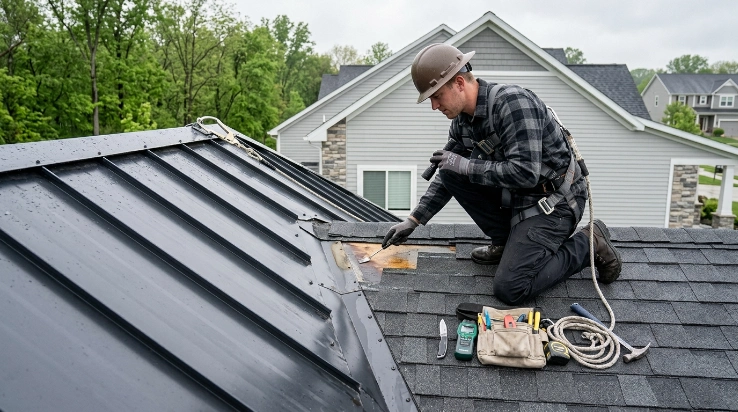
A roofer is not simply covering a hole when repairing a leak.
The contractor first has to determine where water is getting through the roofing system. That can be difficult because water often travels along decking, underlayment, fasteners, seams, or framing before appearing inside your house.
The National Roofing Contractors Association’s guidance on investigating roof leaks emphasizes the importance of finding the actual water-entry path instead of making an unverified surface repair.
Once the leak is located, the roofing material determines how the damaged area must be opened, repaired, sealed, and restored.
The main differences include:
- Cost of replacement roofing material
- Difficulty removing damaged sections
- Specialized tools
- Contractor experience required
- Flashing design
- Fastener or seam type
- Availability of matching material
- Risk of damaging surrounding roofing
- Warranty requirements
- Time needed to complete the repair
A cheap roofing material does not automatically mean a cheap leak repair. Access and repair complexity can sometimes matter more than the material itself.
Roof Material and Typical Leak Repair Complexity
The following table gives homeowners a general comparison.
| Roof Material | Typical Repair Cost Tendency | Common Leak Problems | Repair Difficulty |
|---|---|---|---|
| Asphalt shingles | Low to moderate | Missing shingles, flashing, nail holes | Usually lower |
| Metal roofing | Moderate to high | Fasteners, seams, flashing, corrosion | Moderate to high |
| Clay/concrete tile | High | Cracked tiles, flashing, underlayment | High |
| EPDM/TPO flat roofing | Moderate | Seams, punctures, flashing | Moderate |
| Wood shake | Moderate to high | Splits, rot, flashing, underlayment | Moderate to high |
These are general tendencies, not fixed prices.
A small flashing problem on an expensive metal roof could still cost less than a major decking repair under inexpensive asphalt shingles.
Why Metal Roof Leak Repair Can Cost More
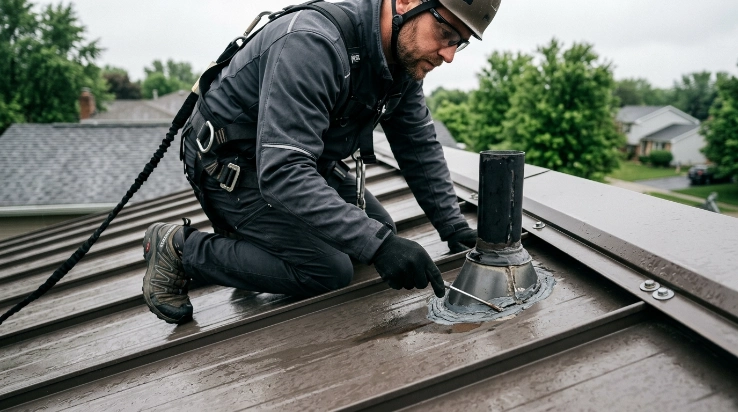
Metal roofing is a complete system rather than simply a layer of metal sheets.
Panels, seams, clips, screws, washers, flashing, sealants, underlayment, penetrations, and trim pieces all work together to keep water outside.
That makes identifying the true problem important.
The Metal Construction Association’s metal roof installation resources cover specialized areas such as metal panels, sealants, fasteners, accessories, substrates, and roof-system installation.
A problem involving one of these components may require more specialized work than replacing a damaged asphalt shingle.
Common Sources of Metal Roof Leaks
Metal roof leaks often develop around:
- Loose or backed-out screws
- Damaged fastener washers
- Failed sealant
- Panel seams
- Roof penetrations
- Chimney flashing
- Plumbing vents
- Skylights
- Ridge or transition flashing
- Rust or corrosion
- Improperly installed panels
- Damaged roof edges
Standing-seam roofs may have concealed clips and mechanically joined seams. Exposed-fastener metal roofs use visible screws and washers.
The repair method can therefore change significantly depending on the metal roof system.
Metal Roof Repair Planning Ranges
Prices vary widely by location and roof design, but homeowners can think about metal leak repairs in broad planning categories.
Minor repair: roughly a few hundred dollars.
This might involve replacing a limited number of compatible fasteners, correcting a small sealant problem, or addressing a simple penetration.
Moderate repair: several hundred to $1,500 or more.
Examples include flashing reconstruction, seam problems, multiple leak points, or repairs requiring more investigation.
Complex repair: $1,000 to several thousand dollars.
Panel replacement, widespread corrosion, hidden moisture, damaged decking, complicated penetrations, or difficult roof access can push costs much higher.
These figures are only budgeting guides. A contractor should inspect the roof before you rely on any repair estimate.
Material Compatibility Matters on Metal Roof Repairs
Metal roofing has another cost consideration that homeowners sometimes overlook: compatibility.
Using the wrong fastener, sealant, patch material, or metal can create new problems.
For example, different metals can react when they come into contact under certain conditions. The Metal Construction Association warns in its guidance on dissimilar-metal corrosion that material and fastener compatibility can affect long-term roof performance.
This is one reason general-purpose caulk or an improvised metal patch may not be the best solution.
A repair should work with the existing roof system rather than simply covering the visible opening.
Other Factors That Affect Roof Leak Repair Cost
Roof material is important, but it is only one part of your estimate.
Leak Location
A leak near an easily accessible roof edge may be simpler to repair than one around a chimney, skylight, valley, dormer, or complicated roof transition.
Roof Pitch
Pitch means how steep your roof is.
A steep roof usually requires more safety planning and can take longer to work on.
Roof Height
Working on a single-story home is usually easier than reaching the roof of a two- or three-story house.
Extra access equipment can increase labor costs.
Hidden Water Damage
The visible leak may only be the beginning.
Water can damage:
- Roof decking
- Insulation
- Ceiling drywall
- Wood framing
- Attic finishes
Decking is the wood or structural surface underneath the roofing system.
If that material has become soft or rotten, repairing the roof covering alone may not solve the full problem.
Flashing
Flashing is metal or another waterproof material installed where the roof meets walls, chimneys, vents, valleys, and other transitions.
Replacing one damaged shingle may be inexpensive.
Rebuilding complicated flashing can require considerably more labor.
Labor and Contractor Experience
Some roofs require specialist knowledge.
A roofer who mainly installs asphalt shingles may not have the tools or training needed for a complicated standing-seam metal repair.
Specialized labor often costs more, but proper repair can reduce the risk of repeated leaks.
Repair or Replace the Roof?
Not every roof leak means you need a new roof.
A localized problem on an otherwise healthy roof is often worth repairing.
Replacement becomes more reasonable when you have:
- Widespread corrosion or deterioration
- Many recurring leaks
- Extensive storm damage
- Rotten or structurally damaged decking
- Large areas of failing roofing
- Serious installation defects
- A roof approaching the end of its useful life
- Repairs that would cost a significant percentage of replacement
Roof age alone should not decide the issue.
A relatively young roof can fail because of poor installation. An older roof may still have years of useful service if the damage is isolated.
Ask the contractor to separate the leak problem from the overall condition of the roof.
What About Warranties and Insurance?
Before approving a repair, check your paperwork.
Your roofing material may have a manufacturer warranty, while the original contractor may have provided a separate workmanship warranty.
Do not assume every leak is covered.
Material warranties commonly have exclusions, and workmanship coverage varies between contractors.
Storm-related damage can also be different from normal wear.
Wind, hail, or falling debris may involve homeowners insurance depending on your policy and the cause of damage.
If you believe a recent storm caused the leak:
- Photograph visible damage from a safe location.
- Photograph interior water stains.
- Note when you first noticed the leak.
- Keep temporary-repair receipts.
- Review your insurance policy.
- Avoid permanently altering evidence before an inspection when a claim may be involved.
Do not delay emergency steps needed to prevent additional water damage.
Can You Inspect a Roof Leak Yourself?
You can perform some basic checks without climbing onto the roof.
Look inside the attic for:
- Wet insulation
- Water stains
- Damp decking
- Rusted fasteners
- Moisture around vents
- Darkened wood
- Signs of active dripping
You can also examine the roof from the ground with binoculars or a zoom camera.
Watch for missing roofing, loose metal, visible rust, damaged flashing, storm debris, or displaced panels.
Do not climb onto a wet, icy, storm-damaged, steep, or questionable roof.
OSHA’s fall-prevention guidance for roofing work highlights the serious fall hazards associated with roof work and the importance of proper fall-protection equipment.
Metal roofing deserves particular caution because smooth panels can become extremely slippery when wet.
Expert Tip
Expert Tip: Ask the contractor to show you the suspected leak source before approving the repair. A ceiling stain does not necessarily sit directly below the roof opening. Paying to repair the wrong location can leave you with the same leak after the next storm.
When to Consult a Licensed Roofing Contractor
Call an experienced roofing contractor when the source of the leak is unclear or the repair involves more than a simple, safely accessible issue.
Professional help is especially important when you see:
- Active water entering the home
- Multiple leak locations
- Sagging roof areas
- Soft or damaged decking
- Severe corrosion
- Loose metal panels
- Major hail or wind damage
- Damaged structural framing
- Problems around chimneys or skylights
- A very steep or high roof
- Recurring leaks after previous repairs
A qualified contractor can inspect the roofing material, underlayment, flashing, drainage, penetrations, and structural deck.
For metal roofing, look for someone with experience working on your specific panel system.
If structural movement or major decking damage is suspected, a structural engineer or other qualified building professional may also need to evaluate the property.
Common Mistakes Homeowners Should Avoid
Several common choices can turn a small leak into a larger repair.
- Patching the ceiling stain location without finding the roof entry point.
- Using random caulk on metal roofing. The sealant may not be compatible with the roof system.
- Ignoring a small leak. Repeated moisture can damage decking and insulation.
- Walking on a wet metal roof. The fall risk can be severe.
- Replacing materials without checking warranty requirements.
- Automatically choosing the cheapest estimate.
- Assuming every leak requires roof replacement.
- Ignoring ventilation or condensation. Moisture in an attic does not always come from rain entering through the roof.
Get the cause confirmed before paying for a large repair whenever possible.
FAQs
Does metal roofing cost more to repair than shingles?
It can. Metal roofs often require specialized fasteners, sealants, panels, flashing methods, and contractor experience. However, replacing a few fasteners may cost less than repairing extensive water damage beneath an asphalt-shingle roof.
What is the most expensive roof material to repair?
Tile, specialty metal, slate, and other premium systems can be costly because materials and skilled labor may be expensive. The exact cost depends more on the size and complexity of the damaged area than material price alone.
Can one leaking metal roof panel be replaced?
Sometimes. Whether a single panel can be replaced depends on the panel system, seam design, location, surrounding panels, and availability of matching material. Standing-seam systems can be particularly involved.
Why is my metal roof leaking around screws?
Exposed-fastener roofs can leak when screws loosen, washers deteriorate, holes enlarge, or fasteners were installed incorrectly. The correct repair depends on the condition of both the fastener and surrounding metal.
Is it cheaper to repair or replace a leaking roof?
A localized leak on an otherwise sound roof is usually a repair problem. Replacement may make more financial sense when damage is widespread, leaks keep returning, decking has deteriorated, or the entire roof system is near the end of its useful life.
Will homeowners insurance pay for roof leak repairs?
It depends on what caused the damage and your specific policy. Sudden covered events such as certain wind or hail losses may be treated differently from wear, corrosion, poor maintenance, or long-term deterioration.
Can a small roof leak become expensive?
Yes. A minor opening can allow water to reach insulation, decking, ceilings, walls, and framing. Finding and repairing the source early can limit secondary damage.
Conclusion
So, does roof material affect leak repair cost? Absolutely. The material determines how a roofing system is assembled, how leaks are diagnosed, what replacement components are needed, and how much specialized labor may be required.
Metal roof leaks can range from a simple fastener repair to complicated work involving seams, flashing, panels, corrosion, or damaged decking.
Do not judge a repair only by the size of the ceiling stain.
Your best next step is to identify the true leak source, understand the condition of the surrounding roof, review any warranty or insurance coverage, and get a detailed written estimate from an experienced roofing contractor before deciding between repair and replacement.