Is It Cheaper to Repair or Replace a Leaking Roof?

A leaking roof can turn a normal day into an expensive problem very quickly. Water may start with a small ceiling stain, but hidden moisture can damage insulation, roof decking, drywall, and even electrical components if the source is not fixed.
So, is it cheaper to repair or replace a leaking roof? In most cases, repairing a localized leak costs less upfront. However, replacement can be the smarter financial choice when the roof is old, leaking in several places, badly damaged, or requiring repeated repairs.
For homeowners with a metal roof, the decision can be especially important. A loose fastener, damaged flashing, failed sealant, or isolated seam problem may be repairable. Widespread corrosion, failing panels, deteriorated underlayment, or major installation problems may point toward replacement.
This guide explains how to compare repair and replacement based on the cause of the leak, roof age, condition, material, labor requirements, warranty coverage, and long-term cost.
Quick Answer
Repairing a leaking roof is usually cheaper when the damage is small, localized, and the rest of the roof is in good condition. Replacement is often more economical long term when the roof is near the end of its lifespan, has widespread deterioration, or keeps developing leaks despite previous repairs.
Does a Roof Leak Automatically Mean You Need a New Roof?
No.
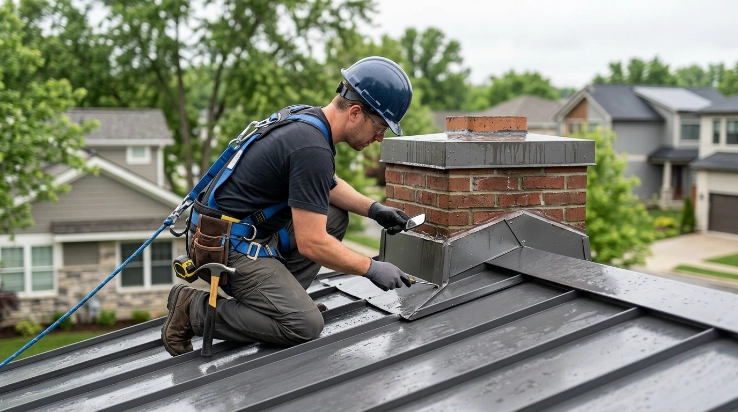
A leak does not automatically mean your entire roofing system has failed. The National Roofing Contractors Association explains that leaks can result from localized problems such as damaged roof areas or loose flashing, while complete roof-system failure is a different and more serious condition. NRCA homeowner roofing resources
Common repairable leak sources include:
- Damaged or missing shingles
- Loose or deteriorated flashing
- Failed pipe-boot seals
- Loose metal-roof fasteners
- Small punctures
- Failed sealant around penetrations
- Isolated metal panel seams
- Minor storm damage
If the roof surrounding the leak is structurally sound and still has substantial useful life remaining, a professional repair usually makes more financial sense than replacement.
The situation changes when the leak is simply one symptom of widespread roof deterioration.
When Roof Repair Is Usually the Cheaper Choice
Repair is normally the first option to consider when the problem can be isolated and corrected without rebuilding a large portion of the roof.
The Leak Has One Clear Source
Suppose water is entering around a plumbing vent because its flashing has deteriorated. If the surrounding roofing material remains healthy, replacing or resealing the flashing may solve the problem.
The same applies to many metal roof leaks. A contractor may discover that water is entering around:
- A loose exposed fastener
- A damaged washer
- A roof penetration
- A ridge cap
- A poorly sealed transition
- A small seam opening
Correcting that specific defect is usually far less expensive than removing a functioning roof.
The Roof Is Relatively Young
Roof age matters because you do not want to replace years of remaining service life unnecessarily.
A younger roof with an isolated defect is generally a stronger repair candidate than an older roof showing several forms of deterioration at once.
Material also matters. Metal roofing, for example, can have a long service life when correctly installed and maintained. A localized leak on an otherwise healthy metal roof should therefore be diagnosed carefully before replacement is considered.
Damage Covers Only a Small Area
A few damaged shingles or one localized section of metal roofing usually favors repair.
The economics change as the damaged area grows. Once labor involves removing and rebuilding substantial portions of the system, replacement may become more attractive.
This Is the First Significant Repair
One isolated roof repair is normal over the life of many roofing systems.
Repeated repairs are different.
If you have already paid to stop leaks in several areas and new ones continue appearing, the roof may be experiencing system-wide deterioration rather than isolated failures.
When Roof Replacement May Be Cheaper Long Term
Replacement costs considerably more upfront, but the lowest initial price is not always the lowest total cost.
Imagine spending money on a leak repair this year, another repair next year, replacing damaged decking later, and finally replacing the roof anyway. In that situation, repeated repairs can become an expensive delay.
Replacement becomes more reasonable when several warning signs appear together.
The Roof Is Near the End of Its Expected Service Life
Every roofing material ages differently.
Asphalt shingles can become brittle, lose granules, curl, crack, or loosen as they age. Metal roofs may develop corrosion, coating deterioration, fastener problems, sealant failure, movement-related damage, or problems around seams and penetrations.
Age alone does not prove replacement is necessary, but age plus recurring leaks and visible deterioration is a strong warning sign.
You Have Multiple Leaks
One leak may be localized.
Leaks in several unrelated locations suggest a broader issue such as:
- Aging roofing material
- Widespread flashing deterioration
- Failed underlayment
- Installation defects
- Storm damage
- Corrosion
- Deteriorated seams or fasteners
- Problems with the roof deck
At that point, repairing each visible leak separately may not address the underlying system condition.
The Roof Decking Is Damaged
Roof decking is the structural wood surface beneath the roofing material.
Prolonged leaks can cause decking to soften, rot, delaminate, or lose its ability to hold roofing fasteners securely.
Damaged decking often increases repair costs because roofing materials must be removed before the compromised wood can be replaced.
Sagging roof areas, extensive rot, or structural movement require professional evaluation and should not be treated as simple DIY leak repairs.
Previous Repairs Keep Failing
A roof that needs frequent patches is telling you something.
Repairs may fail because the original diagnosis was wrong, but continued leaks can also indicate that materials throughout the roof have reached a similar level of deterioration.
Ask your contractor to identify the cause of the repeated failures rather than simply applying another layer of sealant.
Repair vs. Replace a Leaking Roof: Decision Table
| Roof Condition | Repair Usually Makes Sense | Replacement May Make More Sense |
|---|---|---|
| One localized leak | Yes | Usually no |
| Young roof in good condition | Yes | Rarely |
| Minor flashing problem | Yes | Usually no |
| A few damaged shingles or fasteners | Yes | Usually no |
| Multiple unrelated leaks | Sometimes | Often |
| Extensive storm damage | Sometimes | Often |
| Widespread metal corrosion | Rarely | Often |
| Significant decking damage | Limited repair possible | Often |
| Roof near end of service life | Short-term option | Often |
| Repeated repairs over several years | Less attractive | Often |
| Large areas of deteriorated material | Rarely | Often |
The table is a starting point rather than a diagnosis. A professional inspection should determine how far the damage extends beneath the visible roof surface.
What About a Leaking Metal Roof?

Metal roofs deserve careful diagnosis because many leaks come from roof details rather than from the metal panel itself.
Common Metal Roof Leak Sources
A metal leak may originate at:
- Exposed fasteners and washers
- Panel laps
- Standing seams
- Chimney or wall flashing
- Skylights
- Plumbing vents
- Ridge caps
- Valleys
- Roof transitions
- Sealant joints
- Rusted or punctured panels
Metal expands and contracts as temperatures change. Roofing systems are designed to accommodate this movement, but improperly installed fasteners, flashings, penetrations, or seams can eventually become leak points.
When Metal Roof Repair Makes Sense
Repair is usually reasonable when the contractor can identify a limited defect and the surrounding panels remain structurally sound.
For example, repairing a damaged flashing detail or correcting a small group of failed fasteners may restore watertight performance without replacing the entire roof.
When Metal Roof Replacement Becomes More Reasonable
Replacement deserves stronger consideration if the inspection finds:
- Corrosion across large sections
- Numerous deteriorated fasteners
- Widespread seam problems
- Extensive coating failure
- Multiple leaking penetrations
- Severely damaged panels
- Deteriorated decking below the panels
- Major installation defects affecting large roof areas
Do not assume that simply coating or caulking a leaking metal roof will solve these conditions permanently. Sealant can be appropriate for specific details when used as part of the correct repair system, but it should not be treated as a universal cure for structural or installation problems.
How Cost Should Influence Your Decision
Homeowners naturally compare the repair estimate with the replacement estimate.
That is useful, but compare more than today’s invoice.
Consider:
- Current repair cost
- Estimated remaining roof life
- Probability of additional repairs
- Interior damage risk if another leak develops
- Warranty protection
- Whether replacement will be needed soon anyway
For example, an affordable repair on a roof with many years of expected service life can be an excellent investment.
The same repair becomes less attractive if a contractor expects the roof to require replacement within a year or two.
Ask for both a repair recommendation and, when appropriate, a replacement estimate. You can then compare the cost of preserving the existing roof with the cost of starting over with a new system.
Look Beyond the Visible Ceiling Stain
Where you see water indoors is not necessarily where the roof is leaking.
Water can enter around a roof penetration, travel along decking or framing, and appear several feet away.
That is one reason repeated spot repairs sometimes fail.
A proper investigation may involve checking:
- Flashings
- Underlayment
- Decking
- Attic insulation
- Rafters or trusses
- Roof penetrations
- Valleys
- Gutters and drainage
- Metal panel seams and fasteners
Also check whether what appears to be a roof leak could be condensation.
Poor attic ventilation, excessive indoor humidity, or condensation beneath certain roof assemblies can produce moisture symptoms that resemble exterior water intrusion.
Finding the actual moisture source before authorizing a major repair can prevent unnecessary spending.
Storm Damage Can Change the Repair-vs-Replacement Decision
Hail, strong wind, falling branches, and severe storms can damage a roof even when the damage is difficult to see from the ground.
NRCA recommends that homeowners assess storm damage from ground level and leave closer roof evaluation and repairs to professional roofing contractors. NRCA guidance on roof repairs after storms
After a storm, document visible damage before emergency work begins when it is safe to do so.
Photograph:
- Missing roofing material
- Fallen branches
- Interior water stains
- Damaged gutters
- Detached metal panels
- Visible dents or punctures
- Damaged siding or exterior components
If an insurance claim may be involved, contact your insurer promptly and understand its documentation requirements before permanent repairs begin, except when immediate work is necessary to protect the home from additional damage.
Warranties Can Affect Which Option Costs Less
Before approving repair or replacement, check your roofing paperwork.
You may have:
- A manufacturer material warranty
- A contractor workmanship warranty
- A system warranty
- Specific coverage for coatings or metal panels
Some warranties require approved repair methods, particular replacement materials, periodic maintenance, or an authorized installer.
Unauthorized modifications may affect coverage.
A qualified contractor should help identify whether the leaking component appears related to installation, material failure, storm damage, maintenance, or ordinary aging.
Do Not Ignore Safety to Save Repair Costs
Walking on a roof is hazardous. Wet metal roofing can be especially slippery, and roof edges, skylights, ladders, steep slopes, and damaged decking create serious fall hazards.
OSHA’s residential roofing guidance emphasizes fall protection because falls are a major hazard during roofing work. OSHA residential fall-protection guidance
For homeowners, the safest inspection is usually performed from the ground, from inside the attic when conditions are safe, or by a qualified roofing professional.
Do not climb onto a wet, icy, storm-damaged, steep, or structurally questionable roof to save the cost of an inspection.
The medical and financial consequences of a fall can dwarf the cost of professional diagnosis.
Expert Tip
Expert Tip: Before approving another roof patch, ask the contractor to photograph the exact leak source, surrounding roofing condition, and any damaged decking. A clear diagnosis helps you determine whether you are paying for a lasting repair or simply postponing replacement.
When to Consult a Licensed Roofing Contractor
Call a qualified roofing contractor when:
- Water is actively entering the home
- You cannot identify the source safely
- Several rooms show moisture damage
- Roof decking feels or appears damaged
- The roof is sagging
- Metal panels are lifting or badly corroded
- A large section was damaged by wind or hail
- Flashing around a chimney or wall has failed
- Previous repairs have not stopped the leak
- An insurance claim or warranty may be involved
- You are deciding between a major repair and full replacement
For larger jobs, getting more than one written estimate can help you compare recommendations.
After severe weather, be particularly cautious about contractors who appear unexpectedly and pressure you to sign immediately. The Federal Trade Commission recommends verifying licensing and insurance and getting promises in writing before hiring someone for storm-related home repairs. FTC guidance for avoiding post-storm repair scams
Ask each contractor to explain:
- The actual leak source
- The amount of roofing that must be removed
- Whether decking is damaged
- Whether repair is expected to be permanent
- Remaining roof condition
- Warranty coverage
- Repair and replacement options
- What happens if hidden damage is discovered
A good estimate should help you understand why the recommended work is necessary.
Common Mistakes Homeowners Should Avoid
- Repairing the ceiling without repairing the roof. Interior paint does nothing to stop water intrusion.
- Covering every metal-roof leak with sealant. The real problem may be flashing, movement, corrosion, or installation defects.
- Waiting for a small leak to become severe. Moisture can damage insulation and decking before the ceiling damage looks dramatic.
- Replacing the entire roof without confirming the leak source. Some leaks are genuinely localized.
- Repeatedly repairing an obviously failing roof. Small invoices can accumulate into substantial spending.
- Ignoring attic moisture and ventilation. Condensation can be mistaken for a roof leak.
- Walking on a damaged roof yourself. Roofing inspections can involve serious fall hazards.
- Choosing the cheapest quote without comparing scope. Two contractors may be pricing completely different solutions.
- Failing to check warranty or insurance requirements. Incorrect repair methods can complicate coverage.
FAQs
Is it worth repairing a leaking roof?
Yes, if the leak is localized and the surrounding roof remains in good condition. Repairs are particularly sensible for younger roofs with isolated flashing, fastener, shingle, or penetration problems.
How many leaks before a roof should be replaced?
There is no fixed number. However, several unrelated leaks, especially on an older roof, can indicate widespread deterioration. The condition and cause of each leak matter more than the number alone.
Should I repair an old roof or replace it?
A small repair may still be worthwhile if an old roof is otherwise stable. However, major repairs become harder to justify when replacement is already expected soon.
Can a leaking metal roof be repaired?
Yes. Many metal leaks can be repaired when they originate from localized fastener, flashing, sealant, penetration, seam, or panel damage. Widespread corrosion or systemic installation problems may require more extensive work.
Can replacing a roof save money compared with repeated repairs?
It can. If the roof requires frequent repairs and has little useful life remaining, replacement may avoid repeated labor costs and reduce the risk of further water damage.
Can I repair a roof leak myself?
Minor temporary measures from a safe interior location may help limit water damage, but climbing onto a roof can be dangerous. Steep, wet, metal, storm-damaged, or deteriorated roofs should be handled by trained professionals.
How quickly should a leaking roof be repaired?
As soon as practical. Even a slow leak can wet insulation, stain ceilings, damage decking, and create more expensive repairs. Active leaks should be evaluated promptly.
Conclusion
So, is it cheaper to repair or replace a leaking roof?
For a localized problem on a healthy roof, repair is almost always the cheaper immediate option. A damaged flashing, loose metal fastener, small puncture, or limited roofing defect can often be corrected without replacing an otherwise functional system.
Replacement becomes the stronger financial choice when leaks are recurring, deterioration is widespread, decking has been damaged, the roof is approaching the end of its useful life, or major repairs would only postpone an inevitable replacement.
The most important step is to identify the true source and extent of the leak before making the decision.
If you are unsure, have a licensed roofing contractor inspect the roof and provide a clear repair-versus-replacement assessment. Compare the remaining life of the roof, the likelihood of future repairs, warranty considerations, and total long-term cost—not just the lowest estimate today.