
Roof Reg Guide to Metal Roofs: Costs, Lifespan, Pros, Cons, and Homeowner Tips

A metal roof can be one of the longest-lasting roofing choices for a home, but it is also a major investment. If you are researching roof reg information before replacing an aging roof, comparing contractor quotes, or deciding between metal and asphalt shingles, the details matter.
Metal roofing is not one single product. Homeowners can choose from standing seam panels, exposed-fastener panels, metal shingles, steel, aluminum, copper, and other systems. Installation quality, roof shape, climate, coatings, flashing, ventilation, and the condition of the roof deck can all affect performance.
This guide explains metal roof costs, lifespan, advantages, limitations, maintenance, energy considerations, warning signs, warranties, and when professional help is necessary.
Quick Answer
A metal roof is a durable roofing system made from steel, aluminum, copper, zinc, or similar materials. A properly selected and installed system can provide decades of service, strong weather resistance, and relatively low maintenance. However, metal roofing generally costs more upfront than asphalt shingles and requires skilled installation, especially around flashing, penetrations, valleys, and roof edges.
What Is a Metal Roof?
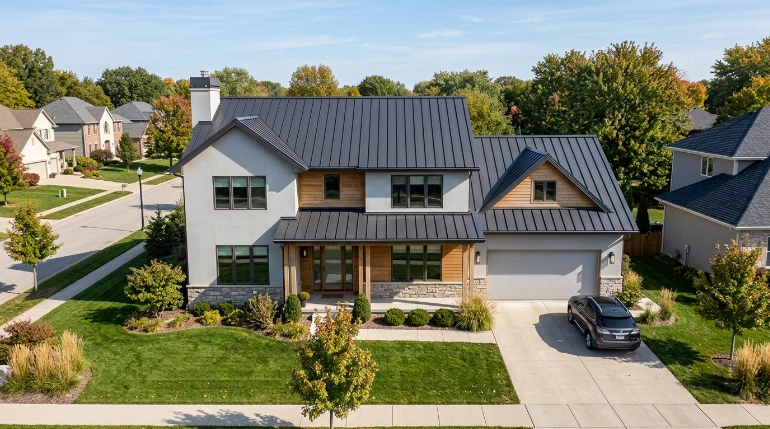
A metal roof uses metal panels or smaller metal pieces as the exterior roof covering that protects the home from rain, snow, wind, sunlight, and other weather.
The Building America Solution Center’s metal roofing guidance describes metal roofing as a durable, weather-resistant roof cladding and emphasizes proper material selection and installation for protection against wind, water intrusion, hail, wildfire, and severe winter weather.
Common residential metal roof systems include:
- Standing seam metal roofing: Long vertical panels with raised, concealed seams.
- Exposed-fastener panels: Panels attached with visible screws and washers.
- Metal shingles: Smaller pieces designed to resemble shingles, slate, or other roofing.
- Corrugated metal panels: Profiled sheets commonly seen on agricultural buildings but also used on some homes.
- Specialty metal roofing: Copper, zinc, and other premium architectural systems.
Standing seam is especially popular on homes because the primary fasteners are generally hidden beneath the seams, which helps protect them from direct weather exposure.
Common Metal Roofing Materials
The metal itself affects price, corrosion resistance, appearance, weight, and expected service life.
Steel
Steel is one of the most common residential metal roofing materials. It is strong, widely available, and typically protected with metallic coatings and painted finishes to improve corrosion resistance.
Steel roofs can be a practical choice in many climates, but the exact coating and finish should be appropriate for local exposure conditions.
Aluminum
Aluminum is lightweight and naturally resistant to corrosion. That can make it attractive in coastal environments where salt exposure may be a concern.
Its higher material price may make it less attractive for budget-focused homeowners.
Copper
Copper provides a distinctive appearance and can develop a natural patina with age.
It is typically considered a premium roofing option because material and installation costs can be significantly higher than common steel systems.
Zinc
Zinc is another specialty metal used on high-end roofs. It can offer a long service life when properly detailed but normally comes at a premium price.
How Long Does a Metal Roof Last?
Metal roofing is selected partly because of its potential for a long service life, but homeowners should be cautious about treating any advertised lifespan as a guarantee.
Actual performance depends on:
- Metal type and thickness
- Protective coating
- Paint system
- Fastener design
- Installation quality
- Roof slope
- Local climate
- Salt or industrial exposure
- Maintenance
- Flashing details
- Roof ventilation
- Drainage
- Storm exposure
A high-quality metal panel can still develop problems early when flashing, penetrations, or fasteners are installed incorrectly.
Likewise, a well-installed system can perform poorly if water is allowed to remain trapped against vulnerable components.
The installation details are often just as important as the metal itself.
How Much Does a Metal Roof Cost?
There is no reliable single price for every metal roof.
Your final estimate depends heavily on the roof’s size, complexity, material, panel profile, labor market, existing roof condition, and tear-off requirements.
Important cost factors include:
| Cost Factor | Why It Matters |
|---|---|
| Roof area | More square footage requires more material and labor |
| Roof pitch | Steep roofs usually require additional safety measures and labor |
| Roof complexity | Valleys, dormers, skylights, chimneys, and multiple roof planes increase labor |
| Metal type | Steel is commonly less expensive than premium copper or zinc |
| Panel system | Standing seam and specialty systems may require more skilled labor |
| Tear-off | Removing old roofing increases labor and disposal costs |
| Decking repair | Rotten or damaged decking must be repaired before installation |
| Underlayment | The roof assembly may require new underlayment or specialized membranes |
| Flashing | Chimneys, walls, valleys, vents, and roof edges need precise detailing |
| Location | Labor rates, permits, codes, and material availability vary |
When comparing quotes, avoid choosing a contractor based only on the lowest total.
Ask what is included.
A complete quote should clearly describe the material, panel profile, finish, underlayment, flashing, tear-off, decking allowances, ventilation work, permits, cleanup, warranties, and any exclusions.
Metal Roof Pros and Cons
Metal roofing can provide excellent performance, but it is not automatically the right choice for every home.
| Metal Roof Advantages | Metal Roof Limitations |
|---|---|
| Long service potential | Higher initial cost |
| Strong weather resistance when properly installed | Installation requires specialized skill |
| Available in many profiles and colors | Poor detailing can cause leaks |
| Relatively low routine maintenance | Some systems can dent from severe impacts |
| Can work well with reflective roof finishes | Scratches or coating damage may require attention |
| Lightweight compared with some heavy roofing materials | Expansion and contraction must be accommodated |
| Useful in many steep-slope applications | Repairs may require matching older panels or finishes |
Advantages
One of the strongest arguments for metal roofing is durability.
A well-designed metal roof can resist common forms of deterioration that affect some other roof coverings. Metal also does not rot like wood-based roofing materials.
Weather performance can be another advantage when the entire roof assembly is engineered and installed correctly. IBHS notes that modern code-compliant metal roofing relies on mechanical attachment to resist wind forces. IBHS research on roof-cover performance also shows why proper attachment matters: if large metal panels are removed by severe wind, substantial areas of roof decking may become exposed.
Limitations
Metal roofing is not maintenance-free or damage-proof.
Possible concerns include:
- Loose or deteriorated exposed fasteners
- Sealant deterioration
- Scratched coatings
- Corrosion in vulnerable locations
- Improperly detailed flashing
- Movement caused by thermal expansion and contraction
- Storm-related dents or panel damage
- Leaks around penetrations
- Debris accumulation in valleys or drainage areas
Many of these problems are manageable when caught early.
Standing Seam vs. Exposed-Fastener Metal Roofing
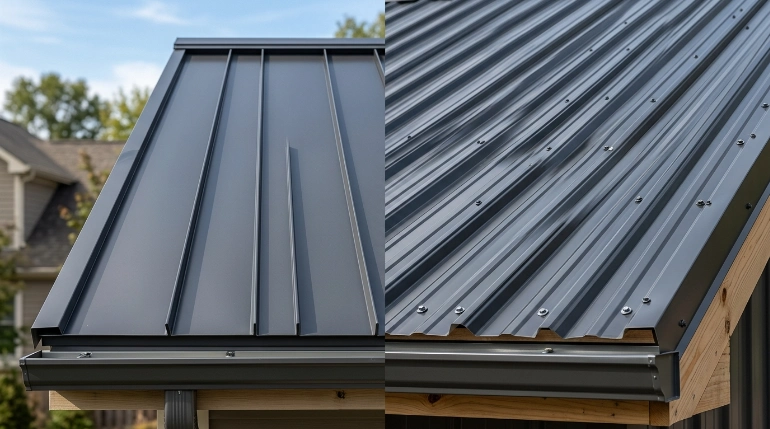
Homeowners often compare these two systems.
Standing Seam
Standing seam panels typically have raised seams and concealed attachment systems.
Potential benefits include:
- Fewer exposed fasteners
- Clean architectural appearance
- Better accommodation of panel movement in many system designs
- Strong long-term performance when properly installed
The tradeoff is usually higher material and installation cost.
Exposed-Fastener Panels
These panels are attached through the panel face with screws that normally use sealing washers.
They can be more economical, but the exposed attachment points require attention as the roof ages.
Washers, screws, sealants, and surrounding metal should be inspected periodically because movement and weather exposure can eventually affect these components.
Does a Metal Roof Make a House Hotter?
Not necessarily.
Roof temperature depends on far more than whether the roof is made of metal. Color, coating, solar reflectance, thermal emittance, insulation, ventilation, climate, attic design, and roof assembly all matter.
The Cool Roof Rating Council’s homeowner information explains that solar reflectance measures how much solar energy a roof surface reflects, while thermal emittance describes how effectively a surface releases absorbed heat.
Therefore, homeowners interested in reducing summer heat gain should compare the tested properties of specific roofing products rather than assuming every metal roof performs the same way.
Reflective roofing can be particularly useful in cooling-dominated climates, although results depend on the building and climate.
Can a Metal Roof Handle High Winds and Storms?
A properly designed metal roof can perform very well during severe weather, but the roof must function as a complete system.
Panels alone are not enough.
Important components include:
- Roof decking
- Underlayment
- Fasteners and clips
- Panel seams
- Edge flashing
- Ridge details
- Valleys
- Eaves
- Penetrations
- Structural attachment
The U.S. Department of Energy’s residential metal roof guidance emphasizes proper installation for reducing damage from high wind, water, hail, wildfire, and other hazards.
Homes in hurricane-prone or high-wind regions may need systems designed and approved for specific local wind conditions.
Ask the contractor which building-code requirements, fastening patterns, panel approvals, and manufacturer instructions apply to your project.
What About Hail?
Metal can resist many types of weather exposure, but hail performance varies.
Panel thickness, metal type, roof slope, deck support, hail size, impact energy, and panel profile can influence whether cosmetic denting or functional damage occurs.
After a major hailstorm, inspect safely from the ground first.
Look for:
- Obvious panel deformation
- Loose ridge components
- Damaged gutters
- Displaced flashing
- Debris impact marks
- Interior leaks or water stains
If damage may involve an insurance claim, avoid making unnecessary temporary alterations before documenting the condition.
What Is Under a Metal Roof?
The visible metal is only one layer of the roof assembly.
Depending on the home and system, components may include:
- Structural framing
- Roof decking or sheathing
- Water-resistant underlayment or membrane
- Flashing
- Battens or other attachment components where required
- Metal panels or shingles
- Ridge, edge, and penetration details
Decking is the solid structural surface attached to the roof framing.
Underlayment is a protective layer between the deck and exterior roof covering.
Flashing directs water away from joints, transitions, walls, chimneys, vents, and other vulnerable locations.
Water leaks blamed on “the metal roof” often originate at a flashing detail, penetration, seam, edge, or installation defect rather than through the middle of an intact panel.
Can Metal Roofing Be Installed Over Old Shingles?
Sometimes, but it should not be treated as an automatic shortcut.
Whether installing over an existing roof is appropriate depends on:
- Local building requirements
- Number of existing roof layers
- Condition of the deck
- Moisture problems
- Roof flatness
- Manufacturer instructions
- Attachment requirements
- Existing flashing
- Ventilation design
Covering an existing roof can also make hidden damage harder to identify.
If the existing roof has active leakage, suspected rotten decking, sagging, mold-related moisture problems, or structural concerns, those issues should be investigated first.
A contractor should explain why an overlay is appropriate rather than simply using it to avoid tear-off costs.
Metal Roof Maintenance
Metal roofs often require less routine attention than some roof coverings, but periodic inspection is still important.
A practical homeowner maintenance plan includes checking for:
- Loose or missing components
- Damaged flashing
- Open seams
- Rust or corrosion
- Scratched coating
- Loose exposed fasteners
- Failed sealant
- Debris in valleys
- Blocked gutters
- Damaged pipe boots
- Storm impact
- Interior water stains
Observe the roof after major wind or hail events as well.
Do not assume that a small ceiling stain is harmless. Water can travel along decking, framing, or underlayment before becoming visible inside the home.
Expert Tip
Expert Tip: When comparing metal roof bids, ask each contractor to identify the exact panel system, metal thickness or specification, coating, fastening method, underlayment, flashing approach, and both workmanship and manufacturer warranty. Similar-looking roofs can differ substantially in materials and installation quality.
Understanding Metal Roof Warranties
A roofing warranty may contain several separate protections.
Manufacturer Material Warranty
This generally relates to the roofing product itself and is governed by manufacturer terms and exclusions.
Finish or Paint Warranty
Painted metal products may have separate coverage addressing specific coating-performance conditions.
Workmanship Warranty
This is typically offered by the installer and relates to installation quality.
These warranties are not interchangeable.
Before signing a contract, ask:
- Who provides each warranty?
- What exactly is covered?
- What is excluded?
- Is coverage prorated?
- Does it transfer to a future owner?
- Is registration required?
- What maintenance is required?
- Who pays for labor if a material claim occurs?
- Can unauthorized repairs void coverage?
Do not judge a warranty only by the number of years printed on the brochure.
Read the actual terms.
Common Mistakes Homeowners Should Avoid
- Choosing only by price. A low quote may exclude tear-off, flashing, decking repair, permits, or essential details.
- Assuming all metal roofing is identical. Panel systems, coatings, metals, and fasteners vary.
- Ignoring the roof deck. New roofing cannot correct structurally damaged or rotten decking.
- Reusing questionable flashing. Critical transitions should be evaluated carefully during replacement.
- Overlooking ventilation. Roofing and attic performance are connected.
- Assuming “lifetime” means no maintenance. Always read the actual warranty.
- Making storm repairs before documenting damage. This can complicate an insurance evaluation.
- Walking on the roof without training. Metal surfaces can be extremely slippery.
- Allowing unqualified installation. Metal roof detailing requires system-specific knowledge.
Metal Roof Safety: Should You Inspect It Yourself?
Most homeowners can perform a useful visual inspection without climbing onto the roof.
Use binoculars or a camera from the ground and inspect the attic or upper-floor ceilings for moisture symptoms.
Going onto a roof creates serious fall risk.
OSHA’s fall-protection guidance emphasizes controlling fall hazards when working at elevation. Professional roofers use appropriate access methods, fall-protection equipment, training, and job-site procedures.
Metal roofing can be particularly slippery when wet, dusty, frosted, or covered with pollen.
Do not climb onto a roof during rain, high winds, snow, ice, or immediately after severe weather.
If you cannot evaluate a suspect area safely from the ground, hire a qualified professional.
When to Consult a Licensed Roofing Contractor
Professional evaluation is especially appropriate when you notice:
- Active interior leaks
- Sagging roof areas
- Suspected rotten decking
- Panels lifting after a windstorm
- Loose or missing flashing
- Significant hail damage
- Rust through the metal
- Repeated leakage around penetrations
- Chimney or wall-transition leaks
- Large areas of coating failure
- Structural concerns
- Multiple previous roof repairs
- Insurance-related storm damage
A contractor should also evaluate the home before major roof replacement work.
Ask about licensing requirements in your state or locality, insurance coverage, references, product certifications, written scope of work, change-order procedures, cleanup, and warranties.
For complex structural concerns, a roofing contractor may recommend evaluation by a structural engineer or another appropriately qualified professional.
Repair or Replace a Metal Roof?
Not every metal roof problem requires replacement.
A localized repair may make sense when:
- Damage is confined to a small area
- Most panels remain in good condition
- Flashing can be repaired properly
- Compatible replacement materials are available
- The roof deck is sound
- Corrosion is limited
- The remaining roof still has useful service life
Replacement may become more practical when:
- Corrosion is widespread
- Many panels have failed
- Fastener problems affect large areas
- Previous repairs repeatedly fail
- Decking damage is extensive
- The system was fundamentally installed incorrectly
- Replacement cost is more sensible than repeated repairs
The goal should be to correct the cause of the problem, not simply cover the visible symptom.
FAQs
Is a metal roof better than shingles?
It depends on your budget, climate, home design, expected ownership period, and installation options. Metal roofing can offer long service potential and strong weather resistance, while asphalt shingles often have a lower upfront cost.
Are metal roofs noisy when it rains?
Noise depends on the roof assembly. A residential metal roof installed over solid decking, underlayment, insulation, attic space, and interior ceilings may sound very different from an exposed metal roof on an open structure.
Will a metal roof rust?
Some metal roofing materials and coatings provide strong corrosion resistance, but no system should be assumed immune to deterioration. Material selection, scratches, coastal salt exposure, trapped moisture, incompatible metals, and maintenance can influence corrosion risk.
Can you walk on a metal roof?
Some metal roofs can physically support properly trained workers in designated areas, but homeowners should not assume a roof is safe to walk on. Panels may be slippery or damaged by improper foot placement. Fall hazards are also serious.
Does a metal roof need gutters?
A metal roof can still benefit from properly designed gutters and drainage. Because smooth metal surfaces can shed water efficiently, gutter size, placement, attachment, and drainage should be appropriate for the roof and local rainfall.
Can metal roofs leak?
Yes. Any roof can leak if it is damaged or improperly installed. On metal roofs, common vulnerable areas include penetrations, flashing, seams, fasteners, transitions, valleys, and roof edges.
Is metal roofing worth the higher initial cost?
It can be for homeowners who value durability, weather performance, appearance, and a potentially long service period. Compare total project quality and expected ownership plans rather than evaluating upfront price alone.
Conclusion
A metal roof can be an excellent long-term roofing choice, but successful performance depends on more than purchasing metal panels.
The material, coating, panel design, roof deck, underlayment, flashing, drainage, ventilation, fastening system, installer skill, local weather, and maintenance practices all matter.
For homeowners researching roof reg information and considering metal roofing, focus on the complete roof system rather than price alone. Compare detailed written quotes, read warranty terms carefully, confirm that your contractor understands the specific metal roofing system, and address any existing deck or moisture problems before installation.
If your current roof is leaking, storm-damaged, badly corroded, or approaching the end of its practical service life, arrange a professional inspection and obtain detailed quotes before choosing between repair and replacement.