
Complete Homeowner’s Guide: How to Work on a Roof Safely

Climbing onto your roof to clear out clogged gutters, inspect storm damage, or patch a minor leak can save you hundreds of dollars in contractor fees. However, heights and sloped surfaces present serious physical hazards that demand absolute caution. Knowing how to work on roof safely is the single most important skill a homeowner can master before attempting any do-it-yourself roof maintenance. Without proper precautions, a routine weekend project can quickly lead to severe injuries. This guide breaks down essential protective gear, proper ladder setup, weather evaluation, and step-by-step roof navigation so you can protect yourself and your home.
Quick Answer
To work on a roof safely, always check the weather forecast, wear rubber-soled shoes with high traction, and set up an extension ladder using the 4-to-1 ratio rule. Secure a personal fall arrest system or harness for roofs steeper than a 4:12 pitch, maintain three points of contact, and never work alone.
Essential Safety Gear and Preparation
Before you even step foot near a ladder, assembling the right safety equipment is non-negotiable. Roofing materials—especially asphalt shingles, slate, or tile—can become slick from morning dew, granule loss, or hidden algae.
- Footwear with Traction: Choose boots or sneakers with thick, flexible rubber tread. Avoid smooth-soled shoes, loafers, or worn-down tennis shoes that can slip instantly on granule-covered surfaces.
- Fall Protection Harness: For sloped roofs, professional guidance emphasizes utilizing a proper harness and roof anchor kit tied off to a structural framing member.
- Hand Protection: Heavy-duty work gloves protect your hands from sharp shingle edges, abrasive granules, and rusted flashing nails.
- Eye Protection: Safety glasses prevent loose debris, old fasteners, or granule dust from blowing into your eyes during cleaning or repair work.
Reference official standards like the OSHA residential construction safety guidance to understand why baseline fall protection standards exist for elevated work surfaces.
Setting Up Your Ladder Safely
Most roof-related accidents happen not on the roof itself, but while climbing up or down. Incorrect ladder placement is a leading cause of instability.
- Inspect the Ladder: Check for cracked fiberglass, bent aluminum rungs, or loose locking hinges before moving it into position.
- Choose Level Ground: Place the ladder base on firm, flat ground. Never prop a ladder up on loose bricks, buckets, or sloping dirt beds.
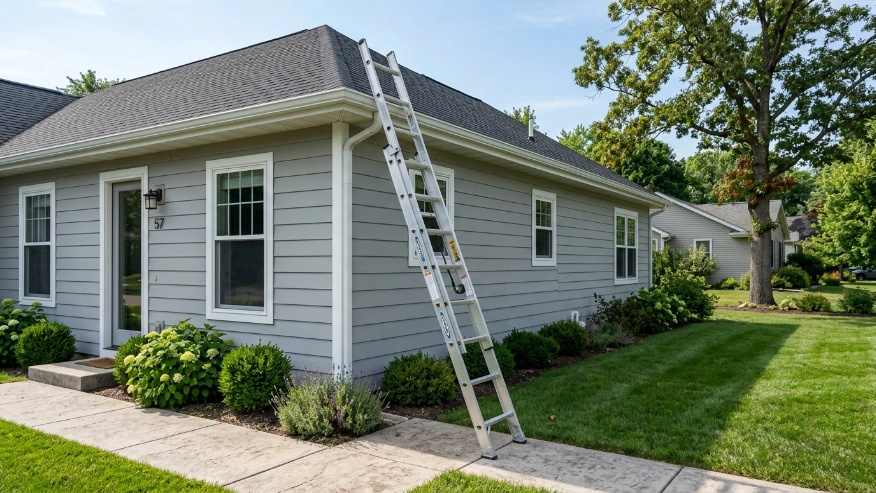
- Apply the 4-to-1 Rule: For every four feet of vertical height to the roof line, move the base of the ladder one foot away from the exterior wall.
- Extend Past the Roof Edge: Ensure the top of the ladder extends at least three feet (36 inches) above the roof edge or gutter line to provide a secure handhold when transitioning.
- Secure and Tie Off: Have a helper anchor the bottom of the ladder, or tie the top secure to a stable structural point to prevent side-slipping.
Consult resources such as the CDC and NIOSH ladder safety guidelines for comprehensive visual diagrams and setup procedures.
Evaluating Weather and Environmental Conditions
Mother Nature dictates when it is safe to touch your roof. Ignoring environmental factors turns even a low-slope roof into a hazardous hazard zone.
- Wind Speeds: Gusts above 15 to 20 mph can easily compromise your balance while carrying tools or sheets of material.
- Moisture and Dew: Morning frost, heavy dew, or residual rain makes roof shingles slicker than ice. Always wait for the sun to completely dry the roof surface.
- Extreme Heat: Asphalt shingles absorb solar radiation rapidly, making surface temperatures far hotter than the air. Working in extreme heat induces dizziness, fatigue, and poor decision-making.
Warning: Never climb onto a roof during active precipitation, thunderstorms, high winds, or immediately after a severe freeze when hidden ice patches may linger in shaded valleys.
Step-by-Step Guide to Walking on a Roof
Once you have prepared your gear, secured your ladder, and verified clear weather, follow these steps to move across the roof surface:
- Step 1: Climb slowly while maintaining three points of contact (two hands and one foot, or two feet and one hand) on the ladder rungs at all times.
- Step 2: Step off the ladder onto the lower section of the roof, keeping your center of gravity low and close to the roof surface.
- Step 3: Walk with your entire foot flat against the shingle rather than on your toes. This maximizes friction and prevents your foot from sliding out.
- Step 4: Avoid walking on wet leaves, moss patches, or steep roof pitches exceeding a 6:12 slope unless you have specialized roof jacks and toe-boards installed.
Roofing Safety Comparison: DIY vs. Professional
| Safety Factor | DIY Homeowner Approach | Professional Roofing Contractor |
|---|---|---|
| Fall Protection | Often relies on balance or basic ropes | OSHA-compliant harnesses, tie-offs, and scaffolding |
| Ladder Safety | Standard residential extension ladder | Commercial-grade stabilizer bars and standoff frames |
| Insurance Coverage | Homeowner bears all medical/injury liability | Fully covered by worker’s compensation and liability insurance |
| Risk Exposure | High risk during complex repairs or steep pitches | Low risk due to daily professional training and safety protocols |
Common Mistakes Homeowners Should Avoid
- Rushing the Transition: Stepping off the top of a ladder onto the roof without a secure handhold is a primary trigger for slips.
- Carrying Heavy Loads While Climbing: Never hold bundles of shingles, heavy tools, or buckets while climbing up or down a ladder. Use a hoist rope or tool belt instead.
- Ignoring Footwear Quality: Wearing worn sneakers with smooth soles instead of deep-tread rubber work boots.
- Working Alone: Always have a ground partner present who can steady your ladder, hand up tools, and call for emergency assistance if an accident occurs.
- Stepping on Skylights or Old Vent Curbs: Plastic skylights and aged plumbing vent covers look solid from above but will crack instantly under human weight.
When to Call a Roofing Professional
While clearing gutters or nailing down a single loose shingle can be manageable DIY tasks, certain roofing scenarios are far too dangerous for homeowners.
- Steep Pitches: If your roof pitch is steep (greater than 6 inches of vertical rise per 12 inches of horizontal run), stay off.
- Structural Sagging: If sections of your roof deck appear wavy, depressed, or spongy, structural failure may be underway.
- Severe Storm Damage: Extensive wind or hail damage requires professional insurance documentation and specialized equipment.
- Multi-Story Homes: Working on a two- or three-story home exponentially increases fall severity, making professional contractor intervention mandatory.
Expert Tip:
Always hire a licensed, insured local contractor for any project requiring you to walk higher than a single-story roof or handle complex flashing repairs.
Image Placeholders
FAQs

Can I work on my roof if it is slightly damp from morning dew?
No. Even a light layer of morning dew or condensation makes asphalt shingles extremely slippery. Always wait until the sun has completely dried the entire roof surface before climbing up.
How do I know if my roof pitch is too steep for DIY work?
Any roof with a pitch greater than 6:12 (meaning a 6-inch vertical rise for every 12 inches of horizontal run) is generally considered too steep for safe walking without professional roof jacks, harnesses, and scaffolding.
What is the safest way to carry tools onto a roof?
Never carry tools or materials in your hands while climbing a ladder. Wear a tool belt to keep your hands free for gripping the rungs, or use a sturdy bucket attached to a pull rope to hoist materials up after you reach the roof.
Do I need a harness for a single-story ranch-style home?
While lower heights reduce the severity of a fall, injuries from falling off a single-story roof onto a concrete patio or hard ground can still be life-altering. Fall protection is recommended for any height where a fall could cause serious injury.
What shoes should I wear when walking on shingles?
Wear flexible work boots or sneakers featuring high-traction rubber soles. Avoid hard leather soles, sandals, or running shoes with worn-out treads that lack grip.