
How Do Roofers Not Fall? Safety Secrets Every Homeowner Should Know

When you look up at a steep roof and see a contractor walking across it with ease, it is easy to wonder: how do roofers not fall? Gravity is relentless, and roof heights can be dizzying, yet professional crews perform complex repairs and replacements every day without incident. The secret is not superhuman balance or luck. Instead, it relies on strict engineering, specialized equipment, rigorous training, and a deep respect for height safety regulations. Whether you are planning to inspect your own roof or simply evaluating a local contractor before hiring them, understanding how professionals stay secure can give you incredible peace of mind.
Quick Answer
Roofers stay safe through a combination of engineered fall protection systems, OSHA-regulated harnesses, specialized footwear with high-friction rubber soles, and secure roof anchors. By tying off to heavy-duty anchor points drilled into the roof structure, professionals ensure that even if they slip, a high-strength lifeline immediately catches them before they hit the ground.
The Anatomy of Roofer Safety: Equipment and Gear
Professional roofing safety is a science. When contractors step onto a roof, they do not just rely on their footing. They wear and utilize a multi-layered defense system designed to stop a fall before it can result in a serious injury.
According to the OSHA residential construction safety guidelines, fall protection is mandatory for construction work at heights of six feet or more. This federal standard forces roofing companies to invest heavily in top-tier safety gear.
1. Personal Fall Arrest Systems (PFAS)
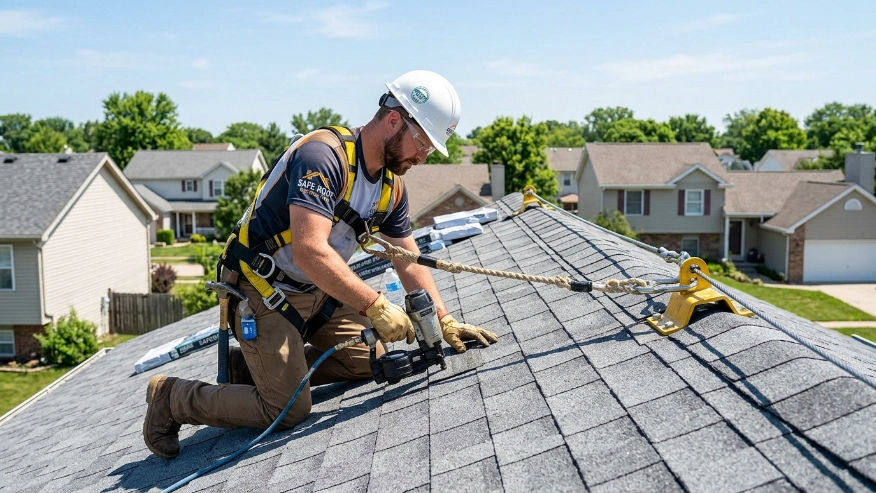
The cornerstone of roofer safety is the Personal Fall Arrest System. This kit typically includes three vital components:
- Full-Body Harness: Distributes the force of a fall evenly across the shoulders, thighs, and pelvis to prevent internal injury.
- Lifeline/Rope Grab: A durable synthetic rope connected to the harness that slides smoothly through a mechanical rope grab, allowing movement while locking instantly if tension pulls sharply.
- Roof Anchor: A heavy-duty steel or aluminum bracket bolted or nailed directly into the roof framing, capable of supporting thousands of pounds of force.
2. Specialized Footwear
Regular sneakers or soft-soled shoes will slide instantly on granules, morning dew, or steep shingles. Roofers wear boots specifically designed for roofing. These boots feature soft, high-traction rubber compounds and wedge-shaped soles that maximize surface area contact with the roof slope, gripping granules like treads on a tire.
How Weather and Roof Pitch Dictate Safety Setup
Not every roof is built the same, and weather conditions change the safety equation drastically. A dry, low-slope roof requires a completely different approach than a wet, steep Victorian gable.
+--------------------+----------------------------------+------------------------------------+
| Roof Characteristic| Safety Challenge                 | Primary Solution                   |
+--------------------+----------------------------------+------------------------------------+
| Low-Slope (3:12)   | Tripping hazards, ponding water  | Perimeter warning lines, toe boards|
| Steep-Slope (8:12+)| Extreme gravity pull, sliding    | Harnesses, roof jacks, slide guards|
| Wet or Frosty      | Slick surfaces, zero traction    | Delayed work, specialized cleats   |
| High Wind          | Loss of balance, flying debris   | Immediate work stoppage, tie-offs  |
+--------------------+----------------------------------+------------------------------------+
Contractors monitor weather patterns closely. Morning dew makes shingles slicker than ice, meaning many crews wait for the sun to burn off moisture before starting major work. Furthermore, trade organizations like the National Roofing Contractors Association safety resources emphasize that wind speeds above 25–30 mph make tie-off lines hazardous due to sail effects, prompting safe work stoppages.
Step-by-Step: How Crews Rig a Roof for Safety
Before a single shingle is torn off, a professional roofing crew sets up a meticulous safety perimeter. Here is how they prepare the job site:
- Ground Inspection: The crew evaluates the ground for underground utilities, power lines, and flat spaces to set up ladders safely.
- Ladder Securing: Extension ladders are placed at a strict 4-to-1 ratio (one foot out for every four feet up) and tied off securely at the top gutter or fascia.
- Anchor Installation: Technicians hammer or screw permanent or reusable heavy-duty anchors into the peak or rafters of the roof structure.
- Harness Connection: Every worker puts on a fitted full-body harness and clips securely to the lifeline before stepping past the eave.
- Perimeter Safety Nets or Rails: For commercial buildings or multi-story residential projects, perimeter guardrails are built to block accidental falls entirely.
Common Mistakes Homeowners Should Avoid
Many DIY roofing accidents happen because homeowners underestimate the physical demands and slick nature of a roof surface. If you are tempted to climb up to check a leak or clean gutters, avoid these critical errors:
- Wearing ordinary running shoes: Smooth rubber or plastic soles will slip instantly on loose shingle granules.
- Failing to secure the ladder: Leaning an unlatched aluminum ladder against a slick aluminum gutter is a recipe for a sliding fall.
- Walking on wet or frosty roofs: Even a slight morning mist turns asphalt shingles into a frictionless slide.
- Working completely alone: If an accident happens while you are solo on a roof, getting help or calling emergency services is dangerously delayed.
- Ignoring overhead power lines: Carrying metal ladders or tools near service drops can result in fatal electrocution.
Expert Tip: If your roof pitch is steeper than 6-in-12 (meaning the roof rises 6 inches for every 12 inches of horizontal run), do not attempt to walk on it yourself. Rent scaffolding or call a licensed professional who has specialized tie-off gear.
When to Call a Roofing Professional
While minor ground-level gutter clearing or visual binocular inspections are safe for homeowners, certain situations demand immediate professional intervention. You should step away and call a certified contractor if:
- Your roof is steep or multi-story: Falls from heights greater than one story frequently result in catastrophic injuries.
- Storm damage is extensive: Missing structural decking, compromised rafters, or sagging sections require professional reinforcement before anyone steps on them.
- Repairs involve electrical penetrations: Fixing flashing around solar panels or complex chimney stacks requires specialized trade knowledge and safety protocols.
FAQs

Why don’t roofers slide off the roof?
Roofers stay secure by wearing specialized rubber-soled footwear that grips shingle granules, utilizing roof jacks or slide guards on steep slopes, and wearing full-body harnesses attached to secure structural anchors.
Do all roofing contractors use safety harnesses?
Reputable, licensed, and insured roofing contractors follow strict OSHA regulations and use harnesses for any work performed above six feet. If a crew is working without harnesses, it is a major red flag regarding their professionalism and insurance coverage.
Can I walk on my roof without damaging it?
Walking carefully on asphalt shingle roofs is generally safe if done gently and in cool weather. However, walking on hot days can scuff or loosen protective granules, and walking on tile or slate roofs can crack the brittle materials instantly.
What is a roof anchor?
A roof anchor is a heavy-duty metal bracket temporarily or permanently fastened directly to the roof framing through the decking. It serves as the secure tie-off point for a roofer’s lifeline rope and harness.
How do roofers handle steep Victorian or Mansard roofs?
For extremely steep pitches, roofers utilize specialized scaffolding, pump jacks, and roof brackets that create temporary flat standing platforms, preventing workers from sliding altogether.
Conclusion
Understanding how roofers manage to stay safe high above the ground reveals the incredible level of engineering, discipline, and preparation behind professional roofing work. Wondering how do roofers not fall highlights the importance of proper gear, training, and respect for height hazards. When planning your next roofing project, always verify that your chosen contractor prioritizes worker safety as much as quality craftsmanship. Make the smart choice for your home by hiring certified professionals who protect their crews and respect your property. Contact a trusted local roofing expert today for a safe, thorough, and professional roof evaluation.