
Maximizing Home Safety: Why Metal Roofing is a Smart Choice for Protection
Choosing the right roof for your home is one of the biggest financial and safety decisions you will ever make as a homeowner. When severe weather strikes, your roof serves as your household’s first and most critical line of defense. For homeowners looking to significantly upgrade their structural protection, home safety metal roofing has quickly become a gold standard. Traditional asphalt shingles degrade quickly under intense UV rays, high winds, and heavy downpours, leaving properties vulnerable to leaks and structural rot. Modern metal roofing systems, by contrast, offer exceptional durability, fire resistance, and peace of mind. This guide explores how metal roofing directly impacts home safety, what you need to know about materials, how it handles severe weather, and when it is time to bring in a professional contractor.
Quick Answer
Metal roofing enhances home safety by providing superior fire resistance, exceptional wind uplift performance, and high impact durability against hail. Because metal is non-combustible and locks together tightly, it protects against flying embers and severe storms, often lowering insurance premiums while offering a long-term lifespan of 40 to 70 years.
Understanding Home Safety and Metal Roofing Performance
When evaluating how a roof safeguards your family, structural integrity and environmental resilience are paramount. Home safety goes beyond just keeping the rain out; it involves ensuring that your shelter can withstand natural disasters without putting your household at risk.
Fire Resistance and Wildfire Protection
One of the most profound safety advantages of metal roofing is its non-combustible nature. In regions prone to wildfires or even stray sparks from neighborhood fire pits and fireworks, standard asphalt shingles can easily ignite.
- Class A Fire Rating: Many metal roofing systems achieve the highest possible fire rating without requiring special chemical treatments.
- Spark Deflection: The smooth, interlocking surface of metal prevents floating embers from lodging into gaps or igniting the wooden deck underneath.
To understand how proper structural standards are tested and enforced across different building components, you can review the U.S. Department of Energy building science guidelines.
Wind Resistance and Severe Storms
High winds present a major hazard during hurricanes, tornadoes, and heavy seasonal storms. When severe wind sweeps across a property, it creates negative pressure (wind uplift) that can rip traditional shingles clean off the decking.
Metal roofs combat this through engineered interlocking panels and concealed fastener systems. According to independent building science assessments, such as those outlined by the Insurance Institute for Business & Home Safety (IBHS) FORTIFIED program, secure roof deck attachments and rigid outer coverings drastically minimize the risk of catastrophic roof failure during extreme weather events.
Material Choices and Durability Factors
Not all metal roofs are created equal. Homeowners can choose from several material profiles, each offering unique safety, aesthetic, and cost benefits.
- Standing Seam Steel: Features vertical panels with concealed fasteners hidden above the deck, preventing water infiltration and screw pull-out.
- Aluminum: Highly resistant to salt corrosion, making it ideal for coastal environments prone to heavy moisture and salty sea air.
- Zinc and Copper: Premium, self-healing materials that offer incredible longevity, though they come with a significantly higher upfront investment.
| Metal Roofing Material | Average Lifespan | Wind Resistance | Fire Rating | Best Application |
|---|---|---|---|---|
| Standing Seam Steel | 40–60 Years | Excellent (Up to 150+ mph) | Class A | General suburban & high-wind zones |
| Corrugated Aluminum | 30–50 Years | Very Good | Class A | Coastal and high-moisture regions |
| Metal Shingles/Tiles | 50+ Years | Excellent | Class A | Homeowners wanting traditional aesthetics with metal safety |
Common Safety Benefits Beyond Basic Shelter
Investing in a metal roof changes how your home interacts with external environmental pressures. Beyond stopping water and wind, metal roofing provides hidden safety perks:
- Weight Distribution: Metal is surprisingly lightweight compared to concrete or slate tiles, placing less structural stress on your home’s framing walls.
- Mold and Mildew Prevention: Because metal does not absorb moisture, it prevents the growth of hazardous mold and fungal rot that can compromise indoor air quality.
- Lightning Safety: A common myth is that metal roofs attract lightning. In reality, if lightning does strike, a metal roof disperses the electrical energy safely throughout the structure rather than causing localized combustion, as metal is a non-combustible conductor.
Expert Tip: When replacing an old roof with metal, always ask your contractor to inspect the underlying roof deck for structural sagging or water damage before laying down synthetic underlayment. A safe metal roof requires a rock-solid structural foundation.
Common Mistakes Homeowners Should Avoid
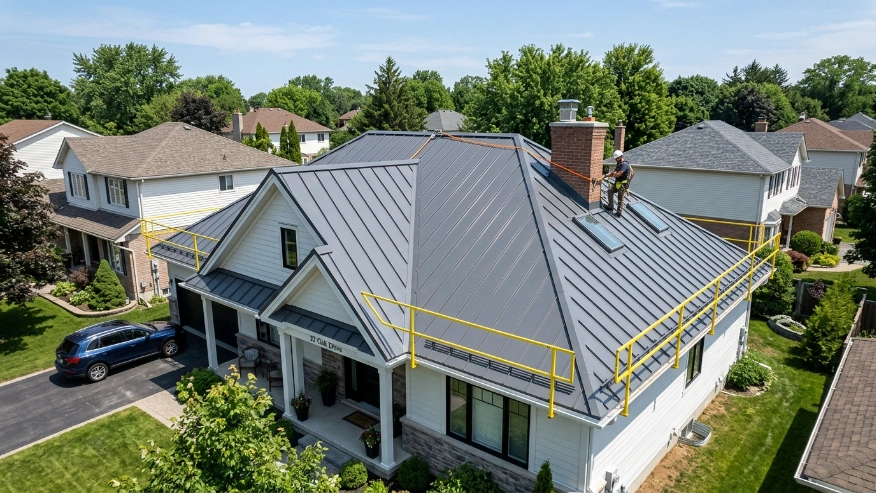
Navigating a major roofing project can be overwhelming. Homeowners often make critical missteps that compromise both safety and budget:
- Skipping Local Building Codes: Failing to pull permits or ignoring local wind-load requirements can leave your home vulnerable and invalidate your insurance policy.
- Mixing Incompatible Metals: Using aluminum flashing with steel panels can trigger galvanic corrosion, causing the metal to disintegrate rapidly at the joints.
- Hiring Inexperienced Installers: Metal roofing requires specialized tools, precise cuts, and detailed flashing techniques. Handyman shortcuts frequently lead to leaks around chimneys and valleys.
- Ignoring Proper Ventilation: Assuming metal roofs do not need attic ventilation can trap condensation underneath the panels, causing hidden mold growth.
When to Call a Roofing Professional
While routine visual inspections from the ground using binoculars are safe for homeowners, climbing onto a metal roof yourself is strongly discouraged. Slipping hazards are high, especially when metal panels are damp, dusty, or covered in morning dew.
You should call a certified roofing contractor immediately if you notice:
- Punctures, dents, or loose panels following a severe hail storm.
- Water stains on your ceiling or damp insulation in your attic space.
- Lifting or peeling ridge caps and edge flashings during high winds.
- Rust or corrosion forming around fasteners or penetration points.
FAQs

Can a metal roof be installed directly over my old shingles?
In many jurisdictions, building codes allow a metal roof to be installed directly over one layer of existing asphalt shingles (known as an overlay). However, tearing off the old roof is often safer because it allows contractors to inspect the wooden decking for rot and install high-performance synthetic underlayment.
Does metal roofing make loud noises during a rainstorm?
No. When installed correctly over solid decking and quality insulation, a metal roof is no louder during a rainstorm than traditional asphalt shingle roofing. The solid substrate and attic insulation absorb sound effectively.
Will a metal roof interfere with cell phone or Wi-Fi signals inside my home?
Generally, no. While metal can reflect certain electromagnetic signals, residential metal roofs do not create a complete “Faraday cage” effect because of gaps, windows, and non-metal building materials throughout the rest of the house structure.
How does a metal roof affect home insurance costs?
Because metal roofs offer exceptional fire resistance and wind durability, many major insurance companies offer policy discounts or premium reductions for homes equipped with certified metal roofing systems. Always check with your specific provider.
How long does a standard residential metal roof last?
Most residential metal roofs last between 40 and 70 years with minimal maintenance, easily outlasting traditional asphalt shingle roofs two or three times over.
Conclusion
Upgrading to home safety metal roofing is a transformative investment that protects your property, reduces environmental stress, and brings long-term peace of mind. By prioritizing fire resistance, structural wind durability, and quality professional installation, you safeguard your household against unpredictable weather patterns for decades to come. Evaluate your local climate needs, consult with a licensed contractor, and take the next step toward securing your home with confidence.