
What Goes Under Metal Roofing? A Homeowner’s Guide to the Layers Beneath a Metal Roof

Introduction
If you’re planning to install a metal roof or replace an existing one, you may be wondering: what goes under metal roofing? While the metal panels get most of the attention, the materials underneath are just as important. They help protect your home from water damage, improve energy efficiency, reduce noise, and extend the life of your roof.
Many homeowners focus on the visible roofing material and overlook the underlayment, decking, ventilation, and moisture barriers hidden below. However, these components work together to create a durable roofing system.
In this guide, you’ll learn what goes under metal roofing, why each layer matters, common installation options, and how to make informed decisions before hiring a roofing contractor.
Quick Answer
The materials that go under metal roofing typically include roof decking, underlayment, moisture barriers, and ventilation components. In some cases, installers also use furring strips or battens. These layers protect against leaks, condensation, heat buildup, and structural damage while helping the metal roof perform properly for decades.
Understanding the Layers Under a Metal Roof
A metal roof is not simply installed directly onto your home’s structure. Multiple layers work together to create a complete roofing system.
The exact configuration depends on factors such as:
- Roof design
- Climate conditions
- Building codes
- Roofing material type
- New installation versus reroofing project
Typical Metal Roofing Layer Structure
| Layer | Purpose |
|---|---|
| Metal roofing panels | Main weather-resistant surface |
| Battens or furring strips (optional) | Creates airflow and attachment points |
| Underlayment | Secondary water barrier |
| Roof decking | Structural base for roofing system |
| Attic ventilation components | Controls moisture and heat |
| Roof framing | Supports the entire roof structure |
Understanding each layer helps homeowners evaluate roofing estimates and installation recommendations.
Roof Decking: The Foundation of the Roof
The roof deck is the solid surface that supports the entire roofing system.
Most residential homes use:
- Plywood decking
- OSB (Oriented Strand Board)
- Structural wood panels
The metal roof is typically installed over this decking rather than directly onto rafters.
Why Roof Decking Matters
The decking:
- Provides structural support
- Creates a flat installation surface
- Helps distribute roof loads
- Supports underlayment attachment
Before installing a new metal roof, contractors should inspect the decking for:
- Rot
- Water damage
- Mold
- Delamination
- Soft spots
Damaged decking should always be replaced before installing a metal roof.
Underlayment: The Most Important Layer Under Metal Roofing
In most residential applications, the primary answer to “what goes under metal roofing” is roof underlayment.
Underlayment acts as a backup waterproof barrier if wind-driven rain or snow gets beneath the metal panels.
According to the National Roofing Contractors Association roofing guidance, underlayment serves as an important secondary weather protection layer beneath roofing materials.
Types of Underlayment Used Under Metal Roofs
Synthetic Underlayment
Synthetic underlayment is the most common choice today.
Benefits include:
- Lightweight material
- Excellent tear resistance
- Better UV exposure tolerance
- Easier installation
- Long lifespan
Many roofing professionals prefer synthetic underlayment for residential metal roofs.
Felt Underlayment
Traditional asphalt-saturated felt remains an option.
Advantages:
- Lower upfront cost
- Widely available
- Familiar installation process
Limitations:
- Less durable
- Can wrinkle when wet
- Shorter lifespan
Self-Adhering Waterproof Membranes
These premium underlayments are commonly installed in vulnerable areas such as:
- Roof valleys
- Eaves
- Low-slope sections
- Snow-prone regions
They create an additional moisture barrier against water intrusion.
Why Condensation Protection Matters Under Metal Roofing
Metal roofs can experience condensation when warm, humid air meets cooler metal surfaces.
Without proper moisture control, condensation may cause:
- Wood rot
- Mold growth
- Insulation damage
- Reduced energy efficiency
The U.S. Department of Energy’s attic ventilation guidance explains how proper ventilation and moisture control help protect roofing systems and improve home performance.
Signs of Condensation Problems
Watch for:
- Water stains in attic spaces
- Damp insulation
- Mold odors
- Rust on fasteners
- Excess attic humidity
Proper underlayment and ventilation work together to prevent these issues.
Do You Need Furring Strips Under Metal Roofing?
Furring strips, sometimes called battens, are narrow wood strips installed between the roof deck and metal panels.
Not every metal roof requires them.
Benefits of Furring Strips
They can:
- Improve airflow beneath panels
- Reduce condensation risk
- Create a more level installation surface
- Increase energy efficiency
- Help with reroofing applications
When They Are Commonly Used
Furring strips may be recommended when:
- Installing over an existing roof
- Working in humid climates
- Using specific metal roofing systems
- Creating a vented roof assembly
However, many standing seam metal roofs are installed directly over underlayment and decking without battens.
Can Metal Roofing Be Installed Over Existing Shingles?
In some situations, yes.
Many building codes allow metal roofing to be installed over one layer of asphalt shingles, but requirements vary by location.
Before choosing this approach, a contractor should inspect:
- Structural integrity
- Roof deck condition
- Weight considerations
- Local code requirements
The International Code Council residential code resources provide standards that many jurisdictions use when evaluating roofing projects.
Pros of Installing Over Shingles
- Reduced tear-off costs
- Faster installation
- Less landfill waste
Cons of Installing Over Shingles
- Hidden roof damage may go unnoticed
- Uneven roof surface
- Potential ventilation issues
- Future repairs can become more difficult
A complete tear-off often provides the best long-term result, especially on older roofs.
The Role of Roof Ventilation
Ventilation is often overlooked but plays a major role in roof performance.
Proper ventilation helps:
- Remove excess heat
- Reduce moisture buildup
- Extend roofing lifespan
- Improve attic comfort
- Lower cooling costs
Common Ventilation Components
- Ridge vents
- Soffit vents
- Gable vents
- Powered attic fans
A balanced ventilation system allows fresh air to enter through soffits and exit through ridge vents.
Poor ventilation can shorten the life of both the roof and attic insulation.
Expert Tip
Expert Tip: When comparing roofing estimates, ask contractors exactly which underlayment product they plan to install. The quality of the underlayment often has a major impact on leak protection and long-term roof performance.
Metal Roof Underlayment Comparison Table
| Feature | Synthetic Underlayment | Felt Underlayment |
|---|---|---|
| Durability | Excellent | Moderate |
| Tear Resistance | High | Lower |
| Water Resistance | Excellent | Good |
| Weight | Lightweight | Heavier |
| Lifespan | Longer | Shorter |
| Cost | Higher upfront | Lower upfront |
| Installation Ease | Easier | More labor-intensive |
Climate Considerations
The materials that go under metal roofing often depend on local weather conditions.
Cold Climates
Homeowners in snowy regions may benefit from:
- Ice and water shield membranes
- Enhanced attic ventilation
- Additional moisture protection
Hot Climates
Warm-weather homes often need:
- Reflective underlayment
- Ventilation systems
- Heat-reducing roof assemblies
Humid Climates
Moisture management becomes critical.
Contractors may recommend:
- Vented assemblies
- Synthetic underlayment
- Condensation-control systems
When to Call a Roofing Professional
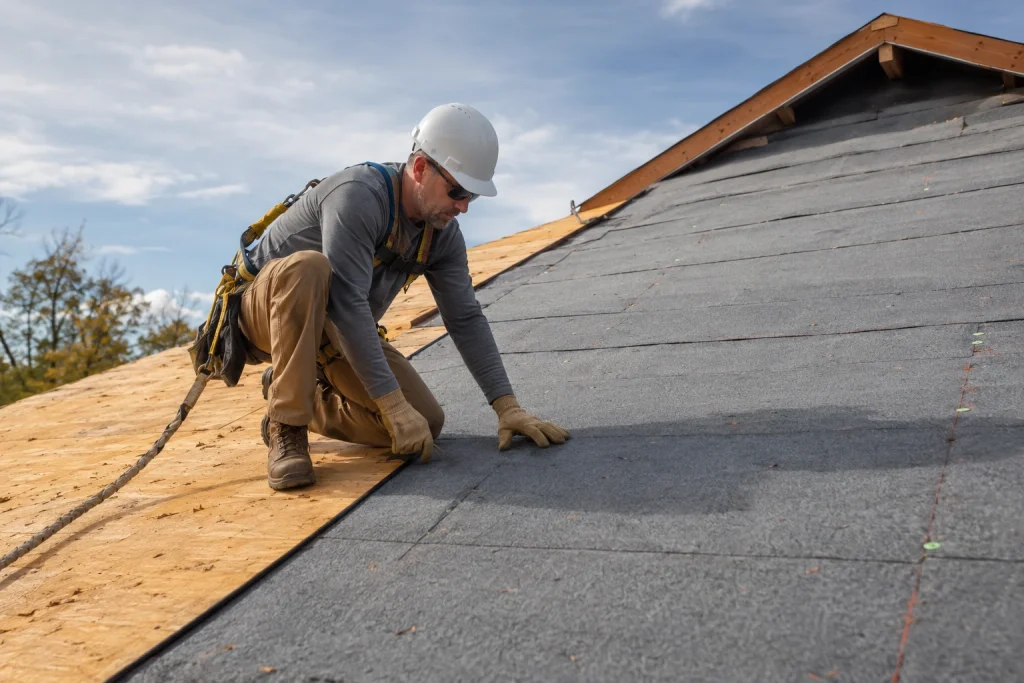
Some roofing decisions are difficult to make without an inspection.
Consider calling a roofing professional if:
- You see roof leaks
- Your attic has moisture issues
- The roof deck may be damaged
- You’re replacing an older roof
- You’re considering installing metal over shingles
- You notice sagging areas
Roof inspections can identify hidden problems before installation begins.
DIY installation may seem appealing, but working on roofs involves serious fall hazards. The OSHA residential roofing safety guidance highlights the risks associated with roofing work and the importance of proper safety measures.
Common Mistakes Homeowners Should Avoid
- Choosing roofing materials based only on price
- Ignoring underlayment quality
- Installing metal roofing over damaged decking
- Overlooking attic ventilation needs
- Assuming all metal roofs use the same installation method
- Hiring contractors who cannot explain the roof assembly
- Skipping roof inspections before replacement
- Failing to address condensation concerns
These mistakes can lead to leaks, premature roof failure, and expensive repairs.
FAQs
What is the best underlayment for metal roofing?

Synthetic underlayment is generally considered the best option because it offers superior durability, water resistance, and tear strength compared to traditional felt.
Can metal roofing be installed directly on plywood?
Yes. Most residential metal roofs are installed over plywood or OSB decking with underlayment placed between the decking and the metal panels.
Do all metal roofs require furring strips?
No. Many metal roofing systems are installed directly over underlayment and decking. Furring strips are used only in specific situations.
Is ice and water shield necessary under metal roofing?
In many cold-weather regions, ice and water shield is recommended or required in vulnerable areas such as eaves, valleys, and roof penetrations.
What happens if underlayment is not installed?
Without underlayment, the roof loses an important secondary water barrier, increasing the risk of leaks and moisture damage.
Can a metal roof reduce attic temperatures?
Yes. Properly installed metal roofing systems combined with good ventilation can help reflect heat and improve energy efficiency.
How long does underlayment last under a metal roof?
High-quality synthetic underlayment can last for decades when installed correctly beneath a properly maintained metal roof.
Conclusion
Understanding what goes under metal roofing is essential for making smart roofing decisions. While metal panels provide the visible protection, the real performance of the roof depends on the layers underneath. Quality decking, durable underlayment, effective moisture protection, and proper ventilation all contribute to a longer-lasting roofing system.
Before starting a metal roofing project, ask contractors detailed questions about the materials they plan to install beneath the panels. Investing in the right roof assembly today can help prevent leaks, reduce maintenance costs, and protect your home for many years to come.