How to Repaint a Metal Roof: A Homeowner’s Practical Guide

If your metal roof looks faded, chalky, rusty, or outdated, you may be wondering how to repaint a metal roof without wasting money or creating bigger roofing problems. A good repaint can improve curb appeal, add a layer of protection, and help extend the useful life of the roof.
But repainting a metal roof is not the same as painting a fence or interior wall. The surface must be cleaned, repaired, primed, and coated with products made for metal roofing. If the roof is damaged, leaking, or badly corroded, painting over the problem will not fix it.
This guide explains when repainting makes sense, how the process works, what mistakes to avoid, and when a roofing professional should handle the job.
Quick Answer
To repaint a metal roof, clean the surface, remove rust, repair loose fasteners or damaged panels, apply the right metal roof primer, and use a high-quality exterior roof coating or metal roof paint. The roof must be dry, structurally sound, and safe to access before painting begins.
Can You Repaint a Metal Roof?
Yes, most metal roofs can be repainted if the panels are still in good condition. Repainting is common when the factory finish has faded, the color no longer fits the home, or the coating is beginning to wear.
A metal roof should not be repainted until the surface is properly inspected. Paint will not solve:
- Active leaks
- Loose or missing fasteners
- Severe rust-through
- Bent or separated panels
- Failed seams or flashing
- Moisture trapped under old coatings
The roof must be repaired before it is repainted. Otherwise, the new paint may peel early, and water damage can continue underneath.
Why Homeowners Repaint Metal Roofs
Homeowners usually repaint metal roofs for one of four reasons: appearance, protection, energy performance, or maintenance.
Better Curb Appeal
Metal roofing can fade after years of sun, rain, wind, and temperature changes. A fresh color can make an older roof look cleaner and newer without the cost of full replacement.
This is especially helpful if you are preparing to sell your home or updating exterior colors.
Added Weather Protection
Quality metal roof paint helps protect the surface from UV rays, moisture, and corrosion. It does not make the roof “new,” but it can slow surface wear when applied correctly.
Improved Heat Reflection
Some roof coatings are designed to reflect more sunlight. The U.S. Department of Energy explains that cool roofs are designed to reflect more sunlight than conventional roofs, which can help reduce heat absorption in certain climates.
This does not mean every painted metal roof will lower energy bills. Color, coating type, insulation, attic ventilation, climate, and roof design all matter.
Longer Service Life
Repainting can help extend the life of a metal roof when the roof is already sound. It is best viewed as protective maintenance, not a substitute for needed repairs.
When Repainting Makes Sense
Repainting is usually worth considering when the roof has cosmetic or surface-level wear but no major structural issues.
Good candidates include metal roofs with:
- Faded paint
- Light chalking
- Minor surface rust
- Sound panels
- No active leaks
- Secure fasteners
- Intact seams and flashing
If the roof is older but still performs well, repainting may be a practical middle option between simple cleaning and full replacement.
When Repainting Is Not Enough
Painting a failing roof is a common and expensive mistake. It can hide problems for a short time, but it will not stop serious roof deterioration.
Repainting may not be the right choice if you see:
- Rust holes
- Large areas of flaking metal
- Repeated leaks
- Loose panels
- Widespread fastener failure
- Sagging roof sections
- Damaged underlayment
- Poor drainage or standing water
In those cases, repair or replacement may be more cost-effective.
Metal Roof Repainting vs. Replacement
| Situation | Repainting May Work | Replacement May Be Better |
|---|---|---|
| Paint is faded but panels are solid | Yes | No |
| Light surface rust is present | Yes, after rust treatment | Not usually |
| Roof has active leaks | No, repair first | Possibly |
| Panels have rust holes | No | Yes |
| Fasteners are loose in many areas | Maybe, after repair | Possibly |
| Roof is near the end of its life | Maybe short-term | Often yes |
| You want a new color only | Yes | No |
Best rule: repaint when the roof is worn on the surface, not when the roof system is failing.
How to Repaint a Metal Roof Step by Step
The exact process depends on the roof type, paint system, and existing finish. Still, most successful repainting projects follow the same basic sequence.
1. Inspect the Roof First
Before buying paint, inspect the entire roof. Look for rust, loose screws, damaged seams, failed flashing, and signs of leaks.
Check these areas carefully:
- Around chimneys
- Around skylights
- Along valleys
- Near gutters
- At ridge caps
- Around vent pipes
- Along panel overlaps
- Near exposed fasteners
Do not skip this step. A clean new paint job over hidden damage can fail quickly.
2. Check the Existing Coating
Older metal roofs may have factory-applied coatings, previous paint layers, or elastomeric coatings. Not every new coating bonds well to every old coating.
If you are unsure what is on the roof, ask a roofing contractor or paint manufacturer for guidance. Some coatings require a specific primer. Others may need adhesion testing before repainting.
3. Clean the Roof Thoroughly
Paint needs a clean surface. Dirt, pollen, algae, chalky residue, grease, and loose paint can prevent proper bonding.
Common cleaning steps include:
- Remove leaves, sticks, and loose debris.
- Wash the roof with a cleaner approved for metal roofing.
- Rinse thoroughly.
- Allow the roof to dry completely.
- Remove loose paint and rust before priming.
Avoid harsh cleaning methods that damage the existing coating. Pressure washing may be useful, but too much pressure can force water into seams or damage finishes.
4. Remove Rust and Loose Paint
Surface rust must be handled before painting. If rust stays under the coating, it can spread and cause early paint failure.
Light rust may be cleaned with a wire brush, sanding pad, or approved rust treatment. Severe rust should be evaluated by a roofing professional.
Do not paint directly over loose rust, peeling paint, or flaky coating. The new paint will only stick to the weak layer underneath.
5. Repair Fasteners, Seams, and Flashing
Many metal roof leaks happen around fasteners, seams, penetrations, and flashing. These areas should be repaired before primer or paint is applied.
Common repairs may include:
- Replacing backed-out screws
- Replacing cracked washers
- Sealing small gaps with approved roofing sealant
- Repairing flashing around vents or chimneys
- Tightening or replacing loose trim pieces
- Addressing minor panel movement
Use products compatible with metal roofing. Standard household caulk is usually not suitable for roof exposure.
6. Apply the Right Primer
Primer helps paint bond to the metal and can add corrosion protection. The correct primer depends on the roof material and existing coating.
Metal roofs may be made from:
- Galvanized steel
- Galvalume steel
- Aluminum
- Copper
- Zinc-coated metal
Each surface may need a different preparation method. Many coating manufacturers provide instructions for metal roof systems, and the Metal Construction Association offers technical resources related to paint systems on metal panels.
Follow the paint manufacturer’s primer instructions closely. Skipping primer can lead to peeling, especially on bare metal or rust-treated areas.
7. Choose a High-Quality Metal Roof Paint
Use paint or coating specifically made for exterior metal roofing. Ordinary exterior house paint may not expand, contract, or resist weather the same way roof coatings do.
Look for paint with:
- UV resistance
- Rust protection
- Flexibility
- Strong adhesion to metal
- Resistance to chalking and fading
- Compatibility with your roof material
- Manufacturer support for roof applications
Acrylic, silicone, polyurethane, and elastomeric coatings may be used in different roofing situations. The best option depends on roof slope, climate, existing surface, and performance goals.
8. Apply Paint in Proper Weather
Weather conditions matter. Paint should not be applied when the roof is wet, too hot, too cold, or when rain is expected too soon.
Most coating products have specific temperature and humidity requirements. Applying paint outside those limits can cause poor adhesion, bubbling, uneven curing, or early peeling.
A mild, dry day is usually best. Morning dew, afternoon heat, and evening moisture should all be considered.
9. Use the Correct Application Method
Metal roof paint may be applied with a sprayer, roller, or brush. Sprayers are faster for large roofs, but they require skill and proper overspray control. Rollers can work well on smaller or simpler roofs.
The coating should be applied evenly at the recommended thickness. Too little paint may not protect the roof. Too much paint can cure poorly or crack.
Follow the product instructions for:
- Number of coats
- Dry time between coats
- Wet film thickness
- Coverage rate
- Recoat window
- Cleanup method
10. Let the Roof Cure Properly
Drying and curing are not always the same. A coating may feel dry before it has fully cured. Avoid walking on the roof too soon after painting.
If a second coat is required, apply it within the manufacturer’s recommended time frame.
Expert Tip
Expert Tip:
Before repainting the whole roof, test a small hidden area first. Clean it, prime it, paint it, and check adhesion after it cures. This can help prevent a costly full-roof coating failure.
Safety Considerations Before Repainting a Metal Roof
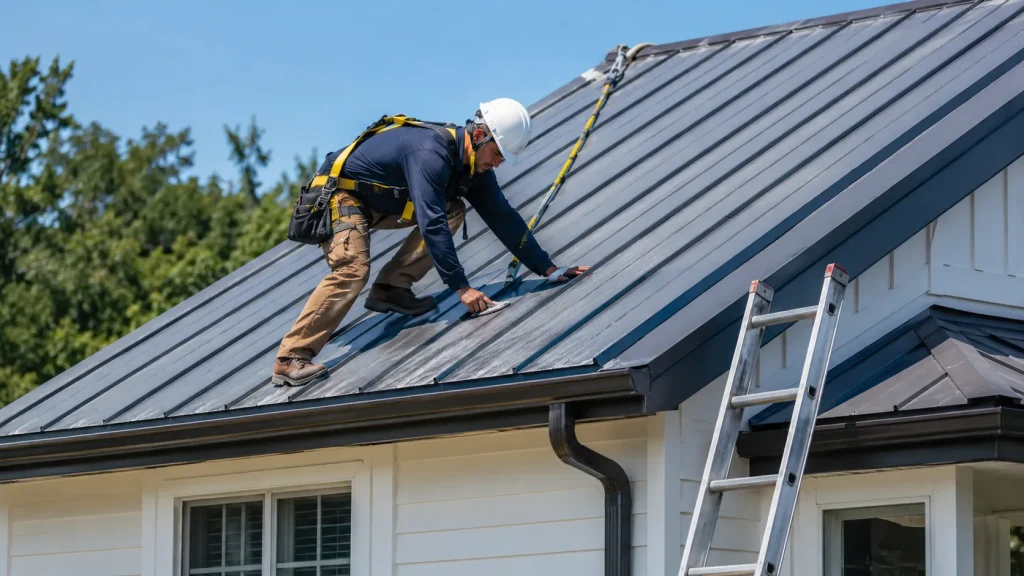
Repainting a roof can be dangerous. Metal roofs can be slippery, steep, and hot. Even a low-slope roof can become unsafe when wet or coated with dust, pollen, or cleaning solution.
According to OSHA’s residential fall protection guidance, fall prevention is a major safety concern in residential construction work.
Homeowners should be especially careful with:
- Steep roof slopes
- Wet metal panels
- Loose ladders
- Power washing equipment
- Paint overspray
- Electrical service lines
- Hot roof surfaces
- Fragile skylights or old panels
If you are not comfortable working at height, do not repaint the roof yourself. Hire a qualified roofing or coating professional.
How Much Does It Cost to Repaint a Metal Roof?
The cost to repaint a metal roof depends on roof size, slope, height, surface condition, rust level, paint type, labor rates, and repair needs.
Homeowners usually pay more when the roof needs heavy cleaning, rust removal, primer, multiple coats, or fastener repairs.
Major cost factors include:
- Roof square footage
- Number of stories
- Roof pitch
- Accessibility
- Surface preparation
- Rust treatment
- Primer requirements
- Paint or coating quality
- Labor and safety equipment
- Local climate and drying conditions
A simple repaint on a clean, low-slope metal roof costs less than repainting a steep, rusty, two-story roof with many details.
Cheapest is not always best. Poor surface preparation is one of the biggest reasons roof paint fails early.
Best Paint Colors for a Metal Roof
Color affects appearance, heat absorption, and long-term satisfaction. Dark colors often look bold and traditional, but they may absorb more heat. Lighter colors usually reflect more sunlight.
The EPA notes that cool roofs absorb and transfer less heat to buildings than conventional roofs, especially when they have high solar reflectance and thermal emittance.
Popular metal roof colors include:
- White
- Light gray
- Charcoal
- Bronze
- Forest green
- Matte black
- Red
- Brown
- Beige
When choosing a color, consider:
- Your siding color
- Trim color
- Neighborhood style
- HOA rules
- Local climate
- Dirt visibility
- Resale appeal
A very trendy color may look good now but feel dated later. Neutral colors are usually safer for long-term curb appeal.
How Long Does Repainted Metal Roof Paint Last?
A properly repainted metal roof may last many years before needing another coating. The exact lifespan depends on preparation, coating quality, roof exposure, and maintenance.
Paint may fail early if:
- The roof was dirty when painted
- Rust was not removed
- The wrong primer was used
- Paint was applied in poor weather
- The coating was too thin
- The old coating was incompatible
- Repairs were skipped
A well-prepared roof with quality coating usually performs much better than a rushed paint job.
DIY vs. Professional Metal Roof Repainting
Some homeowners can repaint small, low-slope metal roofs safely. However, many projects are better handled by professionals.
| Factor | DIY Repainting | Professional Repainting |
|---|---|---|
| Upfront cost | Lower | Higher |
| Safety risk | Higher for homeowner | Lower for homeowner |
| Surface prep quality | Varies | Usually better |
| Product selection | Can be confusing | More guided |
| Warranty support | Limited | May include workmanship warranty |
| Best for | Small, simple roofs | Steep, large, rusty, or complex roofs |
DIY may be reasonable if the roof is low, simple, dry, and easy to access. Professional help is smarter when the roof is steep, tall, damaged, or heavily weathered.
When to Call a Roofing Professional
Call a roofing professional before repainting if you notice leaks, rust holes, widespread fastener problems, or damaged flashing. You should also get help if the roof is steep, high, or difficult to access.
A professional can inspect the roof system, not just the paint surface. This matters because metal roofs move with temperature changes. Fasteners, seams, and flashing must remain watertight.
You should also call a professional when:
- You are unsure what coating is already on the roof
- The roof has multiple previous paint layers
- Rust covers large areas
- You see water stains inside the attic
- Panels are loose or lifting
- You need warranty-friendly coating guidance
- Your home has solar panels, skylights, or complex penetrations
A good contractor should explain the preparation process, coating system, warranty terms, and repair recommendations before work begins.
Common Warning Signs Before Repainting

Before repainting, look for signs that the roof needs more than a new color.
Warning signs include:
- Brown or orange rust streaks
- Paint peeling in sheets
- Chalky powder on your hand after touching the roof
- Missing or raised screws
- Cracked rubber washers
- Water stains on ceilings
- Mold or damp insulation in the attic
- Loose flashing
- Separated seams
- Dented panels from hail or impact
If you see several of these signs, schedule an inspection before painting.
Common Mistakes Homeowners Should Avoid
Repainting a metal roof can go wrong when the project is rushed. Avoid these common mistakes:
- Painting over dirt or chalky residue: Paint needs a clean surface to bond.
- Skipping rust treatment: Rust can continue spreading under new paint.
- Using the wrong paint: Interior paint or standard wall paint is not made for metal roofing.
- Ignoring leaks: Paint is not a leak repair system.
- Forgetting primer: Bare metal and repaired areas often need primer.
- Painting in poor weather: Heat, moisture, and cold can affect curing.
- Applying one thick coat: Multiple proper coats are usually better than one heavy coat.
- Walking carelessly on panels: Metal roofs can dent, bend, or become slippery.
- Not checking HOA rules: Some neighborhoods limit roof colors.
- Choosing color only by trend: Consider climate, resale value, and home style.
Maintenance After Repainting
After repainting, inspect the roof at least once or twice a year. Also check it after major storms.
Basic maintenance includes:
- Cleaning leaves and debris
- Keeping gutters clear
- Checking fasteners
- Looking for scratches or chips
- Watching for rust near seams
- Inspecting flashing
- Removing branches that scrape the roof
- Checking attic signs of leaks
Do not use harsh chemicals or abrasive tools unless the coating manufacturer approves them.
Small touch-ups are easier and cheaper than waiting until large areas fail.
FAQs
Can I repaint a metal roof myself?
Yes, but only if the roof is safe, low-slope, and in good condition. If the roof is steep, rusty, leaking, or difficult to access, hire a roofing professional.
Do I need primer before repainting a metal roof?
Usually, yes. Primer helps paint bond to bare metal, rust-treated areas, and older coatings. Always follow the coating manufacturer’s instructions.
Can I paint over rust on a metal roof?
No. Loose rust should be removed, and the area should be properly treated before primer and paint are applied. Painting directly over rust can lead to early failure.
What kind of paint should I use on a metal roof?
Use exterior paint or coating specifically designed for metal roofing. The right product depends on your roof material, existing coating, climate, and roof slope.
How often should a metal roof be repainted?
It depends on the coating quality, weather exposure, and maintenance. Many metal roofs need repainting when the finish fades, chalks, or begins to lose protection.
Will repainting a metal roof stop leaks?
No. Paint may help protect the surface, but it should not be used as the main fix for leaks. Leaks should be repaired before repainting.
Is a lighter color better for a metal roof?
In hot climates, lighter colors may help reflect more sunlight. However, the best color also depends on your home style, local climate, HOA rules, and coating performance.
Conclusion
Learning how to repaint a metal roof starts with understanding that preparation matters more than the paint itself. A successful project requires inspection, cleaning, rust removal, repairs, primer, the right coating, and safe working conditions.
Repainting can improve curb appeal and help protect a sound metal roof. But it should not be used to cover leaks, rust holes, or failing panels. If your roof has damage or safety concerns, schedule a professional inspection before investing in paint.
The smartest next step is simple: check the roof’s condition first, choose a compatible coating system, and make sure every repair is handled before the first coat goes on.